
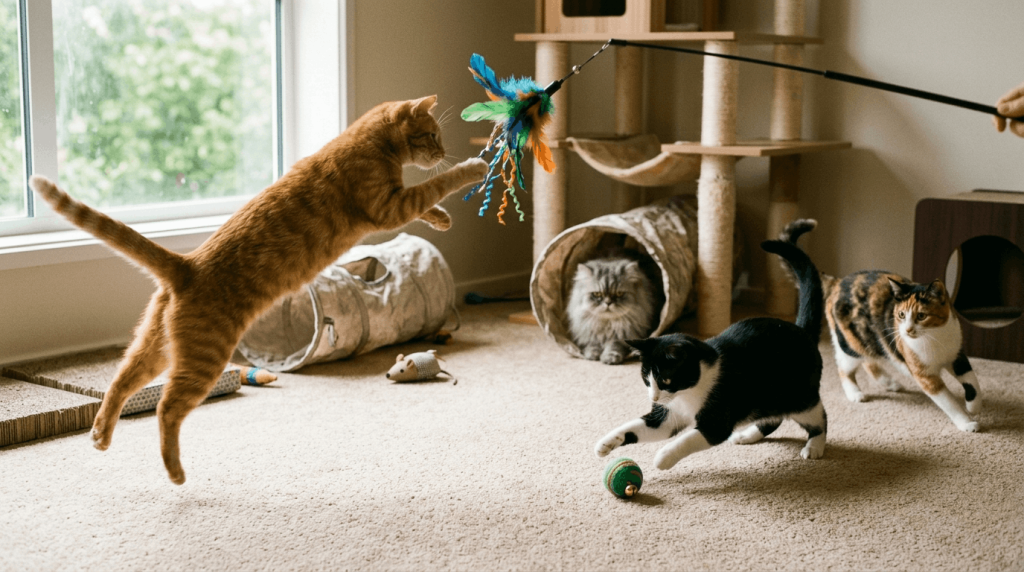

Play based exercise cats need is one of the most effective ways to support their overall health and happiness. While many owners assume that cats naturally stay active on their own, the reality is quite different, especially for indoor pets. Without intentional play and movement, cats can quickly become sedentary, which leads to weight gain, boredom, and even behavioral issues. Therefore, understanding how play based exercise cats benefit from can transform your pet’s daily routine and long-term well-being.
Cats are natural hunters, and their instincts drive them to stalk, chase, and pounce. However, when they live indoors, those instincts often go unused. As a result, structured activity becomes essential. Play based exercise cats enjoy not only mimics hunting behavior but also gives them a safe outlet for energy. This approach keeps their bodies strong while also stimulating their minds, creating a balanced and healthy lifestyle.
Why Play Matters More Than You Think
Many pet owners underestimate how critical play is for a cat’s health. Unlike dogs, cats do not always show obvious signs of needing exercise, yet the consequences of inactivity can be just as serious. Play based exercise cats benefit from helps prevent obesity, which is one of the most common health issues among indoor cats.
Additionally, regular play supports cardiovascular health. When cats run, jump, and chase, their heart rate increases, improving circulation and muscle tone. Over time, this leads to better endurance and overall vitality. At the same time, mental stimulation reduces stress and anxiety, which often manifest as destructive behaviors.
Moreover, play strengthens the bond between you and your cat. Engaging in daily sessions builds trust and reinforces positive interactions. Because of this, play based exercise cats rely on is not just about movement, but also about emotional connection.
Understanding Your Cat’s Natural Instincts
To make the most of play based exercise cats enjoy, it is important to understand their natural behaviors. Cats are crepuscular, meaning they are most active during dawn and dusk. Therefore, scheduling play sessions during these times often yields the best results.
Their hunting pattern typically follows a sequence: stalking, chasing, pouncing, and capturing. When play mimics this cycle, cats become more engaged and satisfied. For example, using toys that move unpredictably can trigger their instinct to hunt, making the experience more rewarding.
Furthermore, variety keeps things interesting. Cats can lose interest in repetitive activities, so rotating toys and introducing new challenges helps maintain excitement. By aligning play with instinct, play based exercise cats thrive on becomes both effective and enjoyable.
Types Of Play That Keep Cats Active
There are many ways to incorporate play based exercise cats need into daily routines. Each type of activity offers unique benefits, and combining them ensures a well-rounded approach.
Interactive toys are among the most effective options. Wand toys, feather teasers, and laser pointers encourage movement and mimic prey. These tools allow you to control the action, keeping your cat engaged and active.
Solo play is also important. Toys such as balls, puzzle feeders, and motorized mice provide stimulation when you are not available. These options ensure that play based exercise cats require continues even during busy schedules.
Climbing structures add another dimension. Cat trees and shelves encourage vertical movement, which strengthens muscles and improves coordination. Since cats naturally enjoy high vantage points, these setups also enhance their environment.
Finally, simple household items can become effective tools. A crumpled piece of paper or a cardboard box can spark curiosity and movement. Creativity plays a key role in maintaining consistent activity levels.
How Much Exercise Does Your Cat Need
Determining the right amount of play based exercise cats require depends on several factors, including age, breed, and health status. However, most cats benefit from at least 20 to 30 minutes of active play each day.
Instead of one long session, shorter bursts often work better. Cats tend to prefer multiple play sessions that mimic short hunting cycles. For example, two or three sessions spread throughout the day can keep them energized without causing fatigue.
Kittens and young cats usually need more activity. Their energy levels are higher, and regular play helps channel that energy in positive ways. On the other hand, older cats may require gentler play, focusing on low-impact movements that still provide stimulation.
Regardless of age, consistency is key. When play becomes part of a routine, cats are more likely to stay active and maintain a healthy weight. This is why play based exercise cats benefit from should be a daily priority.
Signs Your Cat Needs More Activity
It is not always obvious when a cat needs more exercise, yet certain behaviors can indicate a lack of stimulation. Recognizing these signs allows you to adjust your approach before problems develop.
Weight gain is one of the most common indicators. If your cat is becoming less active and gaining weight, it may not be getting enough movement. Increasing play based exercise cats engage in can help reverse this trend.
Behavioral issues are another clue. Cats that scratch furniture excessively, knock items off surfaces, or display aggression may be bored. These behaviors often stem from pent-up energy that needs an outlet.
Lethargy can also signal a problem. While cats sleep a lot, a lack of interest in play may indicate that they are not getting enough stimulation. Encouraging regular activity can improve both energy levels and mood.
Making Play Part Of Your Daily Routine
Integrating play based exercise cats need into your daily routine does not have to be complicated. In fact, small, consistent efforts often yield the best results.
Start by setting specific times for play. Morning and evening sessions align with natural activity patterns, making them more effective. Even a quick 10-minute session can make a difference.
Next, create a dedicated play area. This space should be safe and free from hazards, allowing your cat to move freely. Keeping toys accessible in this area encourages spontaneous play.
In addition, stay engaged during interactive sessions. Your participation makes the experience more dynamic and rewarding for your cat. Changing the speed and direction of toys keeps them interested and active.
Since play based exercise cats depend on for health is ongoing, building it into your routine ensures long-term success.
Overcoming Common Challenges
Some cats may resist play, especially if they are older or not used to regular activity. However, there are ways to overcome these challenges and encourage participation.
Start slowly. Introduce gentle movements and gradually increase intensity as your cat becomes more comfortable. Patience is essential during this process.
Experiment with different toys. Not all cats respond to the same stimuli, so finding what excites your pet may take time. Observing their preferences helps tailor the experience.
Additionally, use positive reinforcement. Rewarding your cat with treats or affection after play reinforces the behavior. Over time, this creates a positive association with activity.
Because play based exercise cats need can vary, adapting your approach ensures that every cat can benefit, regardless of personality or age.
The Long-Term Benefits Of Active Play
The impact of play based exercise cats engage in extends far beyond immediate enjoyment. Over time, consistent activity leads to lasting health improvements.
Physically, active cats maintain a healthy weight and strong muscles. This reduces the risk of conditions such as diabetes and joint problems. Mentally, stimulation keeps their minds sharp, preventing boredom and cognitive decline.
Emotionally, regular play reduces stress and anxiety. Cats that engage in daily activity are generally more relaxed and content. This contributes to a harmonious home environment.
Ultimately, investing time in play based exercise cats rely on enhances every aspect of their lives. It supports their natural instincts while promoting overall well-being.
Conclusion
Play based exercise cats need is not just a luxury but a necessity for a healthy and fulfilling life. By understanding your cat’s instincts and providing consistent opportunities for movement, you create an environment that supports both physical and mental health. Small daily efforts, combined with creativity and patience, can transform your cat’s routine and improve their quality of life.
When you prioritize play, you are not only preventing health issues but also strengthening your bond with your pet. Over time, these moments of interaction become the foundation of a happy and active lifestyle. With the right approach, keeping your cat healthy through play becomes both simple and rewarding.
FAQ
- How often should I play with my cat each day?
Most cats benefit from two to three short play sessions daily, totaling around 20 to 30 minutes of activity. - What toys are best for keeping cats active?
Interactive toys like feather wands and laser pointers work well, along with puzzle toys for independent play. - Can older cats still benefit from regular activity?
Yes, older cats benefit from gentle play that keeps them moving without causing strain or discomfort. - Why does my cat lose interest in toys quickly?
Cats can get bored with repetition, so rotating toys and introducing new ones helps maintain interest. - Is indoor play enough for a cat’s health?
Yes, indoor play can fully support a cat’s health when it includes regular, engaging, and varied activities.