

Setting up an aquarium brings beauty and calm into your home, yet it also introduces electrical components that require careful attention. Aquarium electrical safety is often overlooked, especially by beginners who focus more on water quality and fish care. However, without proper precautions, electrical equipment can pose serious risks to both people and aquatic life. Because of this, understanding how to manage these systems safely is just as important as maintaining the tank itself.
Aquariums rely on multiple electrical devices such as heaters, filters, lights, and pumps. These components operate in close proximity to water, which naturally increases the risk of accidents. Therefore, aquarium electrical safety should always be a priority from the moment you set up your tank. By taking a proactive approach, you can prevent potential hazards while ensuring your aquarium runs smoothly and safely over time.
Why Aquarium Electrical Safety Matters in Every Setup
Water and electricity are a dangerous combination, which makes aquarium electrical safety essential in every home setup. Even small mistakes, such as improper wiring or damaged equipment, can lead to serious consequences. Because aquariums run continuously, the risk is not limited to occasional use but exists at all times.
Electrical faults can harm your fish as well. Sudden power surges or faulty devices may disrupt water temperature or filtration, leading to stress or even loss of aquatic life. Therefore, aquarium electrical safety is not only about protecting people but also about maintaining a stable and healthy environment for your tank.
In addition, long-term exposure to moisture can wear down electrical components. Without regular checks, minor issues can turn into major hazards. By focusing on prevention, you reduce risks and extend the lifespan of your equipment.
Common Electrical Risks Around Aquariums
Many aquarium owners are unaware of the everyday risks present in their setup. Aquarium electrical safety involves identifying these hazards early and addressing them before they cause problems. One of the most common issues is water splashing onto power outlets or cords.
Loose or damaged wires also pose a serious threat. Over time, wear and tear can expose internal wiring, increasing the risk of short circuits. Because of this, inspecting cables regularly is an important part of aquarium electrical safety.
Another concern is overcrowded power strips. Plugging too many devices into a single outlet can lead to overheating. This not only damages equipment but also increases fire risk. Therefore, managing electrical load is a key aspect of maintaining aquarium electrical safety in your home.
Proper Placement of Electrical Equipment
Positioning your equipment correctly is one of the simplest ways to improve safety. Aquarium electrical safety starts with keeping all electrical components away from direct water contact. Placing outlets above the water level helps prevent accidental exposure.
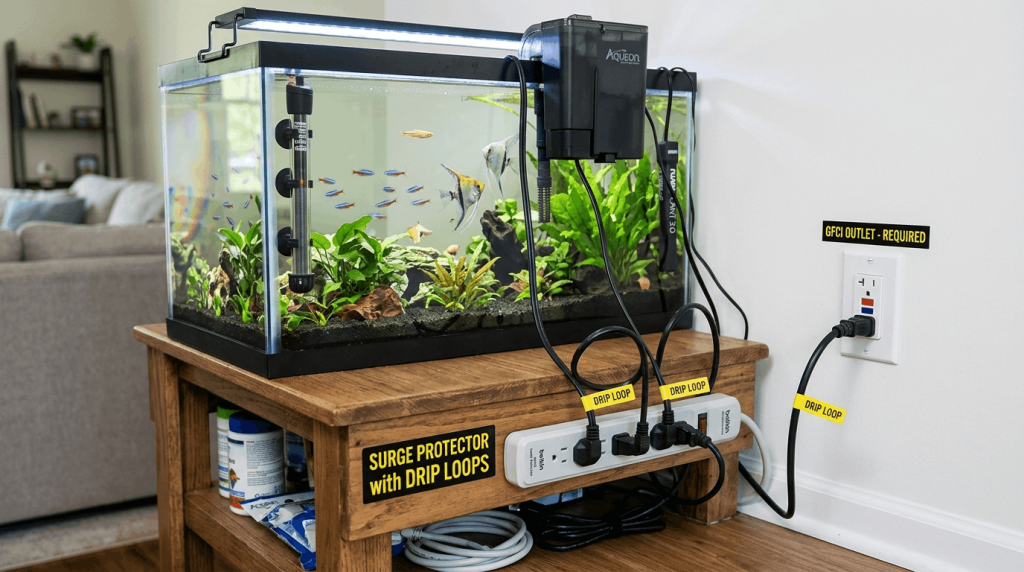
Drip loops are another essential precaution. By allowing cords to hang lower than the outlet before rising up, you prevent water from traveling along the cable into the socket. This simple technique plays a major role in aquarium electrical safety.
In addition, organizing cables neatly reduces the chance of tangling or accidental damage. Using cable clips or holders can keep everything secure and easy to manage. Over time, these small adjustments create a safer and more efficient setup.
Using Quality Equipment and Devices
Not all aquarium equipment is created equal, and choosing high-quality devices is crucial. Aquarium electrical safety depends heavily on the reliability of your equipment. Investing in well-made heaters, filters, and lighting systems reduces the risk of malfunctions.
Look for products that meet safety standards and are specifically designed for aquarium use. These devices are built to withstand moisture and continuous operation. Because of this, they provide better protection compared to generic alternatives.
Ground fault circuit interrupters, or GFCIs, are also highly recommended. These devices automatically shut off power if a fault is detected, preventing electric shocks. Including them in your setup significantly enhances aquarium electrical safety.
Routine Maintenance and Inspection
Regular maintenance is a key part of preventing electrical issues. Aquarium electrical safety improves when you inspect your equipment frequently. Checking cords, plugs, and devices for signs of wear helps identify problems early.
Cleaning equipment also plays a role. Dust and moisture buildup can affect performance and increase risk. By keeping your devices clean and dry, you maintain both efficiency and safety.
In addition, replacing old or damaged equipment promptly is essential. Continuing to use faulty devices can lead to serious hazards. Therefore, routine checks should be a standard part of your aquarium care routine.
Safe Handling Practices Around Water
Handling electrical equipment near water requires extra caution. Aquarium electrical safety includes turning off and unplugging devices before performing maintenance. This simple step reduces the risk of electric shock.
Dry hands are also important when working with electrical components. Moisture increases conductivity, which can make even minor contact dangerous. Because of this, always ensure your hands are completely dry before touching plugs or switches.
Using insulated tools and avoiding direct contact with exposed wiring further improves safety. By adopting careful habits, you create a safer environment for both yourself and your aquarium.
Planning for Power Outages and Emergencies
Unexpected power outages can disrupt your aquarium and create additional risks. Aquarium electrical safety includes preparing for these situations in advance. Backup power solutions, such as battery-operated air pumps, help maintain oxygen levels during outages.
Surge protectors can also protect your equipment from sudden voltage spikes when power returns. These devices prevent damage and extend the lifespan of your setup. Because of this, they are an important part of aquarium electrical safety planning.
Having a clear plan ensures that you can respond quickly in emergencies. By staying prepared, you reduce stress and protect your aquatic environment.
Creating a Long-Term Safe Environment
Building a safe aquarium setup requires ongoing attention and care. Aquarium electrical safety is not a one-time task but a continuous process that evolves with your setup. As you add new equipment or make changes, reassessing safety measures helps maintain protection.
Educating yourself about proper practices also makes a difference. Staying informed about new products and safety guidelines ensures that your setup remains up to date. In addition, sharing knowledge with other aquarium owners can promote safer practices within the community.
By prioritizing safety, you create an environment where both you and your fish can thrive. Over time, these efforts lead to a more reliable and enjoyable aquarium experience.
Conclusion
Aquariums bring life and beauty into your home, but they also require careful management of electrical systems. Aquarium electrical safety is essential for preventing accidents, protecting equipment, and ensuring a stable environment for your fish. By understanding common risks and implementing simple precautions, you can significantly reduce potential hazards.
From proper equipment placement to regular maintenance, each step contributes to a safer setup. While it may seem like extra effort, these practices quickly become part of your routine. Ultimately, aquarium electrical safety is about creating peace of mind while enjoying the benefits of your aquarium for years to come.
FAQ
- What is the most important safety feature for aquariums?
Using a GFCI outlet is one of the most effective ways to prevent electrical accidents. - How often should I check aquarium equipment?
Inspect your equipment regularly, ideally once a week, for signs of wear or damage. - Can water splashes cause electrical problems?
Yes, water exposure can lead to short circuits or shocks if it reaches outlets or wiring. - What is a drip loop and why is it important?
A drip loop prevents water from running along cords into electrical outlets. - How can I prepare for a power outage?
Use backup air pumps and surge protectors to maintain safety and protect equipment.