
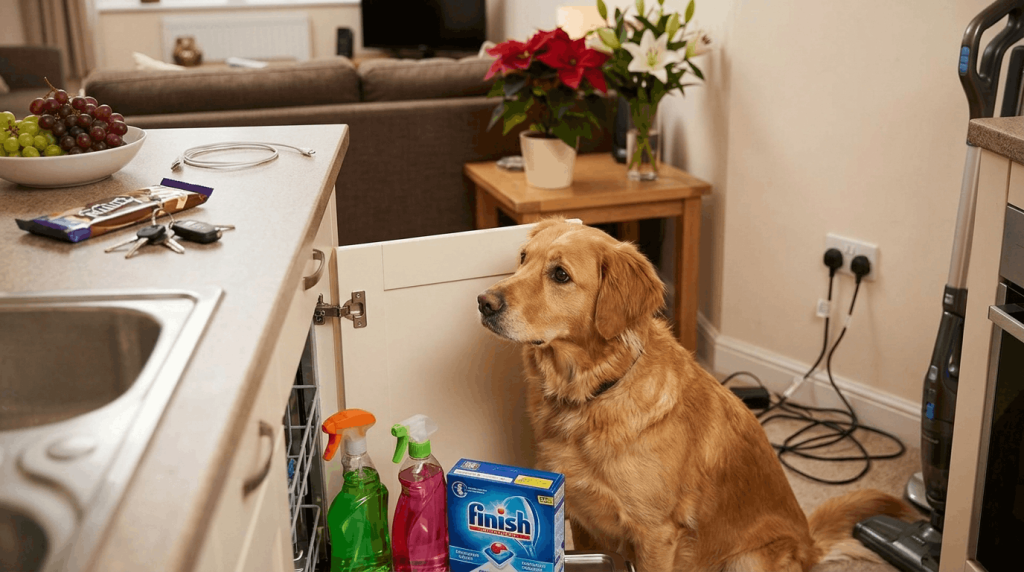

Keeping your dog safe at home might seem simple, yet many risks exist in everyday environments that often go unnoticed. Household hazards for dogs can range from common foods to cleaning products, and even small objects can pose serious threats. While dogs rely on us for protection, their natural curiosity often leads them to explore things they should avoid. Because of this, understanding these risks is essential for creating a safe and comfortable living space.
Many pet owners assume that danger only exists outdoors, but the truth is that your home can present just as many risks. From the kitchen to the living room, household hazards for dogs can appear in places you least expect. By becoming aware of these dangers and taking simple precautions, you can significantly reduce the chances of accidents. Over time, these small adjustments create a safer environment where your dog can thrive without unnecessary risk.
Hidden Dangers in Everyday Household Items
Most homes contain items that are perfectly safe for humans but dangerous for dogs. Cleaning supplies, medications, and even decorative objects can become serious threats if left within reach. Because dogs often explore with their mouths, they are more likely to ingest harmful substances. This is why household hazards for dogs often involve items that seem harmless at first glance.
For example, common cleaning products contain chemicals that can irritate or poison your dog if ingested. Even small amounts can cause serious health issues. In addition, medications such as pain relievers or vitamins can be toxic to dogs. Keeping these items securely stored is one of the simplest ways to prevent accidents.
Small objects also pose a choking hazard. Items like coins, buttons, or children’s toys can easily be swallowed. Therefore, maintaining a clutter-free environment helps reduce exposure to these household hazards for dogs and keeps your home safer overall.
Toxic Foods Found in the Kitchen
The kitchen is one of the most common areas where household hazards for dogs exist. Many foods that are safe for humans can be toxic to dogs, even in small quantities. Chocolate, grapes, onions, and garlic are among the most well-known examples, yet there are many others that owners may not recognize.
Because Labradors and other breeds often have strong appetites, they are more likely to seek out food left unattended. This behavior increases the risk of accidental ingestion. For instance, chocolate contains substances that can affect a dog’s heart and nervous system, while grapes can lead to kidney problems.
Additionally, fatty foods and leftovers can cause digestive issues or pancreatitis. Although sharing food may seem harmless, it is important to remember that household hazards for dogs often come from everyday habits. By keeping food out of reach and avoiding table scraps, you protect your dog from unnecessary risks.
Electrical Cords and Chewing Risks
Dogs, especially younger ones, often chew on objects as part of their natural behavior. Unfortunately, electrical cords are a common target, which makes them one of the more dangerous household hazards for dogs. Chewing on cords can lead to burns, electric shock, or even more serious injuries.
To reduce this risk, it is important to keep cords organized and out of reach. Using protective covers or securing cords behind furniture can help prevent access. In addition, providing appropriate chew toys gives your dog a safe outlet for this behavior.
Training also plays a role in prevention. Teaching your dog what is acceptable to chew helps reduce the likelihood of accidents. By combining proper management and training, you can minimize the impact of these household hazards for dogs.
Houseplants That Can Be Harmful
Many people enjoy decorating their homes with plants, but some of these plants can be toxic to dogs. Common houseplants such as lilies, aloe vera, and philodendrons can cause symptoms ranging from mild irritation to serious health problems. Because of this, they are important household hazards for dogs to consider.
Dogs may chew on leaves out of curiosity or boredom, which increases the risk of ingestion. Even small amounts can cause vomiting, diarrhea, or more severe reactions. Therefore, it is important to research any plants you bring into your home.
If you already have plants, placing them out of reach or choosing pet-safe alternatives can reduce the risk. By making informed choices, you can enjoy greenery without exposing your dog to unnecessary danger.
Household Chemicals and Cleaning Products
Cleaning products are essential for maintaining a clean home, yet they can also pose significant risks to your dog. Many of these products contain strong chemicals that can cause irritation or poisoning if ingested or inhaled. As a result, they are among the most common household hazards for dogs.
For example, bleach, disinfectants, and certain floor cleaners can leave residues that your dog may come into contact with. Because dogs often lick their paws, they can ingest these substances indirectly. This makes proper storage and careful use of cleaning products essential.
Using pet-safe alternatives can reduce these risks. In addition, ensuring that surfaces are dry before allowing your dog to walk on them helps prevent exposure. These simple steps make a big difference in minimizing household hazards for dogs.
Small Spaces and Physical Safety Risks
Not all hazards involve chemicals or food. Physical dangers, such as small spaces or unstable furniture, can also pose risks. Dogs may become trapped in tight areas or injured by falling objects. These situations highlight another aspect of household hazards for dogs that owners should consider.
For instance, open cabinets, narrow gaps, or unsecured furniture can create unsafe conditions. Ensuring that your home is well-organized and free from potential traps helps protect your dog from injury. In addition, using safety gates or barriers can limit access to high-risk areas.
Supervision is also important, especially for puppies or newly adopted dogs. By keeping an eye on your dog’s behavior, you can quickly address potential hazards and prevent accidents before they occur.
Temperature and Environmental Factors
Temperature is another factor that can affect your dog’s safety at home. Extreme heat or cold can create uncomfortable or dangerous conditions, especially for certain breeds. While indoor environments are generally controlled, they can still present household hazards for dogs if not managed properly.
For example, leaving a dog near a heat source or in direct sunlight for extended periods can lead to overheating. Similarly, cold drafts or damp conditions can cause discomfort. Maintaining a stable indoor temperature helps ensure your dog remains comfortable and safe.
In addition, access to fresh water is essential. Dehydration can occur quickly, particularly in warmer climates. By monitoring your dog’s environment, you reduce the risk of these often-overlooked household hazards for dogs.
Preventing Accidents Through Awareness and Routine
The most effective way to manage household hazards for dogs is through awareness and routine. By regularly inspecting your home for potential risks, you can address issues before they become serious. This proactive approach helps create a safer environment for your pet.
Establishing routines, such as keeping items stored properly and cleaning up after meals, also reduces risk. Consistency is key, as it prevents hazards from reappearing over time. In addition, training your dog to follow basic commands can help manage behavior and avoid dangerous situations.
Over time, these habits become second nature. By staying vigilant and maintaining a structured environment, you significantly reduce the likelihood of accidents.
Conclusion
Your home should be a place of comfort and safety for your dog, yet many hidden dangers can threaten that security. Household hazards for dogs are often found in everyday items, which makes awareness essential for prevention. By understanding these risks and taking simple steps to address them, you create an environment where your dog can live safely and happily.
From toxic foods to physical dangers, each hazard can be managed with careful planning and consistent habits. While it may seem overwhelming at first, small changes can have a lasting impact. Ultimately, protecting your dog from household hazards for dogs is an ongoing responsibility, but it is one that ensures your pet’s health and well-being for years to come.
FAQ
- What are the most common dangers inside the home for dogs?
Common risks include toxic foods, cleaning products, small objects, and electrical cords. - How can I make my home safer for my dog?
Keep harmful items out of reach, use pet-safe products, and maintain a clean, organized space. - Are houseplants dangerous for dogs?
Some plants are toxic, so it is important to choose pet-safe varieties or keep them out of reach. - Can cleaning products harm my dog?
Yes, many contain chemicals that can cause irritation or poisoning if ingested or touched. - Why do dogs get into dangerous situations at home?
Curiosity and natural behaviors like chewing and exploring often lead dogs to potential hazards.


