

If you’ve ever wondered whether your pet is getting enough movement, understanding indoor cat exercise needs is essential for keeping your feline healthy and happy. While indoor cats are protected from outdoor dangers, they often face a different challenge: a lack of physical activity. Because their environment is more controlled and less stimulating, they can easily slip into a sedentary lifestyle without you noticing.
Many cat owners assume that indoor cats naturally stay active, especially when they dart around the house occasionally. However, those short bursts of energy rarely meet true indoor cat exercise needs. Instead, consistent daily movement plays a key role in maintaining a healthy weight, supporting mental stimulation, and preventing behavioral issues.
When you understand how much activity your cat truly requires, it becomes easier to create a routine that supports both physical health and emotional well-being. With the right approach, you can turn your home into an engaging space that keeps your cat moving naturally throughout the day.
Why Exercise Matters For Indoor Cats
Unlike outdoor cats, indoor cats rely entirely on their owners to meet their indoor cat exercise needs. Because they do not hunt, climb trees, or roam freely, they miss out on many natural forms of movement. As a result, their daily activity levels often fall short unless you intentionally create opportunities for exercise.
Regular movement helps prevent obesity, which is one of the most common issues in indoor cats. Excess weight can lead to joint problems, diabetes, and a shorter lifespan. Therefore, meeting indoor cat exercise needs is not just about playtime; it directly impacts long-term health.
In addition, exercise supports mental stimulation. Cats are natural hunters, and without an outlet for that instinct, they may become bored or stressed. This often leads to unwanted behaviors such as scratching furniture, overeating, or excessive sleeping. By focusing on indoor cat exercise needs, you help your cat stay both physically and mentally balanced.
Signs Your Cat May Need More Activity
Even subtle changes in behavior can indicate that your cat’s indoor cat exercise needs are not being met. For instance, if your cat is gaining weight despite normal feeding, inactivity may be the cause. Similarly, a lack of interest in play or a tendency to sleep most of the day can signal low activity levels.
Some cats express boredom in more obvious ways. They may become destructive, knock objects over, or demand constant attention. On the other hand, some cats withdraw and appear less engaged with their surroundings. In both cases, these behaviors often point to unmet indoor cat exercise needs.
You might also notice reduced agility. If your cat hesitates to jump or struggles with movement, it could be due to a lack of regular activity. While aging can play a role, inactivity often accelerates these changes. Therefore, observing your cat closely helps you identify whether adjustments are needed.
How Much Exercise Does An Indoor Cat Need
Understanding how much activity is required can help you better meet indoor cat exercise needs. Most adult cats benefit from at least 20 to 30 minutes of active play each day. However, this does not need to happen all at once. In fact, shorter sessions spread throughout the day often work better.
Kittens and younger cats usually require more activity because of their higher energy levels. Meanwhile, older cats still need movement, although the intensity may be lower. Regardless of age, consistency is key when addressing indoor cat exercise needs.
It’s also important to consider your cat’s personality. Some cats are naturally more active, while others prefer a slower pace. By tailoring activities to your cat’s preferences, you can make exercise feel natural rather than forced. This approach increases engagement and ensures that indoor cat exercise needs are met more effectively.
Simple Ways To Increase Daily Movement
Creating opportunities for movement does not require complicated setups. In fact, small changes can significantly improve indoor cat exercise needs without overwhelming your routine.
Interactive play is one of the most effective methods. Toys that mimic prey, such as feather wands or laser pointers, encourage natural hunting behavior. Because these activities tap into instinct, they provide both physical exercise and mental stimulation.
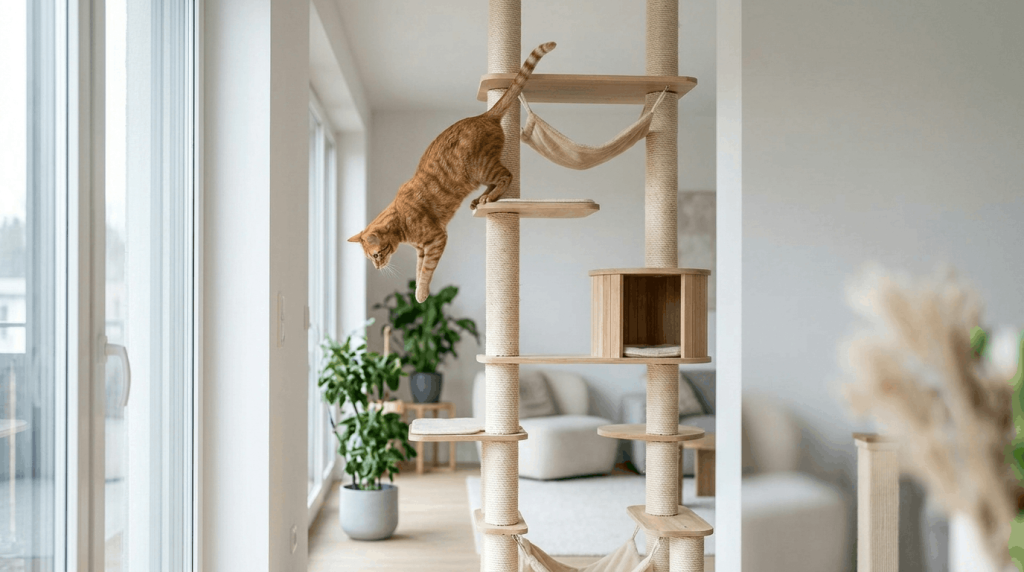
Additionally, vertical spaces can make a big difference. Cats love to climb, and adding shelves or cat trees allows them to move more throughout the day. This simple adjustment helps support indoor cat exercise needs by encouraging natural exploration.
You can also rotate toys regularly to keep things interesting. When toys remain the same, cats often lose interest. However, introducing variety keeps them engaged and more likely to stay active.
Creating A Stimulating Indoor Environment
A well-designed environment plays a major role in meeting indoor cat exercise needs. While toys and play sessions are important, your home layout also influences how much your cat moves.
For example, placing food bowls in different locations encourages walking. Similarly, positioning resting spots at various heights motivates your cat to climb and explore. These small adjustments naturally increase daily activity without requiring constant supervision.
Windows can also provide valuable stimulation. Cats enjoy watching birds, people, and outdoor movement. Adding a perch near a window keeps your cat mentally engaged while encouraging occasional movement.
Moreover, introducing puzzle feeders can combine exercise with feeding time. These tools require your cat to work for their food, which supports both physical and mental activity. As a result, indoor cat exercise needs are addressed in a more dynamic way.
Balancing Activity And Rest
While movement is important, balance is equally essential. Cats naturally spend a significant portion of their day resting, so the goal is not constant activity. Instead, you want to create bursts of movement that align with their natural rhythm.
Short play sessions that mimic hunting cycles work best. Typically, cats hunt, eat, and then rest. By following this pattern, you support their instincts while meeting indoor cat exercise needs.
It’s also important to avoid overexertion. If your cat shows signs of fatigue, such as heavy breathing or loss of interest, it’s time to stop. Gradual increases in activity are more effective and safer than sudden changes.
By respecting your cat’s natural behavior, you create a routine that feels comfortable and sustainable.
Common Mistakes Cat Owners Make
Many cat owners unintentionally overlook indoor cat exercise needs by relying on passive entertainment. For example, simply providing toys without interaction often fails to keep cats engaged. While toys are useful, they work best when combined with active play.
Another common mistake is assuming that one play session is enough. In reality, cats benefit from multiple short sessions throughout the day. This approach better reflects their natural activity patterns.
Some owners also underestimate the importance of environment. Without climbing spaces or varied stimulation, cats have fewer opportunities to move. As a result, indoor cat exercise needs may remain unmet despite good intentions.
Additionally, ignoring changes in behavior can delay necessary adjustments. When cats become less active or more restless, it often signals that their routine needs improvement. Recognizing these signs early helps prevent long-term issues.
Long-Term Benefits Of Keeping Your Cat Active
Meeting indoor cat exercise needs consistently leads to noticeable improvements in your cat’s overall well-being. Physically, active cats maintain a healthier weight and stronger muscles. This reduces the risk of common health problems and supports mobility as they age.
Mentally, regular activity keeps cats engaged and less prone to boredom. This often results in fewer behavioral issues and a more relaxed demeanor. Active cats tend to be more curious, playful, and responsive to their environment.
Additionally, shared playtime strengthens the bond between you and your cat. These interactions build trust and create positive experiences that enhance your relationship.
Over time, the benefits of meeting indoor cat exercise needs extend beyond health. They contribute to a happier, more balanced life for your pet, which ultimately makes your home a more enjoyable place for both of you.
Conclusion
Understanding and supporting indoor cat exercise needs is one of the most important responsibilities of a cat owner. While indoor living offers safety and comfort, it also requires intentional effort to ensure your cat stays active and engaged.
By incorporating regular play, creating a stimulating environment, and paying attention to behavioral cues, you can provide the movement your cat needs without making drastic changes to your routine. Even small adjustments can lead to significant improvements in your cat’s health and happiness.
As you develop a consistent approach, meeting indoor cat exercise needs becomes a natural part of daily life. With time, your cat will become more energetic, responsive, and content, reflecting the positive impact of a well-balanced lifestyle.
FAQ
1. How can I tell if my indoor cat is bored?
Signs include excessive sleeping, overeating, or destructive behavior, which often indicate a lack of stimulation.
2. What are the best toys for increasing activity?
Interactive toys like feather wands and laser pointers encourage natural hunting behavior and movement.
3. Do older cats still need daily playtime?
Yes, although the intensity should be lower, regular movement helps maintain mobility and overall health.
4. Can feeding routines help improve activity levels?
Yes, puzzle feeders and spaced-out meals can encourage movement and mental engagement.
5. How often should I play with my cat each day?
Multiple short sessions throughout the day are more effective than one long session.