Many bird owners focus on feeding and cage setup. However, household hazards pet birds encounter daily can be far more dangerous. These hidden risks often exist in plain sight inside your home.
Birds are highly sensitive creatures. Their respiratory systems and small bodies make them vulnerable to toxins and environmental dangers. Therefore, even minor exposure can lead to serious health issues.
Understanding household hazards pet birds face is essential for responsible ownership. By identifying risks early, you can create a safer environment and protect your bird’s well-being.
Why Pet Birds Are More Vulnerable at Home
Pet birds differ from other pets in many ways. Household hazards pet birds encounter often affect them more severely than dogs or cats.
Their lungs are extremely efficient. While this helps them breathe easily, it also means they absorb airborne toxins quickly. As a result, fumes that seem harmless to humans can be deadly to birds.
Additionally, birds explore with their beaks. They chew, peck, and investigate objects. Therefore, they are more likely to ingest harmful substances.
Because of this, creating a safe home requires extra awareness and careful planning.
Toxic Fumes in the Kitchen
The kitchen is one of the most dangerous areas. Household hazards pet birds face often include toxic fumes from cooking.
Non-stick cookware releases harmful gases when overheated. These fumes can cause severe respiratory distress in birds.
Other risks include:
- Burning food or oil
- Smoke from cooking
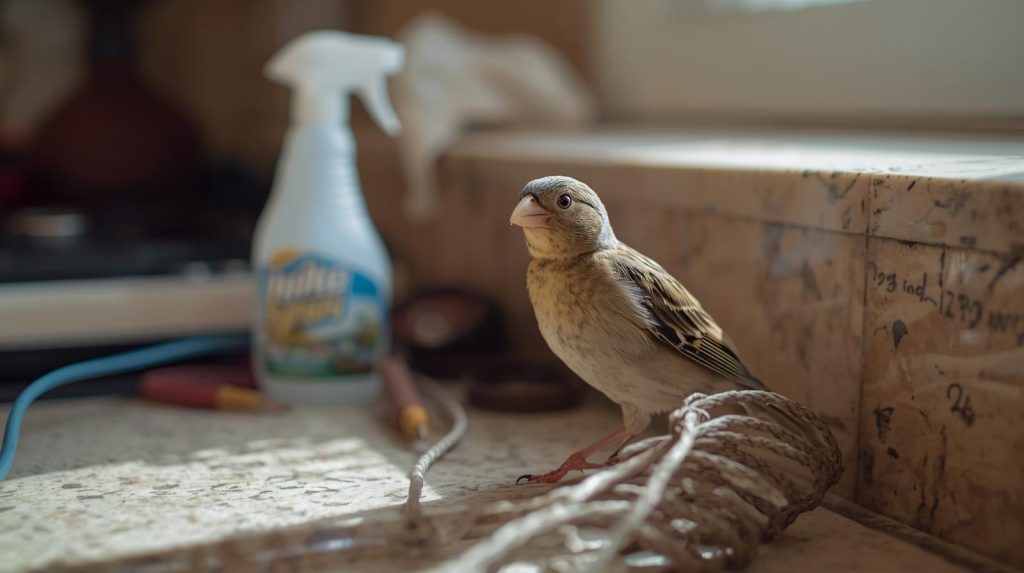
- Cleaning sprays used near food areas
Even small amounts of fumes can be harmful. Therefore, always keep your bird away from the kitchen while cooking.
Proper ventilation also reduces risk. However, distance remains the safest solution.
Cleaning Products and Chemicals
Cleaning supplies are common in every home. However, household hazards pet birds face often involve exposure to chemicals.
Many products release strong fumes. These can irritate or damage a bird’s respiratory system.
Common harmful products include:
- Bleach
- Ammonia-based cleaners
- Aerosol sprays
- Disinfectants with strong scents
Instead, choose bird-safe cleaning alternatives. Natural options like vinegar and water are safer choices.
Always clean in a separate area. Additionally, ensure proper ventilation before returning your bird to the room.
Air Fresheners and Scented Products
Pleasant scents may seem harmless. However, household hazards pet birds include air fresheners and scented items.
Products such as:
- Candles
- Essential oil diffusers
- Plug-in air fresheners
- Incense
release chemicals into the air. Birds inhale these particles easily.
Over time, exposure can cause respiratory problems. Therefore, it is best to avoid scented products entirely around birds.
Fresh air is always the safest option. Opening windows, when safe, helps maintain air quality.
Open Windows and Escape Risks
Open windows pose a serious danger. Household hazards pet birds include accidental escapes.
Birds can fly quickly and become disoriented outside. Once escaped, they may not survive long due to predators or unfamiliar environments.
To prevent this:
- Install secure window screens
- Keep doors closed during out-of-cage time
- Supervise your bird at all times
Even a small opening can lead to escape. Therefore, always double-check before allowing your bird to roam.
Electrical Wires and Cords
Birds love to chew. Unfortunately, household hazards pet birds encounter include electrical cords.
Chewing wires can cause:
- Electric shock
- Burns
- Internal injuries
Additionally, damaged wires pose fire risks. Therefore, managing cables is essential.
Use cord covers or hide wires behind furniture. Providing safe chew toys also reduces interest in dangerous items.
Keeping cords out of reach protects both your bird and your home.
Toxic Plants in the Home
Indoor plants add beauty to a home. However, household hazards pet birds often involve toxic plants.
Many common plants are harmful if ingested. Examples include:
- Philodendron
- Pothos
- Dieffenbachia
- Certain types of lilies
Birds may chew leaves out of curiosity. Even small amounts can cause illness.
Research each plant before bringing it into your home. Alternatively, choose bird-safe plants to avoid risk.
Ceiling Fans and Moving Objects
Moving objects can be dangerous. Household hazards pet birds include ceiling fans and other rotating items.
A flying bird can collide with fan blades. This can result in serious injury or death.
To reduce risk:
- Turn off fans before letting your bird out
- Avoid running appliances with exposed moving parts
- Monitor your bird closely during free flight
Creating a controlled environment ensures safe movement.
Small Objects and Choking Hazards
Birds often pick up small items. Household hazards pet birds face include choking risks.
Objects such as:
- Buttons
- Beads
- Coins
- Small toys
can be swallowed accidentally. This can lead to blockages or internal injuries.
Keep small items out of reach. Regularly inspect your bird’s play area for potential hazards.
Safe toys designed for birds are the best alternative.
Kitchen Foods That Are Toxic to Birds
Food safety is critical. Household hazards pet birds encounter also include toxic human foods.
Some dangerous foods include:
- Chocolate
- Avocado
- Caffeine
- Alcohol
These substances can cause severe reactions. Even small amounts may be harmful.
Always research before sharing food. Providing a proper bird diet ensures safety and health.
Temperature and Environmental Risks
Temperature changes can be dangerous. Household hazards pet birds include extreme heat or cold.
Birds are sensitive to sudden changes. Drafts, heaters, and direct sunlight can cause stress.
Maintain a stable temperature throughout the day. Additionally, avoid placing cages near vents or windows.
Consistency helps your bird stay comfortable and healthy.
Bathroom Hazards and Water Risks
Bathrooms may seem harmless. However, household hazards pet birds include water-related dangers.
Open toilets, sinks, or bathtubs can pose drowning risks. Birds may fall in and struggle to escape.
To prevent accidents:
- Keep toilet lids closed
- Avoid leaving water unattended
- Supervise your bird at all times
Simple precautions can prevent serious incidents.
Other Pets and Unexpected Threats
Even friendly pets can pose risks. Household hazards pet birds often involve interactions with other animals.
Cats and dogs may act on instinct. Even playful behavior can harm a bird.
Always supervise interactions. Additionally, keep your bird in a secure area when other pets are nearby.
Safety should always come first.
Creating a Bird-Safe Home Environment
Preventing danger requires planning. Household hazards pet birds face can be minimized with simple steps.
Focus on:
- Removing toxic items
- Securing dangerous areas
- Providing safe toys and spaces
- Monitoring your bird’s environment
Regular checks help identify new risks. As your home changes, update your safety measures.
Consistency ensures long-term protection.
Long-Term Health Benefits of Safety Awareness
Avoiding hazards improves your bird’s quality of life. Household hazards pet birds face can lead to chronic health issues if ignored.
A safe environment supports:
- Better respiratory health
- Reduced stress
- Longer lifespan
Additionally, your bird will feel more secure. This leads to better behavior and stronger bonding.
Investing in safety benefits both you and your pet.
Conclusion
Household hazards pet birds face are often hidden but serious. From toxic fumes to small objects, risks exist in everyday spaces.
By staying aware and making simple changes, you can protect your bird from harm. Creating a safe home environment is one of the most important responsibilities of a bird owner.
Take action today. Remove hazards, monitor your surroundings, and prioritize safety. In doing so, you ensure a healthier and happier life for your pet bird.
FAQ
1. What are the most common dangers for pet birds at home?
Common risks include toxic fumes, electrical cords, small objects, and unsafe foods.
2. Are scented candles safe around birds?
No, scented candles can release harmful fumes. It is best to avoid them entirely.
3. How can I make my home safer for my bird?
Remove toxic items, secure windows, and provide safe toys and environments.
4. Can birds be around cooking areas?
It is not recommended. Cooking fumes can be dangerous, especially from non-stick cookware.
5. What should I do if my bird is exposed to a toxin?
Act quickly and contact a veterinarian immediately for proper guidance.