
Creating the right environment for a pet bird requires more than simply buying a cage and placing it in a room. Birds are naturally active creatures that climb, fly, and explore throughout the day. Therefore, their living space should encourage movement rather than restrict it.
A thoughtful bird cage setup plays a major role in keeping birds physically healthy and mentally stimulated. When cages allow climbing, stretching, and exploring, birds remain engaged and energetic.
In contrast, poorly designed cages can limit activity and cause boredom. Over time, inactivity may lead to behavioral issues or health problems.
Fortunately, designing a cage that supports natural movement does not require complicated equipment. With the right layout, perches, and enrichment tools, you can create a stimulating home that promotes exercise and well-being.
This guide explains how to build a cage environment that encourages healthy movement while keeping your bird comfortable and safe.
Why Natural Movement Matters for Pet Birds
Birds evolved to live in complex environments filled with branches, food sources, and open spaces. In the wild, they move frequently while climbing, flying, and exploring their surroundings.
Because of this natural behavior, a proper bird cage setup should mimic these conditions as closely as possible.
Movement benefits birds in several important ways.
First, physical activity strengthens muscles and supports healthy joints. Regular climbing and stretching also improve balance and coordination.
Second, exercise promotes better circulation and heart health.
Finally, active environments reduce boredom and stress.
Without enough movement opportunities, birds may develop problems such as feather plucking, excessive screaming, or lethargy.
Providing a cage that encourages motion helps prevent these issues.
When birds can move naturally throughout the day, they stay happier, healthier, and more mentally engaged.
Choosing the Right Cage Size
The size of the cage strongly influences how much activity a bird can perform inside it. Even though birds spend time outside the cage, their enclosure still serves as their primary living space.
Therefore, selecting the correct dimensions is a crucial part of a good bird cage setup.
Generally, wider cages work better than tall narrow ones. Horizontal space allows birds to hop, climb, and stretch their wings comfortably.
Larger cages also allow room for enrichment items such as toys and ladders.
When selecting a cage, consider the wingspan of your bird species.
The cage should allow the bird to fully extend its wings without touching the sides. Additionally, multiple perches should fit comfortably without crowding the space.
Although bigger cages cost more, they greatly improve a bird’s quality of life.
Positioning the Cage in Your Home
Where you place the cage also influences your bird’s comfort and movement patterns.
A carefully chosen location enhances the effectiveness of your bird cage setup.
Birds enjoy observing household activity. Therefore, placing the cage in a living area helps them feel included.
However, avoid extremely noisy or busy locations.
Too much stress can discourage natural behavior.
The cage should also receive natural light while staying protected from direct drafts.
Additionally, positioning one side of the cage against a wall helps birds feel secure. Open spaces on all sides may make them feel exposed.
Proper placement encourages relaxation and curiosity, which naturally promotes more movement and exploration.
Designing a Multi-Level Perch System
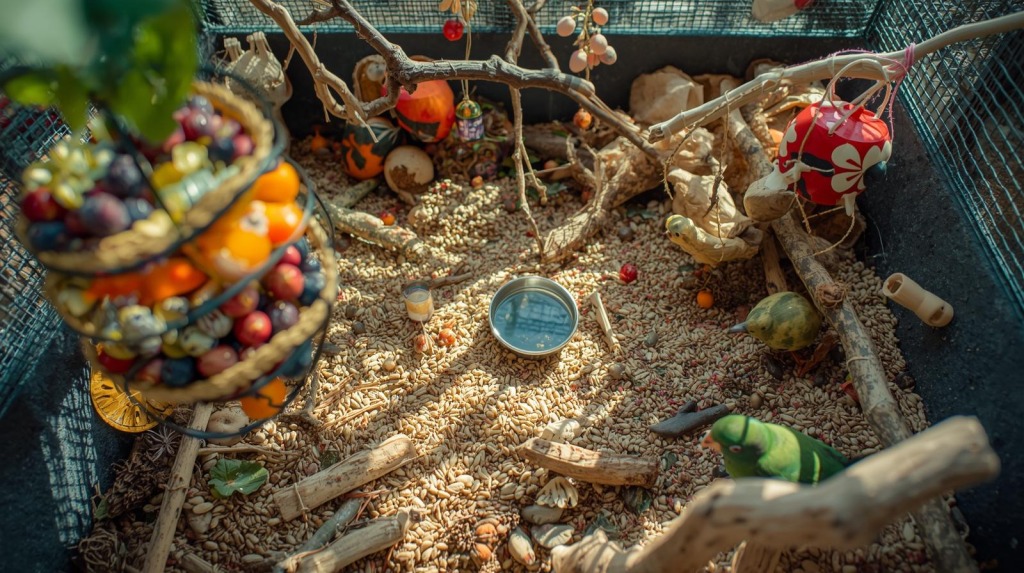
Perches are the most important structural feature inside a cage. They create pathways that allow birds to move naturally throughout their environment.
An effective bird cage setup includes multiple perches at different heights and distances.
Natural wood branches work especially well because they vary in thickness. This variety strengthens foot muscles and improves grip.
Place perches so birds must move between them rather than staying in one location.
Avoid placing all perches in a straight line. Instead, stagger them across the cage to encourage climbing and hopping.
Also leave open areas for wing stretching.
Proper perch placement creates a miniature landscape that encourages daily activity.
Using Different Perch Textures and Shapes
Variety is essential when choosing perches. Birds benefit from different textures that stimulate their feet.
For this reason, a thoughtful bird cage setup includes several perch types.
Natural branches provide excellent grip and promote healthy feet. Rope perches add flexibility and comfort.
Additionally, platform perches offer resting spots for certain bird species.
However, avoid using only smooth dowel rods. These uniform perches do not provide enough stimulation and may cause foot problems over time.
Rotating perch styles occasionally also helps maintain interest.
When birds encounter different surfaces, they naturally move around more while exploring their cage.
Creating Climbing Opportunities
Climbing plays a major role in bird exercise. Many species instinctively climb branches and vines in their natural habitat.
Therefore, climbing structures should be included in your bird cage setup.
Ladders are one of the simplest additions. They encourage birds to move vertically within the cage.
Rope nets and climbing ropes also work well.
Some birds enjoy hanging upside down while exploring these features.
Climbing structures stimulate both muscles and coordination.
Additionally, placing these items between perches encourages birds to travel through the cage.
These small changes transform the cage from a resting space into an active playground.
Incorporating Toys That Encourage Movement
Toys play a powerful role in promoting natural activity. However, toys should encourage interaction rather than simply decorate the cage.
A well-designed bird cage setup includes toys that stimulate movement and curiosity.
Examples include:
• Hanging chew toys
• Shreddable paper toys
• Puzzle toys with treats
• Swings or balance toys
• Foraging containers
These toys motivate birds to climb, reach, and manipulate objects.
Additionally, rotating toys every week keeps the environment fresh and exciting.
When toys remain unchanged for too long, birds may lose interest.
By changing enrichment items regularly, you encourage continuous exploration.
Leaving Space for Wing Movement
Although perches and toys are important, overcrowding the cage can limit movement.
A balanced bird cage setup leaves open space for wing stretching and hopping.
Birds need room to move freely between cage areas.
Avoid placing too many toys in one location. Instead, distribute them throughout the cage.
This layout encourages birds to travel between enrichment zones.
Open areas also allow birds to stretch their wings comfortably.
Wing movement helps maintain muscle strength and flexibility.
When cages remain spacious and uncluttered, birds naturally stay more active.
Adding Foraging Stations
Foraging encourages birds to search, investigate, and move around their environment.
In the wild, birds spend much of their day finding food.
Therefore, a natural bird cage setup includes opportunities to forage.
You can hide small treats inside toys or paper cups.
Another option involves scattering healthy food pieces across different cage locations.
Puzzle feeders also challenge birds to solve problems before accessing food.
These activities extend feeding time while encouraging exploration.
Foraging transforms routine meals into stimulating experiences that support both mental and physical activity.
Providing Access to Natural Light and Views
Birds are highly visual animals that respond strongly to their environment.
Natural light and outside views can enhance the effectiveness of your bird cage setup.
Placing the cage near a window allows birds to observe outdoor activity such as trees, people, and other animals.
This visual stimulation encourages curiosity and movement.
However, direct sunlight should be limited to prevent overheating.
Filtered natural light works best.
When birds can observe their surroundings safely, they remain mentally engaged and active.
Supporting Safe Out-of-Cage Activity
While cage design is important, birds also benefit from time outside their enclosure.
Out-of-cage play complements a well-designed bird cage setup.
Provide play stands, climbing gyms, or safe perches around the room.
These areas allow birds to stretch, explore, and interact with their environment.
Supervised activity strengthens muscles and improves coordination.
Additionally, regular out-of-cage time strengthens the bond between birds and their caregivers.
Combining cage enrichment with free exploration creates a balanced routine.
Maintaining a Clean and Comfortable Environment
Clean environments encourage birds to remain active and comfortable.
A hygienic bird cage setup supports both physical health and movement.
Remove food debris and droppings daily.
Additionally, wash perches and toys regularly.
Clean surfaces reduce the risk of bacteria or illness.
Fresh environments also keep birds curious and interested in their surroundings.
Comfortable temperatures and proper ventilation further support healthy activity levels.
When birds feel safe and comfortable, they naturally explore their cage more often.
Observing Your Bird’s Activity Patterns
Each bird has unique preferences and movement patterns.
Observing your bird helps you refine your bird cage setup for better activity.
Watch how your bird interacts with perches, toys, and climbing areas.
If certain areas remain unused, consider rearranging the layout.
Birds often respond positively to small environmental changes.
Rotating enrichment items also reveals which activities your bird enjoys most.
Over time, you can customize the cage to match your bird’s personality and behavior.
Conclusion
A thoughtful bird cage setup does far more than provide shelter. It creates an environment where birds can move, explore, and express natural behaviors every day.
By selecting the right cage size, arranging perches strategically, and adding enrichment tools, you can transform a basic cage into an active habitat.
Movement supports strong muscles, healthy circulation, and emotional well-being.
Furthermore, stimulating environments reduce boredom and behavioral problems.
When birds live in cages designed for activity, they remain curious, playful, and engaged.
With careful planning and regular adjustments, your bird’s home can become a dynamic space that supports lifelong health and happiness.
FAQ
1. What cage size is best for active pet birds?
Larger cages that provide horizontal space allow birds to move, climb, and stretch their wings comfortably.
2. How many perches should a bird cage have?
Most cages should include three to five perches of different sizes and textures to encourage natural movement.
3. Why are natural wood perches recommended?
Natural branches vary in thickness and texture, which helps strengthen foot muscles and prevent pressure sores.
4. How often should cage toys be changed?
Rotating toys weekly keeps the environment stimulating and prevents boredom.
5. Do birds still need exercise outside the cage?
Yes. Supervised out-of-cage time allows birds to fly, climb, and explore beyond their enclosure.