
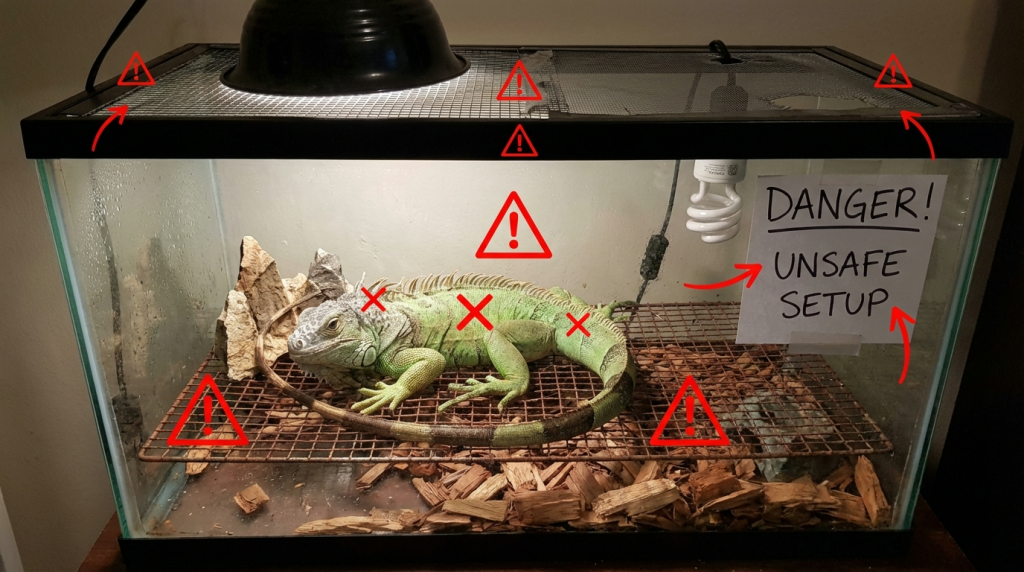

SEO Title (H1): Unsafe Reptile Cages: How Escapes Happen
Slug: unsafe-reptile-cages
Meta Description: Unsafe reptile cages raise escape risks. Learn the causes, warning signs, and simple steps to build secure enclosures and protect your pet.
Excerpt: Unsafe reptile cages are a leading cause of reptile escapes. When enclosure design fails, reptiles quickly find and exploit weak points.
Unsafe Reptile Cages: How Escapes Happen
Reptiles move quietly. They think patiently. And they test everything. When you house them in unsafe reptile cages, you increase the chances of an escape.
Many owners assume their enclosure looks secure. The lid sits flat. The doors close smoothly. The vents appear tight. However, reptiles do not judge by appearance. They rely on persistence.
Escapes rarely happen in a single dramatic moment. Instead, they develop gradually. A snake pushes against the lid each night. A gecko presses its snout into a corner seam. A lizard claws at a loose vent. Over time, pressure exposes weakness.
If you want to prevent panic and potential loss, you must understand how poor enclosure design leads to breakouts. Once you identify the risks, you can fix them confidently.
Why Poor Enclosure Design Leads to Escapes
Reptiles follow instinct. In nature, they constantly search for food, mates, shelter, and warmth. That drive continues in captivity.
When you place a reptile inside an enclosure, it explores every boundary. It pushes, climbs, burrows, and stretches. If weak points exist, they become targets.
Unlike dogs or cats, reptiles do not attack barriers loudly. Instead, they apply steady pressure. That repeated effort loosens clips. It shifts panels. It widens tiny gaps.
Additionally, many commercial tanks prioritize visibility and cost over security. Lightweight tops and basic sliding doors may look sturdy. In reality, they often fail under repeated stress.
Faulty housing creates opportunity. Reptiles simply take advantage of it.
Structural Flaws That Cause Reptile Escapes
To prevent breakouts, you must recognize common weaknesses. Several structural issues appear repeatedly in poorly built enclosures.
Loose or Unlocked Lids
Screen lids remain popular for snakes and small lizards. However, many rely only on weight to stay in place.
A determined snake can lift a lightweight lid easily. Even a narrow opening allows a slender body to slip through. Young snakes squeeze through surprisingly small gaps.
Without locking clips on every side, you leave the enclosure vulnerable.
Weak Door Systems
Sliding glass doors without locks create serious risk. Friction alone cannot hold back a strong reptile.
Large lizards push with force. Smaller reptiles wedge their noses between panels and pry outward. If the track shifts slightly, a gap forms quickly.
Reliable locking mechanisms prevent these issues.
Warped Frames and Expanding Materials
Humidity affects enclosure materials over time. Wood swells. Plastic bends. Seams shift.
When frames warp, tiny openings appear along edges and corners. You may not notice them immediately, but your reptile will.
Regular inspections stop minor distortion from turning into a serious problem.
Damaged Mesh and Vent Panels
Reptiles climb and scratch. Over time, mesh weakens and metal rusts. Plastic vents may crack under constant heat.
Once a vent loosens, reptiles focus on that area repeatedly. Eventually, they create an exit.
Gradual wear often causes enclosure failure, not sudden breakage.
Behavioral Triggers That Increase Escape Attempts
Structure matters. However, behavior plays an equally important role.
Breeding season increases activity. Males roam aggressively and test enclosure walls. If weak spots exist, seasonal restlessness exposes them quickly.
Temperature imbalance also drives escape attempts. Reptiles regulate body heat externally. If the habitat becomes too warm or too cool, they search for better conditions. They push harder when uncomfortable.
Hunger creates similar motivation. A reptile that smells food nearby may press repeatedly against glass or mesh. Over time, that pressure weakens materials.
Stress from loud environments or improper lighting also increases movement. Agitated reptiles explore more intensely.
When motivation rises, even minor flaws become serious vulnerabilities.
How Insecure Housing Endangers Your Home
An escape creates more than inconvenience. It introduces real risk.
Loose reptiles can dehydrate quickly, especially tropical species kept in dry homes. Stress rises within hours.
Escaped reptiles hide efficiently. They slip behind appliances, inside cabinets, or under furniture. Recovery becomes difficult and time-consuming.
Other pets may encounter the escaped animal. Curious cats or dogs can injure it. In some cases, both animals suffer harm.
Neighbors rarely react calmly to a loose snake. Even harmless species create fear.
Insecure housing puts your reptile and household at risk.
Upgrading from Unsafe Reptile Cages to Secure Enclosures
Prevention begins with thoughtful design.
Choose Durable Construction
High-quality PVC resists warping. Thick tempered glass withstands pressure. Reinforced frames maintain shape under humidity changes.
Although budget options seem attractive, durable materials provide long-term security.
Install Strong Locks
Every sliding door needs a dependable lock. Keyed locks or metal bolts work well. Avoid relying on friction tracks alone.
Secure screen lids with multiple locking clips. Add weight if necessary.
When you remove weak latches, you eliminate a major escape route.
Seal and Reinforce Weak Points
Inspect seams carefully. Use aquarium-safe silicone to close small gaps. Tighten hinges and hardware regularly.
Small preventative actions stop large problems later.
Secure enclosures discourage persistent testing. When reptiles cannot find weakness, they stop probing.
Maintenance Habits That Prevent Escapes
Even strong enclosures require consistent care.
Check latches weekly. Apply light pressure to doors and lids to test stability. Examine mesh for bending or rust.
Control humidity levels carefully. Excess moisture accelerates material wear.
Observe your reptile’s behavior. If it repeatedly pushes one area, investigate immediately. Persistent focus often signals discomfort or structural weakness.
Routine maintenance prevents minor flaws from becoming escape routes.
Species-Specific Escape Risks
Different reptiles challenge enclosures in unique ways.
Snakes exploit tiny openings. You must seal edges tightly.
Geckos climb vertical glass and cling to silicone seams. Secure corners and tops thoroughly.
Monitor lizards combine strength and intelligence. Heavy locks and reinforced panels remain essential for them.
Even hatchlings require strong housing. Their small size makes narrow gaps seem enormous.
Match enclosure strength to the species you keep. That simple step prevents countless problems.
What to Do After an Escape
Despite preparation, escapes sometimes occur. Act calmly and quickly.
Close interior doors to limit movement.
Search warm areas first. Reptiles often gravitate toward heat sources like water heaters or electronics.
Place familiar hides along walls to encourage the reptile to settle nearby.
After recovery, inspect the enclosure thoroughly. Identify the weak point and repair it before returning the animal.
Long-Term Benefits of Secure Housing
Secure enclosures change everything.
Reptiles behave calmly in stable environments. They bask confidently and feed consistently. Stress behaviors decrease significantly.
Owners also gain peace of mind. Instead of worrying about possible escapes, you focus on enrichment and proper care.
Children and other pets remain safe. Your investment in equipment and livestock stays protected.
Over time, upgrading unsafe reptile cages to reinforced enclosures proves invaluable.
Conclusion
Unsafe reptile cages remain one of the most common causes of reptile escapes. Weak lids, poor locks, warped frames, and neglected maintenance create openings that reptiles eventually test. However, when you choose durable materials, install strong locks, seal gaps, and inspect regularly, you eliminate those risks.
A reptile enclosure must function like a secure habitat, not a fragile container. When you remove structural weaknesses and respond to behavioral cues, you protect your reptile and your home. In the end, safety depends on preparation, vigilance, and a commitment to secure housing.
FAQ
1. What makes a reptile enclosure unsafe?
Loose lids, weak locks, warped frames, and damaged vents increase escape risk.
2. How small of a gap can a snake escape through?
Many snakes squeeze through gaps as small as their head width, especially juveniles.
3. How often should I inspect my enclosure?
Check latches, seams, and mesh weekly to prevent structural failure.
4. Are screen-top tanks safe for reptiles?
They can be safe if secured with locking clips and reinforced edges.
5. Does stress increase escape attempts?
Yes. Temperature imbalance, hunger, and breeding behavior often increase escape activity.