

Why fish jump is one of the most common and alarming questions aquarium owners ask. You walk into the room, hear a splash, and suddenly your peaceful tank feels like a danger zone. Although it may look random, fish rarely leap without a reason. In most cases, jumping is a response to stress, instinct, or environmental imbalance.
Fish live entirely within the conditions we create for them. Therefore, even small changes in water quality, space, or surroundings can trigger dramatic behavior. When you understand the true causes behind jumping, prevention becomes much easier. Instead of reacting to emergencies, you create a stable habitat where your fish feel secure.
Let’s explore what drives this behavior and how you can protect your aquatic pets long term.
Natural Instincts Behind Jumping Behavior
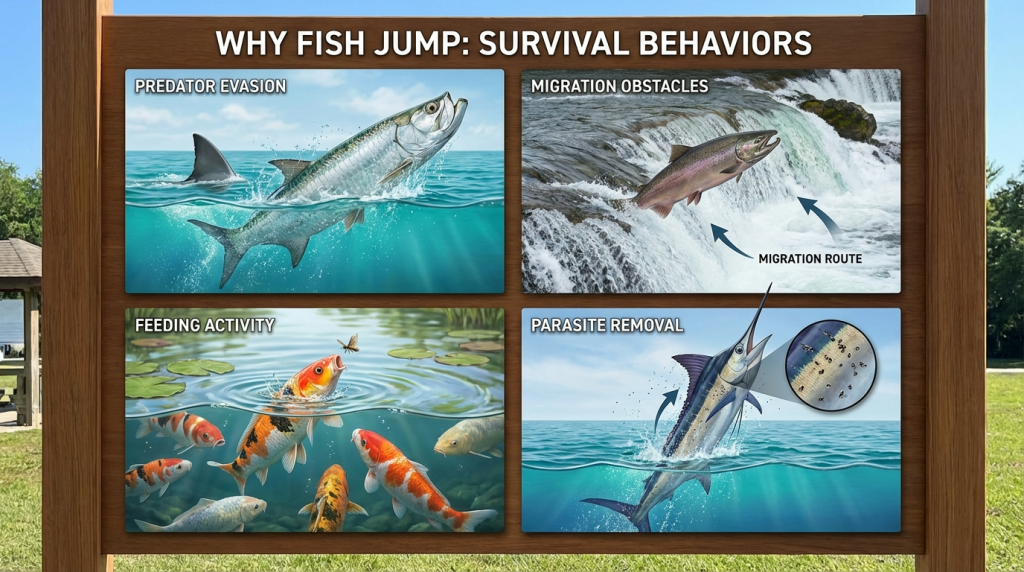
In the wild, leaping serves important survival purposes. Some fish jump to escape predators. Others leap to catch insects hovering above the surface. Certain migratory species even propel themselves upstream during seasonal movement.
These instincts do not disappear in captivity. Even in a safe aquarium, a fish’s nervous system still responds to perceived threats. A shadow passing overhead may resemble a predator. A sudden vibration might signal danger.
Surface-dwelling species are especially prone to this reflex. Bettas, hatchetfish, and killifish naturally explore the upper water column. If startled, they may launch upward instinctively.
Although instinct explains occasional leaps, repeated jumping often points to environmental stress rather than simple curiosity.
Water Quality Problems and Tank Stress
Poor water quality is one of the strongest triggers for erratic behavior. Fish breathe dissolved oxygen through delicate gill structures. When ammonia or nitrite levels rise, irritation occurs quickly.
Even small chemical imbalances can create discomfort. Fish may dart rapidly or swim frantically near the surface. In extreme cases, they leap as an escape response.
Temperature fluctuations also cause shock. A sudden heater malfunction or cold water addition during maintenance can unsettle the entire tank.
Regular water testing prevents many of these problems. Maintain stable pH, ammonia at zero, and low nitrate levels. Weekly partial water changes help maintain consistency.
When water conditions remain stable, fish rarely feel the need to flee.
Overcrowding and Limited Space
Aquarium size directly affects behavior. When too many fish share a small environment, tension builds. Territories overlap. Dominant individuals may chase weaker tank mates.
The chased fish sometimes react by darting upward. Jumping becomes a desperate attempt to escape harassment.
Additionally, limited swimming space reduces comfort. Active species need room to move freely. Without adequate space, stress increases gradually.
Research adult size and temperament before adding new fish. Proper stocking levels create harmony.
Reducing overcrowding often eliminates sudden leaps almost immediately.
Aggression and Social Conflict
Not all species coexist peacefully. Some fish are highly territorial. Cichlids, certain gouramis, and even bettas can display strong dominance.
When aggression persists, subordinate fish may hide constantly. If cornered, they may attempt to leap out.
Observe your tank closely. Torn fins, rapid chasing, and constant hiding are warning signs.
Adding visual barriers like plants or driftwood can reduce line-of-sight tension. In some cases, separation becomes necessary.
When social balance improves, jumping incidents typically decrease.
Startle Responses and Environmental Disturbance
Fish are sensitive to sudden movement and vibration. Loud noises, tapping on glass, or abrupt lighting changes can cause reflexive darting.
Children running near the tank or pets brushing against the stand may create enough vibration to trigger panic.
To reduce this risk, place the aquarium in a low-traffic area. Use timers for gradual light transitions instead of flipping switches suddenly.
Calm surroundings promote stable behavior.
Most accidental leaps occur during moments of surprise.
Oxygen Levels and Surface Activity
Low dissolved oxygen can create visible distress. Fish may hover near the surface, gulping air.
Although jumping does not solve oxygen deficiency, instinct drives fish toward open air during respiratory stress.
Warmer water holds less oxygen, which increases risk during hot weather.
Adding air stones or increasing filter surface agitation improves oxygen exchange.
Healthy aeration supports calm swimming patterns.
Breeding Activity and Energetic Displays
Seasonal behavior sometimes explains sudden leaps. During spawning, certain species become highly energetic.
Males may chase females vigorously. Rapid bursts of speed increase the chance of accidental jumps.
Outdoor pond fish, such as koi, often display intense activity during mating season.
If breeding behavior increases movement, installing protective netting or secure lids is essential.
Natural excitement does not eliminate the need for safety.
Tank Design and Preventive Measures
Open-top aquariums look elegant. However, they increase risk significantly.
Fish do not recognize the invisible boundary above the waterline. If startled, they may clear the rim easily.
Installing a secure lid or mesh cover is the most reliable preventive step.
Maintain a small gap between the water surface and the lid. This buffer reduces momentum during sudden darts.
Additionally, avoid filling the tank to maximum capacity. Lower water levels create extra safety margin.
Simple design adjustments prevent tragic accidents.
Stress as the Underlying Factor
While individual causes vary, stress connects many jumping events.
Stress accumulates from poor water conditions, bullying, inconsistent lighting, or rapid changes.
Fish exposed to chronic stress show increased cortisol levels. This hormonal response amplifies startle reflexes.
Creating stability reduces these triggers. Keep feeding schedules consistent. Avoid rearranging decorations frequently.
Introduce new fish gradually to prevent territorial disruption.
When the environment feels predictable, fish behavior stabilizes naturally.
Outdoor Ponds and Predator Pressure
Pond fish face different challenges. Birds, raccoons, and even neighborhood cats create real threats.
A sudden shadow overhead may trigger an instinctive leap.
Installing pond netting protects fish while still allowing sunlight and airflow.
Adding deeper sections within the pond provides refuge zones.
Floating plants also create cover and reduce perceived exposure.
Outdoor environments require layered protection.
What to Do After a Jump
If a fish lands outside the tank, act quickly.
Gently rinse debris with dechlorinated water. Return the fish immediately.
Monitor closely for injuries. Scales may appear damaged. Breathing may become labored.
Isolation in a hospital tank may be necessary if infection risk exists.
Stress from air exposure can weaken immunity.
Prompt response improves recovery odds significantly.
Long-Term Prevention Strategies
Consistency remains the strongest defense.
Test water weekly. Maintain proper filtration. Avoid sudden parameter shifts.
Provide adequate space and compatible tank mates.
Use secure lids at all times.
Observe behavior daily. Subtle changes often precede larger issues.
When fish feel secure, jumping becomes rare.
Prevention requires attention but not complexity.
Common Misconceptions About Jumping
Some believe leaping indicates happiness. In reality, it often signals discomfort.
Others assume fish learn not to jump after one incident. Unfortunately, instinct overrides memory in many cases.
Understanding true causes prevents misplaced assumptions.
Observation and proactive care make the difference.
Creating a Calm, Balanced Aquarium
A well-balanced tank functions like a small ecosystem. Stable chemistry, adequate oxygen, compatible species, and consistent routines create equilibrium.
Plants help stabilize water parameters and reduce stress.
Proper filtration removes toxins efficiently.
Gradual lighting cycles mimic natural sunrise and sunset.
When balance exists, erratic behavior fades.
Fish thrive in predictable environments.
Conclusion
Why fish jump is rarely a mystery once you examine the environment closely. Instinct, stress, poor water quality, aggression, and sudden disturbances all contribute to this dramatic behavior. However, most causes can be prevented with stable water conditions, proper tank size, reduced stress triggers, and secure lids. Fish depend entirely on the habitat you create. When that habitat feels safe and consistent, leaping becomes unnecessary. By focusing on balance and prevention, you protect your fish from injury and create a peaceful aquatic home.
FAQ
- Why do fish suddenly jump out of the tank?
Fish often jump due to stress, poor water quality, aggression, or sudden environmental changes. - Can healthy fish still jump occasionally?
Yes, natural instinct can cause occasional leaps, especially in surface-dwelling species. - Does low oxygen cause jumping behavior?
Low oxygen may push fish toward the surface and increase frantic movement, which can lead to jumping. - Is a lid necessary for all aquariums?
A secure lid is strongly recommended, especially for active or surface-oriented species. - How can I reduce stress in my aquarium?
Maintain stable water parameters, avoid overcrowding, minimize noise, and provide hiding spaces.