
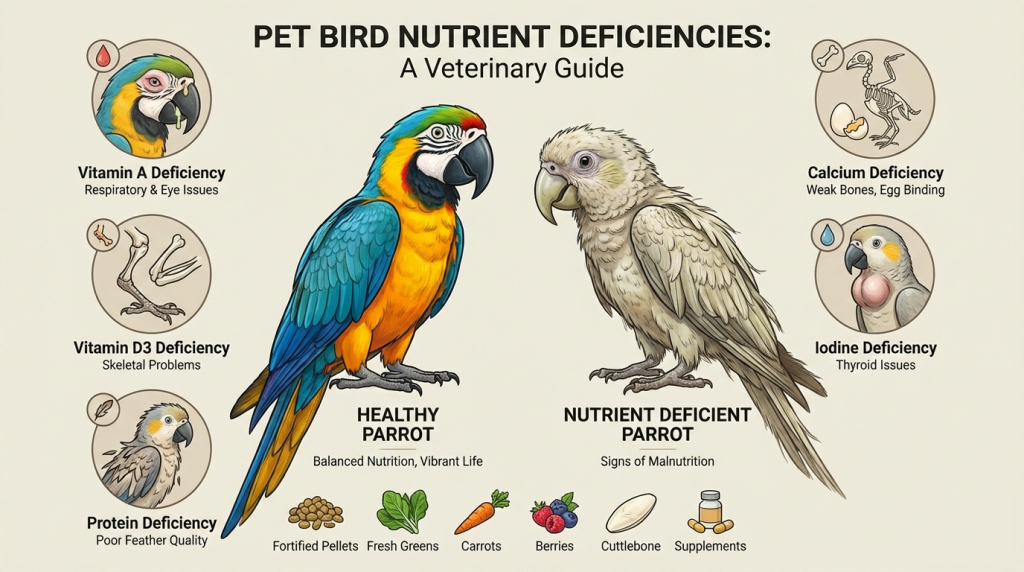

Nutrient deficiencies in pet birds are more common than many owners realize. A colorful cage and cheerful chirping may hide silent imbalances. On the surface, your bird might look fine. However, inside, small dietary gaps can slowly create serious health issues.
Birds have fast metabolisms. Their bodies work like tiny engines running at high speed. Therefore, even minor nutritional mistakes can have large consequences. Unlike cats or dogs, birds are sensitive to vitamin and mineral shortages. Because of this, understanding nutrient deficiencies in pet birds becomes essential for every owner.
If you have ever wondered why feathers lose shine or why energy drops unexpectedly, diet may be the hidden cause. Let’s explore how these deficiencies develop, how to spot them, and how to prevent them.
Why Nutrient Deficiencies in Pet Birds Are So Common
Many pet birds are fed seed-only diets. While seeds look natural, they are often incomplete nutritionally. In fact, seeds are high in fat and low in key vitamins.
In the wild, birds eat a varied diet. They consume fruits, greens, insects, and grains. However, captive birds often eat what is convenient.
Additionally, selective eating makes the problem worse. Birds tend to choose favorite seeds and ignore healthier options. As a result, nutrient deficiencies in pet birds can develop quietly over time.
Furthermore, improper storage of food reduces vitamin potency. Vitamins degrade when exposed to heat or light. Therefore, even fortified pellets can lose effectiveness if not stored correctly.
Because deficiencies build gradually, symptoms may be overlooked until they become severe.
Vitamin A Deficiency: A Leading Nutrient Deficiency in Pet Birds
Vitamin A deficiency is one of the most common nutrient deficiencies in pet birds. This vitamin supports vision, immune function, and skin health.
When levels drop, early signs may include dull feathers or flaky skin. Over time, respiratory infections become more frequent. The immune system weakens.
Additionally, small white plaques may form in the mouth. These plaques signal epithelial damage.
Seed-based diets are typically low in vitamin A. Without leafy greens or orange vegetables, intake remains insufficient.
To correct this deficiency, introduce carrots, sweet potatoes, and dark leafy greens gradually. Pelleted diets also provide balanced vitamin levels.
Because vitamin A is fat-soluble, excessive supplementation should be avoided. Balanced intake is key.
Calcium Imbalance and Nutrient Deficiencies in Pet Birds
Calcium plays a crucial role in bone health and egg production. However, calcium deficiency is another common problem.
Birds require proper calcium-to-phosphorus balance. When phosphorus levels exceed calcium, absorption declines.
Symptoms may include weak bones, tremors, or egg binding in females. In severe cases, seizures can occur.
Additionally, vitamin D3 is required for calcium absorption. Without adequate sunlight or UVB exposure, even calcium-rich diets may fail.
Therefore, ensure access to natural sunlight or full-spectrum lighting.
Cuttlebones and mineral blocks provide supplemental calcium. However, balanced pellets remain the most reliable source.
Iodine Deficiency and Thyroid Issues
Iodine deficiency is less discussed but equally important. It affects thyroid function.
When iodine levels drop, the thyroid gland enlarges. This condition is called goiter.
Signs include voice changes, breathing difficulty, or swelling near the throat.
Birds fed homemade diets without iodine supplementation are at risk.
Fortunately, commercial pellets typically include adequate iodine. However, variety in the diet still matters.
Monitoring changes in vocalization can provide early warning.
Protein Gaps and Feather Problems
Protein supports feather growth and muscle maintenance. While seeds contain some protein, quality varies.
Nutrient deficiencies in pet birds often involve inadequate amino acids. These building blocks are essential for healthy plumage.
When protein intake falls short, feathers may appear brittle or patchy. Molting may become irregular.
Moreover, muscle tone may decline subtly.
Introducing legumes, cooked quinoa, or high-quality pellets improves amino acid balance.
However, avoid excessive protein, as kidney strain can result. Moderation ensures stability.
Iron Storage and Nutrient Deficiencies in Pet Birds
Interestingly, not all deficiencies involve too little intake. Some species, such as toucans and mynahs, are sensitive to iron overload.
Iron storage disease develops when dietary iron exceeds safe levels.
Although this is not a deficiency, imbalance remains the core issue.
Therefore, species-specific dietary research becomes crucial.
Consulting an avian veterinarian ensures appropriate adjustments.
Omega Fatty Acids and Skin Health
Essential fatty acids support feather shine and skin hydration.
When omega levels are inadequate, dryness may appear. Feathers lose gloss.
Additionally, itching may increase. Birds may over-preen.
Seeds provide fat but often lack balanced omega ratios.
Adding small amounts of flaxseed or chia seeds can help. However, portion control matters.
Balanced pellets usually include stabilized fatty acids for consistency.
Behavioral Changes Linked to Nutrient Deficiencies in Pet Birds
Behavior often reflects internal health.
If your bird becomes lethargic or irritable, diet may play a role.
For example, B-vitamin deficiencies can affect nerve function. Subtle tremors or mood shifts may appear.
Similarly, magnesium shortages may influence muscle coordination.
Because behavioral signs are vague, they are frequently misinterpreted.
Observing gradual personality changes can provide early clues.
How to Prevent Nutrient Deficiencies in Pet Birds
Prevention is simpler than treatment.
First, transition to a high-quality pelleted diet. Pellets provide balanced nutrition.
Second, offer fresh vegetables daily. Rotate options to ensure variety.
Third, limit seeds to small portions or training treats.
Fourth, provide clean water and replace it daily.
Additionally, schedule annual avian veterinary exams. Blood work can detect early imbalances.
Small preventive steps protect long-term vitality.
Transitioning Diets Without Causing Stress
Birds resist change. Therefore, dietary shifts must be gradual.
Mix pellets with current food. Increase pellet ratio slowly over weeks.
Introduce vegetables in playful ways. Clip greens to cage bars. Offer chopped mixes.
Positive reinforcement encourages acceptance.
Sudden changes may cause refusal to eat. Patience ensures success.
The Role of Environment in Nutrient Absorption
Environment influences nutrient utilization.
Access to natural light supports vitamin D synthesis. Clean cages reduce infection risk.
Stress management also matters. Chronic stress impairs digestion and absorption.
Therefore, balanced care extends beyond the food bowl.
Monitoring for Early Signs of Nutrient Deficiencies in Pet Birds
Regular observation prevents escalation.
Check feather quality weekly. Monitor weight monthly.
Watch for changes in droppings. Notice shifts in activity.
Because birds hide illness instinctively, subtle signs matter most.
Early detection simplifies correction.
Common Myths About Nutrient Deficiencies in Pet Birds
Some owners believe seeds are sufficient because wild birds eat them. However, wild birds consume diverse seasonal diets.
Others assume supplements alone solve problems. Yet excessive supplementation can create toxicity.
Balanced nutrition remains the safest strategy.
Moderation and variety form the foundation.
Long-Term Health and Nutritional Balance
When nutrient deficiencies in pet birds are prevented, lifespan increases.
Energy improves. Feathers glow. Immune strength rises.
Balanced nutrition becomes an investment.
Think of diet as daily maintenance for a delicate machine. Consistent fuel quality determines long-term performance.
Your bird depends entirely on you for nourishment.
Conclusion
Nutrient deficiencies in pet birds develop quietly but can have serious consequences. Seed-heavy diets, poor variety, and environmental factors all contribute to imbalances. However, by offering balanced pellets, fresh vegetables, proper lighting, and regular veterinary care, you can prevent most deficiencies before they cause harm. Nutrition is not complicated, yet it requires intention. When you prioritize balanced feeding, your bird thrives with vibrant feathers, steady energy, and a stronger immune system for years to come.
FAQ
- What are the most common nutrient deficiencies in pet birds?
Vitamin A and calcium deficiencies are among the most common nutritional problems in captive birds. - Can a seed-only diet cause health problems?
Yes. Seed-only diets often lack essential vitamins and minerals, leading to imbalances over time. - How can I tell if my bird has a nutrient deficiency?
Signs may include dull feathers, lethargy, breathing issues, or changes in behavior. - Are vitamin supplements enough to fix deficiencies?
Supplements may help, but balanced pellets and fresh foods provide safer long-term nutrition. - How often should my bird see an avian vet?
Annual checkups are recommended to detect early signs of nutrient deficiencies in pet birds.