
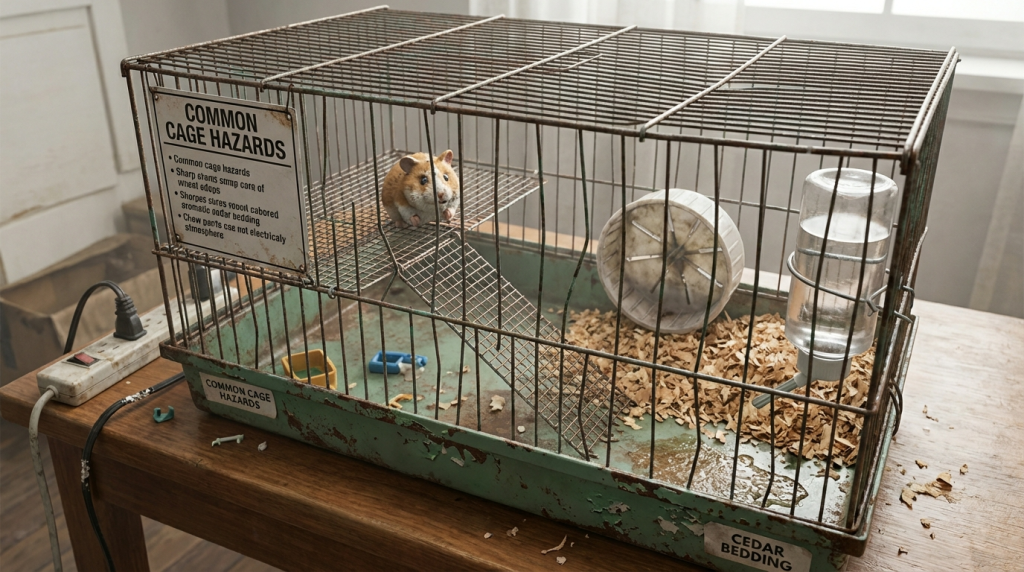

Small pet cage hazards are often hidden in plain sight. The enclosure may look clean. The bedding may look soft. The accessories may seem harmless. However, for a hamster, guinea pig, rabbit, or mouse, small details can become serious dangers.
Unlike larger pets, small animals live almost entirely inside their cages. That means every wire, corner, and accessory affects their daily safety. Because they chew, burrow, and squeeze into tight spaces, even minor flaws can lead to injury.
The good news is that most small pet cage hazards are easy to fix once you know what to look for. Let’s walk through the most common risks and how to correct them today.
Sharp Edges and Wire Flooring: Overlooked Small Pet Cage Hazards
One of the most common small pet cage hazards involves exposed wire or sharp metal edges.
Wire flooring may look convenient for cleaning, yet it can cause sore hocks, foot injuries, and long-term pain. Rabbits and guinea pigs are especially vulnerable. Their delicate feet are not designed for constant pressure on thin wires.
Additionally, poorly finished metal edges can scratch skin. Small pets often squeeze through narrow gaps. When they rub against rough metal, cuts can occur.
To fix this, cover wire floors with solid platforms or safe mats. Inspect cage corners carefully. If metal edges feel sharp to your hand, they are unsafe for your pet.
Smooth surfaces prevent unnecessary injuries.
Improper Bar Spacing and Escape Risks
Bar spacing matters more than many owners realize.
Small pet cage hazards frequently include gaps that are too wide. Hamsters, mice, and young rats can slip through surprisingly small openings.
Escapes expose pets to household dangers. Electrical cords, toxic plants, and larger pets become immediate threats.
Check manufacturer recommendations for species-specific bar spacing. If gaps appear questionable, upgrade the enclosure.
Secure doors firmly after cleaning or feeding.
A properly enclosed space protects curious explorers.
Unsafe Bedding Materials
Bedding plays a major role in comfort and health.
However, certain materials create small pet cage hazards. Cedar and pine shavings release aromatic oils that irritate respiratory systems.
Dusty bedding may cause sneezing and lung issues. Additionally, some soft materials marketed as nesting fluff can cause intestinal blockage if ingested.
Choose paper-based or aspen bedding labeled safe for small animals. Keep the cage clean and dry to prevent mold growth.
Safe bedding supports both comfort and breathing health.
Poor Ventilation and Ammonia Buildup
Air quality inside cages affects long-term health.
Small pet cage hazards often include insufficient airflow. Plastic enclosures with minimal ventilation trap ammonia from urine.
Over time, ammonia irritates eyes and lungs. Respiratory infections may develop.
Clean cages regularly. Ensure ventilation openings allow steady air exchange.
Never place cages in closed cabinets or tight corners without airflow.
Fresh air reduces invisible risks.
Unstable Accessories and Climbing Injuries
Hamsters and rats love to climb. Rabbits may hop onto platforms.
However, unstable accessories create small pet cage hazards. Loose ramps, unsecured shelves, or poorly attached water bottles may fall unexpectedly.
Injuries from falls can include sprains or fractures.
Test every accessory after installation. Shake platforms gently to ensure stability.
Replace cracked plastic parts immediately.
Secure setups prevent painful accidents.
Toxic Chew Toys and Materials
Chewing is natural behavior.
Yet some toys contain toxic dyes, glue, or soft plastics. When ingested, these materials may cause digestive problems.
Small pet cage hazards sometimes hide in colorful accessories.
Choose untreated wood toys and items labeled pet-safe.
Avoid painted or chemically treated materials.
Healthy chewing protects teeth without risking health.
Overcrowding and Limited Space
Space affects mental and physical health.
Small pet cage hazards include cramped living areas. When cages are too small, stress increases.
Hamsters require ample floor space for burrowing and exploration. Guinea pigs need room to run and stretch.
Overcrowding multiple animals in tight enclosures leads to fighting and stress.
Research minimum space guidelines carefully.
Upgrading cage size may be the most impactful safety improvement you make.
Improper Wheel Size and Exercise Equipment
Exercise wheels prevent boredom. However, incorrect sizing creates spinal strain.
Small pet cage hazards often include wheels that are too small. When pets arch their backs unnaturally, long-term injury may occur.
Choose wheels appropriate for your species and size.
Ensure the running surface is solid, not wire-based.
Proper exercise supports health without causing harm.
Water Bottle Leaks and Dehydration
Hydration is critical.
Leaking bottles may soak bedding, increasing humidity and mold risk. Conversely, clogged nozzles may prevent access to water.
Small pet cage hazards related to hydration often go unnoticed.
Test water bottles daily. Ensure smooth flow and secure attachment.
Clean nozzles regularly to prevent blockage.
Consistent water access prevents serious health problems.
Temperature and Sunlight Exposure
Cage placement affects temperature.
Direct sunlight may overheat small enclosures quickly. Small pet cage hazards include placing cages near windows without shade.
Overheating causes lethargy and heatstroke.
Additionally, drafts from air vents may chill sensitive animals.
Position cages in stable, climate-controlled areas.
Consistent temperature protects overall well-being.
Loose Latches and Door Security
Doors may appear closed while remaining unsecured.
Small pet cage hazards often involve worn latches or misaligned doors.
Rabbits and rats are intelligent. They may push weak doors open.
Inspect closures frequently.
Secure locking mechanisms prevent escapes and accidents.
Hidden Household Dangers Near Cages
Cages do not exist in isolation.
Electrical cords within reach invite chewing. Cleaning chemicals stored nearby create toxic exposure risk.
Small pet cage hazards extend beyond the enclosure itself.
Keep surrounding areas pet-proofed.
Safe placement reduces environmental threats.
Inadequate Cleaning Practices
Cleanliness affects health significantly.
Neglected cages accumulate bacteria. Damp bedding encourages mold.
Small pet cage hazards linked to hygiene often cause skin infections and respiratory issues.
Spot-clean daily. Perform full cage cleaning weekly.
Use pet-safe disinfectants only.
Balanced hygiene maintains a healthy habitat.
Ignoring Behavioral Warning Signs
Small pets communicate discomfort subtly.
Excessive hiding, lethargy, or repetitive pacing may indicate environmental stress.
Small pet cage hazards sometimes reveal themselves through behavior before physical injury occurs.
Observe your pet daily.
Adjust cage conditions promptly if changes appear.
Conclusion: Fix Small Pet Cage Hazards Before They Cause Harm
Small pet cage hazards are rarely dramatic at first. However, over time, small risks accumulate.
Sharp edges, poor ventilation, unsafe bedding, unstable accessories, and overcrowding all contribute to injury or stress.
Fortunately, most hazards are easy to correct today.
Inspect your pet’s enclosure carefully. Make necessary upgrades. Replace unsafe materials.
When the cage becomes a secure, clean, and spacious environment, your small pet thrives.
Safety is built through attention to detail.
Fix the hazards now. Protect your pet for years to come.
FAQs
- What is the most common small pet cage hazard?
Wire flooring and improper bar spacing are among the most frequent issues. - Is cedar bedding safe for small pets?
No, cedar bedding can cause respiratory irritation and should be avoided. - How often should I clean my small pet’s cage?
Spot-clean daily and perform a full cleaning at least once a week. - Can small cages cause stress?
Yes, limited space increases stress and may lead to behavioral problems. - How can I check if my cage is safe?
Inspect for sharp edges, stable accessories, secure doors, proper ventilation, and adequate space.