Special lighting for small pets is a topic that often sparks confusion. Walk into a pet store and you will see shelves lined with bulbs labeled full spectrum, UVB, daylight, and infrared. It is easy to assume every small animal needs advanced lighting. However, the truth depends on species, environment, and natural behavior.
Unlike reptiles, most small mammals do not rely on artificial UVB to survive. Still, light affects their circadian rhythm, mood, and activity patterns. Therefore, understanding whether special lighting for small pets is necessary requires looking beyond marketing claims.
Let’s explore which small pets benefit from specific lighting, which do not, and how you can create a balanced environment that supports long-term health.
Understanding Natural Light Cycles Before Adding Special Lighting for Small Pets
Every animal evolved under natural sunlight patterns. Daylight signals activity. Darkness signals rest. Even indoor pets respond to these cycles.
When considering special lighting for small pets, begin by evaluating natural light exposure in your home. Rooms with regular daylight often provide enough environmental cues.
However, window light filtered through glass blocks UVB rays. While that matters significantly for reptiles, it has less impact on most small mammals.
Still, consistent light and dark periods are essential. Disrupted lighting schedules may cause stress, lethargy, or behavioral changes.
Therefore, maintaining predictable day and night cycles matters more than brightness alone.
Do Hamsters Require Special Lighting?
Hamsters are nocturnal. They become active at night and rest during the day.
Because of this pattern, special lighting for small pets like hamsters is usually unnecessary. In fact, bright lighting may cause stress.
Providing dim ambient light during daytime hours is sufficient. At night, allow natural darkness.
Avoid placing hamster enclosures in direct sunlight. Overheating becomes a greater concern than light deficiency.
Stable temperature and quiet surroundings matter more than specialized bulbs for these tiny companions.
Guinea Pigs and the Role of Light
Guinea pigs are crepuscular. They are active at dawn and dusk.
While special lighting for small pets like guinea pigs is not mandatory, consistent daylight exposure supports routine.
Natural light from windows is often enough. However, direct sunlight should be avoided to prevent overheating.
Some owners use full-spectrum lighting to simulate daylight during darker winter months. While not essential, it may support mood and activity consistency.
However, always prioritize ventilation and temperature control.
Rabbits and Natural Lighting Needs
Rabbits rely heavily on circadian rhythm cues.
Because they are also crepuscular, stable lighting schedules support digestive health and sleep cycles.
Special lighting for small pets such as rabbits is rarely required. Still, rooms without windows may benefit from timed lighting that mimics sunrise and sunset patterns.
Avoid constant bright light. Rabbits need dim resting areas within their enclosure.
Balanced lighting encourages calm behavior.
Do Small Rodents Need UVB?
This question arises frequently.
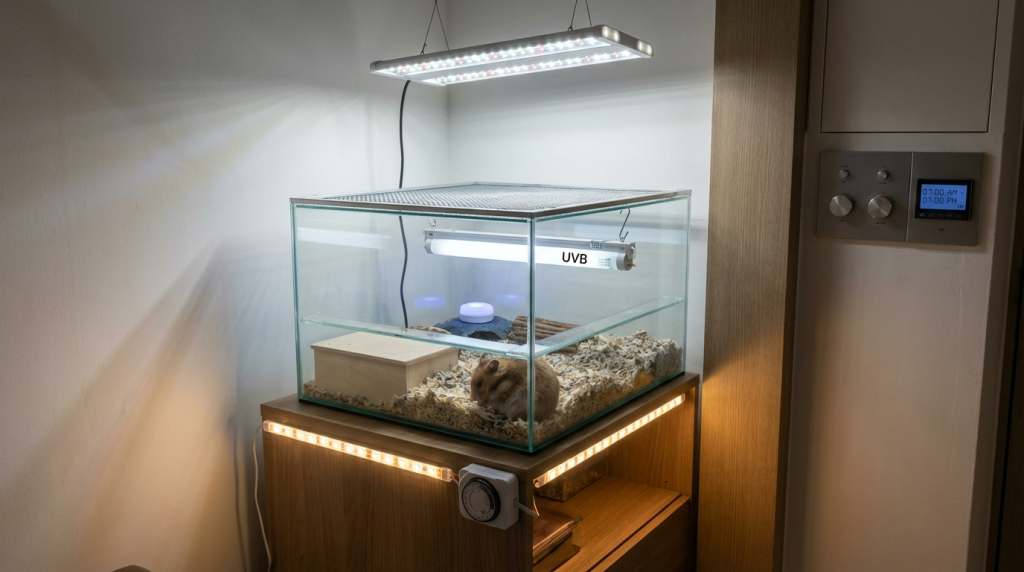
Unlike reptiles, most small mammals synthesize vitamin D through diet rather than UVB exposure. Therefore, special lighting for small pets such as mice, gerbils, and rats does not typically include UVB bulbs.
High-quality pellet diets usually contain sufficient vitamin D.
However, always confirm dietary adequacy with your veterinarian.
Adding UVB without necessity may cause eye irritation or stress.
Appropriate diet often eliminates the need for UV supplementation.
Chinchillas and Light Sensitivity
Chinchillas have sensitive eyes.
Bright lights may cause discomfort. Therefore, special lighting for small pets like chinchillas is generally discouraged.
Provide soft ambient light and dark hiding areas.
Chinchillas thrive in cool, stable environments rather than brightly illuminated ones.
Temperature control remains more critical than advanced lighting.
When Special Lighting for Small Pets May Be Helpful
Although many small mammals do not require UVB, certain conditions justify additional lighting support.
Seasonal Affective Disorder-like symptoms may appear in low-light environments. In such cases, full-spectrum bulbs used during daytime hours can simulate natural daylight.
Additionally, animals housed in windowless rooms benefit from timed lighting schedules.
Special lighting for small pets should support rhythm rather than overwhelm it.
Timers help maintain consistent cycles.
The Importance of Darkness
Darkness is as important as light.
Continuous illumination disrupts melatonin production. Sleep quality declines.
Therefore, even if you provide special lighting for small pets during the day, ensure complete darkness at night.
Avoid leaving televisions or room lights on near enclosures overnight.
Rest supports immune function and emotional balance.
Heat Lamps vs Lighting for Small Pets
Some owners confuse lighting with heating.
Unlike reptiles, small mammals rarely require heat lamps. In fact, heat lamps may cause dehydration or overheating.
Special lighting for small pets should never substitute proper temperature control methods.
Room temperature within species-specific ranges is usually sufficient.
Avoid heat-emitting bulbs unless directed by a veterinarian.
Enclosure Placement and Light Exposure
Location influences lighting needs.
Placing enclosures near windows provides natural cues. However, direct sun exposure may cause overheating.
Special lighting for small pets becomes unnecessary when natural daylight is adequate and temperature remains stable.
Position cages where indirect light enters safely.
Observe behavior to assess comfort levels.
Behavioral Signs of Improper Lighting
Light imbalance shows through behavior.
Excessive hiding, lethargy, or hyperactivity may indicate disrupted cycles.
If special lighting for small pets is used, monitor reactions carefully.
Adjust duration gradually rather than abruptly.
Behavioral feedback guides effective adjustments.
Timers and Consistency
Consistency reduces stress.
Using timers ensures predictable light cycles. Most small pets benefit from 10 to 12 hours of light daily.
Special lighting for small pets should follow a routine schedule.
Avoid irregular switching patterns.
Consistency mirrors natural sunrise and sunset.
Veterinary Guidance and Species Research
Not all small pets share identical needs.
Exotic species such as sugar gliders may have unique requirements.
Consult an exotic veterinarian before adding specialized bulbs.
Research prevents unnecessary equipment purchases.
Proper information protects both wallet and animal.
Balancing Light With Enrichment
Lighting alone does not determine health.
Enrichment, social interaction, diet, and space influence well-being significantly.
Special lighting for small pets supports rhythm, but enrichment drives stimulation.
Provide toys, tunnels, and varied textures.
Balanced care encompasses multiple factors.
Conclusion: Light With Intention, Not Assumption
Special lighting for small pets is not universally required. Most small mammals thrive under natural daylight cycles with consistent routines.
While full-spectrum bulbs may support animals in low-light homes, UVB lighting is rarely necessary for rodents and rabbits.
Focus first on temperature stability, diet, and enclosure design.
Light shapes rhythm, mood, and activity. However, too much or too little disrupts balance.
Use lighting thoughtfully. Maintain consistent day and night cycles.
When environment aligns with natural instincts, small pets remain calmer, healthier, and more active.
FAQs
- Do hamsters need special lighting?
No, hamsters usually thrive with normal room lighting and natural darkness at night. - Is UVB lighting necessary for guinea pigs?
Most guinea pigs receive adequate vitamin D through diet and do not require UVB lighting. - Can bright lights harm small pets?
Yes, excessive brightness can cause stress or eye irritation in sensitive species. - How many hours of light do small pets need?
Most benefit from 10 to 12 hours of consistent light daily with complete darkness at night. - Should I use a timer for pet lighting?
Yes, timers help maintain stable light cycles and reduce stress.