
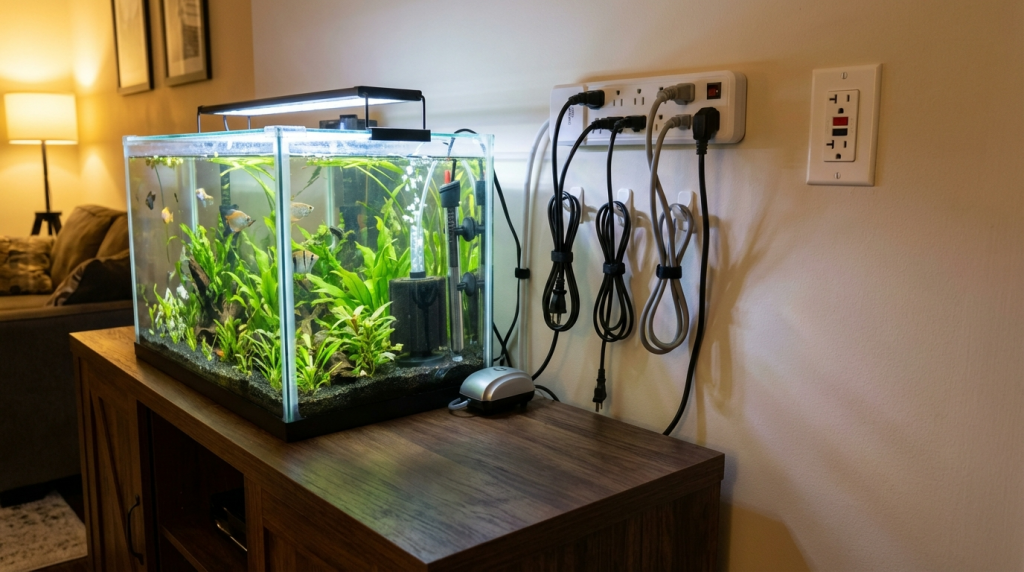

Aquarium electrical safety is often overlooked until something goes wrong. You plug in a heater, connect a filter, add lighting, and move on. After all, everything seems harmless. However, water and electricity share a dangerous relationship. When they mix carelessly, accidents happen fast.
Your aquarium depends on electrical equipment to function. Heaters regulate temperature. Filters keep water clean. Lights support plant growth and fish health. Yet every cord, outlet, and power strip carries risk if not managed properly.
Therefore, aquarium electrical safety is not optional. It is a responsibility. With the right setup and habits, you can prevent shocks, fires, and equipment failure. Let’s explore how to protect your tank, your fish, and your home.
Why Aquarium Electrical Safety Matters More Than You Think
Water conducts electricity. That simple fact explains why aquarium electrical safety deserves serious attention.
Even a small leak of current into the water can stress fish. In more severe cases, it can cause electrocution. Meanwhile, loose cords or overloaded outlets may spark fires.
Because aquariums run continuously, equipment stays powered day and night. This constant operation increases risk over time.
Additionally, saltwater tanks present higher conductivity than freshwater systems. Therefore, saltwater aquariums demand even stricter safety practices.
Taking preventive measures today protects against emergencies tomorrow.
Install GFCI Outlets for Aquarium Electrical Safety
One of the most important aquarium electrical safety steps involves installing a GFCI outlet.
A Ground Fault Circuit Interrupter cuts power instantly if electrical imbalance is detected. For example, if water contacts live wiring, the GFCI shuts off electricity within milliseconds.
This quick reaction prevents severe shock or fire.
If your aquarium is not connected to a GFCI outlet, consult an electrician. Portable GFCI adapters are also available for added protection.
Because accidents can happen unexpectedly, GFCI protection adds a crucial safety layer.
Create Drip Loops on Every Power Cord
A drip loop is simple yet powerful.
When setting up aquarium electrical safety measures, ensure each cord hangs below the outlet before rising back up to plug in. This loop allows water to drip off the lowest point instead of running into the socket.
Without a drip loop, spilled water may travel along the cord directly into the outlet.
This small adjustment reduces risk dramatically.
Check each cord regularly. Adjust positioning if needed.
Keep Power Strips Elevated and Dry
Power strips often sit near tanks. Unfortunately, they are vulnerable to splashes and spills.
Aquarium electrical safety requires mounting power strips above ground level. Use brackets or shelves to keep them away from water.
Additionally, avoid placing strips directly behind the tank where leaks may occur.
Moisture buildup increases corrosion and electrical failure risk.
Keep outlets dry at all times. If water contacts a strip, unplug it immediately and inspect for damage.
Avoid Overloading Circuits
Aquariums use multiple devices.
Heaters, filters, air pumps, lighting systems, and automatic feeders all require power. Therefore, aquarium electrical safety includes managing electrical load.
Do not overload a single outlet with too many high-wattage devices. Spread equipment across multiple outlets if possible.
Check the total wattage rating of your power strip. Exceeding capacity increases overheating risk.
Balanced distribution reduces strain on wiring.
Inspect Equipment Regularly
Electrical components degrade over time.
Heater cracks, worn insulation, and frayed cords create serious hazards. Aquarium electrical safety demands routine inspection.
Check cords monthly for wear or bite marks. Replace damaged equipment immediately.
Additionally, inspect heaters for cracks or condensation inside glass tubes.
Even small defects can cause electrical leakage into water.
Preventive replacement is safer than reactive repair.
Unplug Equipment Before Maintenance
Water changes and cleaning sessions increase exposure risk.
Before placing hands into the tank, unplug all electrical equipment. Aquarium electrical safety guidelines strongly recommend this practice.
Although modern devices are insulated, accidents happen.
Disconnecting power eliminates the chance of shock.
Once maintenance is complete and hands are dry, reconnect equipment carefully.
Safety routines protect both you and your fish.
Use Waterproof Equipment When Possible
Choose equipment designed specifically for aquarium use.
Waterproof heaters and sealed lighting systems reduce exposure risk.
Avoid using indoor extension cords not rated for damp environments.
Aquarium electrical safety improves when equipment meets safety certifications.
Look for UL or equivalent safety marks on products.
Investing in quality gear prevents future hazards.
Separate Water and Wiring Strategically
Organize cables neatly.
When wires cross behind the tank, tangling may occur. Tangled cords trap moisture and create confusion during emergencies.
Use cable ties or cord organizers to separate lines.
Additionally, label plugs clearly. In emergencies, you should know which device is which.
Orderly wiring supports effective aquarium electrical safety planning.
Protect Against Salt Creep in Marine Tanks
Saltwater tanks create unique challenges.
Salt creep forms when water evaporates, leaving salty residue on surfaces. This residue can build up around wiring.
Aquarium electrical safety in marine setups requires regular cleaning of salt deposits.
Wipe cords and nearby surfaces weekly. Prevent buildup before corrosion begins.
Salt accelerates electrical damage.
Proactive cleaning extends equipment lifespan.
Install Surge Protectors
Power surges damage equipment quickly.
Storms or grid fluctuations may send voltage spikes into your tank’s system.
Aquarium electrical safety improves significantly with surge protectors.
Surge protection shields sensitive devices like LED lighting and controllers.
Choose heavy-duty protectors rated for aquarium use.
While they do not prevent all damage, they reduce major risk.
Keep Children and Pets Away From Wiring
Curiosity increases danger.
Pets may chew cords. Children may pull plugs.
Secure wires behind cabinets or protective covers.
Aquarium electrical safety involves household awareness.
Ensure cords remain inaccessible to playful paws or hands.
Backup Systems and Power Failure Planning
Power outages can occur unexpectedly.
Battery backups for air pumps maintain oxygen during outages. Additionally, backup generators may support larger systems.
Although backup power focuses on fish survival, it also protects electrical components from abrupt shutdown damage.
Planning ahead reduces panic during emergencies.
Know the Warning Signs of Electrical Problems
Stray voltage may stress fish.
If fish behave erratically, hide excessively, or show signs of shock, investigate equipment immediately.
Additionally, frequent tripped breakers signal underlying issues.
Aquarium electrical safety requires swift response to warning signs.
When in doubt, consult a licensed electrician.
Maintain Dry Hands and Safe Conditions
Simple habits matter.
Always dry hands completely before touching outlets or switches.
Avoid standing on wet floors during maintenance.
Use rubber-soled shoes if working near water.
These small precautions reinforce broader aquarium electrical safety strategies.
Long-Term Benefits of Electrical Safety Awareness
Safe electrical practices prevent tragedy.
Beyond protecting fish, you safeguard your home and family.
Fires caused by electrical faults are devastating yet preventable.
Consistent maintenance and thoughtful setup dramatically reduce risk.
Electrical safety is an ongoing commitment, not a one-time task.
Conclusion: Protect Your Tank and Your Home
Aquarium electrical safety is essential because water and electricity coexist closely in every tank.
Installing GFCI outlets, creating drip loops, inspecting equipment, and avoiding overloaded circuits form the foundation of safe setup.
Additionally, routine maintenance and organized wiring prevent long-term hazards.
When safety becomes routine, risk decreases significantly.
Your aquarium should be a source of calm beauty, not danger.
Take proactive steps today. Protect your fish, your equipment, and your home with proper electrical safety practices.
FAQs
- Do I really need a GFCI outlet for my aquarium?
Yes, a GFCI outlet significantly reduces shock risk by shutting off power during faults. - What is a drip loop in aquarium electrical safety?
A drip loop is a downward curve in the cord that prevents water from entering the outlet. - Can I use regular extension cords for my tank?
Only if they are rated for damp environments and heavy electrical loads. - How often should I inspect aquarium equipment?
Monthly inspections help detect frayed cords, cracks, or corrosion early. - What should I do if I suspect stray voltage in my tank?
Unplug equipment immediately and consult a professional before reconnecting devices.