
Small pet diet mistakes are more common than most owners realize. You may believe you are feeding your hamster, rabbit, guinea pig, or bird correctly. However, tiny errors repeated daily can slowly chip away at health.
Because small pets have fast metabolisms and delicate systems, nutrition matters deeply. Unlike larger animals, they cannot tolerate long-term imbalance. A few months of improper feeding can equal years of strain in their small bodies.
The good news is simple. Most small pet diet mistakes are easy to fix once you understand them. So let’s uncover the habits that shorten lifespan and replace them with smarter choices.
Why Small Pet Diet Mistakes Are So Dangerous
Small animals burn energy quickly. Their hearts beat fast. Their organs work hard relative to their size. Therefore, nutritional errors show consequences sooner than you might expect.
When small pet diet mistakes occur, deficiencies develop quietly. Weight loss or weight gain may appear gradually. Fur quality may decline. Activity levels may drop.
Because many small pets hide illness instinctively, problems are often advanced before they are noticed.
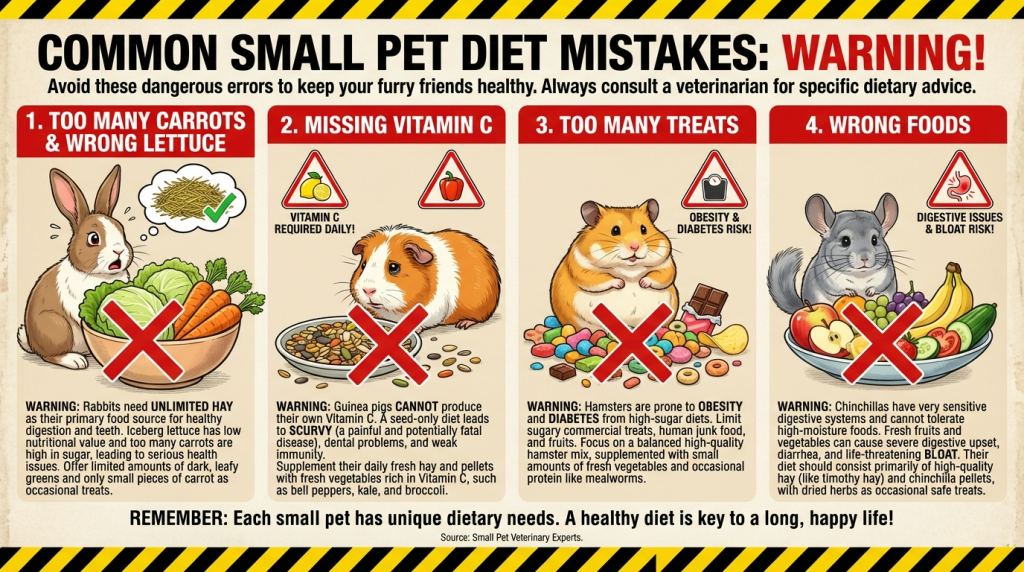
For example, a rabbit fed too many pellets may develop digestive imbalance. A hamster given sugary treats regularly may become obese. These issues accumulate over time.
Nutrition builds the body daily. However, poor nutrition dismantles it just as steadily.
Feeding Only One Type of Food
One of the most common small pet diet mistakes is relying on a single food source.
Many owners assume that commercial pellets alone are complete. While pellets can provide balanced nutrients, they rarely meet all enrichment and fiber needs.
Rabbits and guinea pigs require unlimited hay. Without it, dental overgrowth and gut stasis can occur. Similarly, birds fed only seed mixes often suffer vitamin deficiencies.
Variety supports vitality. When small pet diet mistakes remove diversity, digestive systems suffer.
Therefore, combine pellets with species-appropriate fresh foods and fiber sources.
Too Many Treats and Sugary Snacks
Treats are given with love. However, love must be measured.
Sugary fruits, yogurt drops, and processed snacks often seem harmless. Yet small pet diet mistakes involving treats can lead to obesity quickly.
Hamsters and gerbils are especially prone to weight gain. Excess sugar also disrupts gut bacteria in rabbits and guinea pigs.
Think of treats like dessert for humans. Occasional indulgence is fine. Daily excess is harmful.
Limit treats to small portions once or twice per week. Focus instead on healthy enrichment foods like fresh herbs or safe vegetables.
Ignoring Fiber Requirements
Fiber is the backbone of many small pet diets.
Rabbits and guinea pigs rely on constant fiber intake to keep their digestive systems moving. Without enough roughage, life-threatening conditions can develop.
One of the most serious small pet diet mistakes is reducing hay availability. Hay should be offered unlimited and refreshed daily.
Additionally, fiber supports dental wear. Teeth in rodents and rabbits grow continuously. Chewing fibrous material keeps growth controlled.
Without fiber, teeth may overgrow painfully. Eating then becomes difficult.
A simple pile of fresh hay can prevent complex medical emergencies.
Improper Portion Sizes
Overfeeding is common, yet underfeeding can also occur.
Because small pets are tiny, owners may guess portions incorrectly. Bowls are filled generously “just in case.” However, excess pellets encourage selective eating.
Small pet diet mistakes involving portion control often lead to imbalanced intake. Pets may eat only high-fat seeds or preferred bits.
Measure pellets carefully according to species and weight. Remove empty hulls daily so food levels can be monitored accurately.
Consistency prevents silent overconsumption.
Lack of Fresh Vegetables
Fresh vegetables provide vitamins, hydration, and enrichment.
When small pet diet mistakes eliminate greens entirely, deficiencies may develop. Vitamin C deficiency is common in guinea pigs lacking fresh produce.
Dark leafy greens such as romaine, cilantro, and parsley support immune health. However, vegetables should be introduced gradually.
Wash produce thoroughly. Offer small amounts daily rather than large portions sporadically.
Balance is key. Too many watery vegetables may cause digestive upset.
Feeding Unsafe Foods
Some foods are simply dangerous.
Chocolate, avocado, onions, and processed human snacks should never be offered. Yet small pet diet mistakes sometimes happen due to misinformation.
For example, iceberg lettuce lacks nutrients and may cause diarrhea in some animals. Bread offers little value and disrupts digestion.
Research is essential before introducing new foods. When uncertain, consult a veterinarian familiar with exotic pets.
A single inappropriate snack can cause lasting harm in a small body.
Poor Water Management
Water is often overlooked in diet discussions. However, hydration supports every organ system.
Dirty water bottles can harbor bacteria. Bowls can become contaminated with bedding or droppings.
Small pet diet mistakes sometimes involve neglecting daily water changes. Even minor dehydration affects kidney function and digestion.
Refresh water daily. Clean containers thoroughly. Observe drinking behavior for changes.
Proper hydration enhances nutrient absorption and overall vitality.
Not Adjusting Diet by Life Stage
Young animals need different nutrition than seniors.
Growing rabbits require more protein and calories. Pregnant females need extra calcium. Aging pets may require lower calorie intake.
Small pet diet mistakes often occur when diets remain unchanged across life stages.
Monitor weight and behavior. Adjust feeding plans as activity levels shift.
Just as human diets evolve over time, so should your pet’s.
Overreliance on Seed Mixes
Seed mixes may appear colorful and appealing. However, many contain high-fat components.
Birds often pick favorite seeds and ignore the rest. This selective feeding leads to nutrient imbalance.
Small pet diet mistakes involving seed-only diets are common in finches and parakeets. Vitamin A deficiency may develop.
Incorporate pellets and fresh produce to create balance.
Seeds can remain part of the diet, yet they should not dominate it.
Ignoring Species-Specific Needs
Not all small pets eat the same way.
A rabbit’s digestive system differs greatly from a hamster’s. Guinea pigs cannot produce their own vitamin C. Birds require varied textures and foraging opportunities.
Small pet diet mistakes often happen when one feeding strategy is applied universally.
Research species-specific needs carefully. Tailor the diet accordingly.
Individualization supports longevity.
Sudden Dietary Changes
Abrupt changes can shock the digestive system.
If new pellets are introduced too quickly, refusal or diarrhea may occur. Similarly, sudden vegetable additions can disrupt gut bacteria.
Small pet diet mistakes involving rapid change often lead to unnecessary stress.
Transition slowly over one to two weeks. Mix old and new foods gradually.
Patience protects digestive stability.
Neglecting Dental Health Through Diet
Many small pets rely on chewing to maintain dental health.
Without appropriate chew materials and fibrous foods, teeth may overgrow.
Small pet diet mistakes that limit chewing opportunities increase the risk of dental disease.
Provide hay, safe wood chews, and appropriate gnawing toys.
Healthy teeth support proper eating. Proper eating supports overall health.
Failing to Monitor Weight Regularly
Weight fluctuations can signal dietary imbalance.
Small pet diet mistakes may go unnoticed without regular weighing. A small loss may appear insignificant, yet it can indicate illness.
Weigh your pet weekly using a kitchen scale. Record changes.
Early detection allows quick correction.
Emotional Feeding Habits
Sometimes food is used to bond.
Offering extra treats feels rewarding. However, emotional feeding often leads to small pet diet mistakes.
Instead, bond through interaction, grooming, or enrichment.
Food should nourish first and entertain second.
Conclusion: Smart Feeding Extends Life
Small pet diet mistakes are rarely intentional. Most owners act with love. However, love must be informed.
By providing fiber, balanced pellets, fresh vegetables, and clean water, you build a foundation for health clean water, you build a foundation for health. Avoiding excess treats and unsafe foods prevents long-term damage.
Small bodies depend on precise nutrition. Every meal matters.
Correct small pet diet mistakes early. In doing so, you give your companion more energy, more comfort, and more time by your side.
FAQs
- What are the most common small pet diet mistakes?
Overfeeding pellets, offering too many treats, and failing to provide enough fiber are among the most common errors. - Can small pet diet mistakes really shorten lifespan?
Yes, long-term nutritional imbalance can lead to obesity, organ strain, and digestive disorders. - How often should small pets receive fresh vegetables?
Most herbivorous small pets benefit from small daily portions of safe leafy greens. - Are commercial pellets enough for small pets?
Pellets are important but should be combined with hay, fresh produce, and species-specific supplements. - How can I prevent small pet diet mistakes?
Research your pet’s dietary needs, measure portions carefully, provide variety, and monitor weight regularly.