
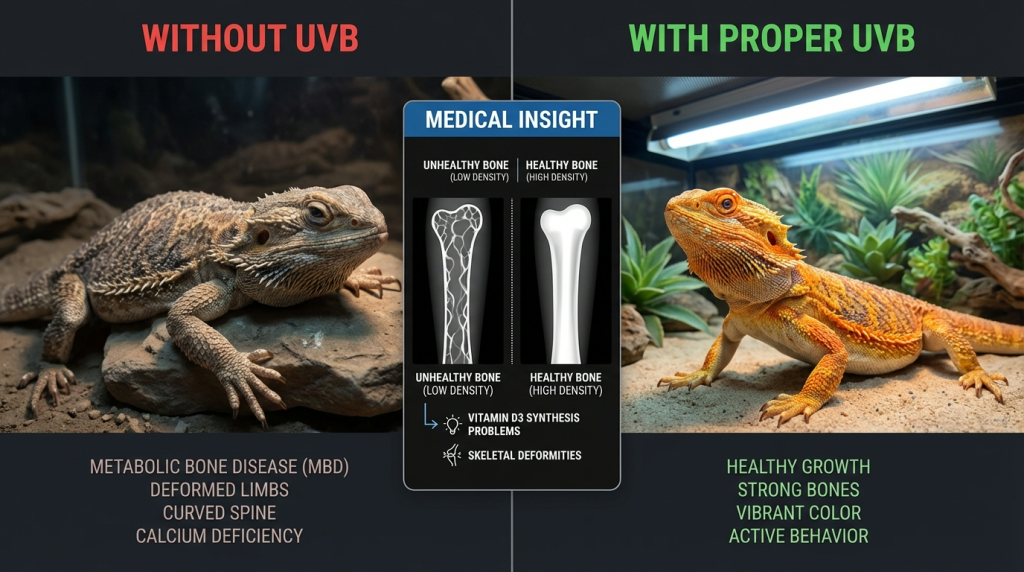

Missing UVB lighting is one of the most dangerous yet overlooked problems in reptile care. At first glance, your reptile may look fine. It may eat. It may move. However, beneath the surface, serious damage can begin quietly.
Unlike mammals, reptiles depend heavily on external light sources to regulate vital processes. UVB light is not decoration. It is not optional. It acts like invisible nutrition delivered through light.
When UVB exposure is removed or insufficient, the consequences can be severe. Bones weaken. Muscles tremble. Immunity declines. In many cases, these issues develop slowly. Therefore, by the time symptoms appear, damage has already progressed.
Let’s explore why missing UVB lighting is so harmful and how you can prevent long-term complications.
Why UVB Lighting Is Essential for Reptiles
To understand the risks of missing UVB lighting, you must first understand what UVB does.
UVB radiation enables reptiles to synthesize vitamin D3. That vitamin allows calcium to be absorbed properly from food. Without it, calcium passes through the body unused.
Think of UVB as the key that unlocks calcium absorption. Without the key, the door remains closed.
In the wild, reptiles bask under the sun. Sunlight provides natural UVB rays. However, in captivity, sunlight is filtered through glass. That glass blocks UVB almost entirely.
Therefore, artificial UVB lighting must be provided. Without it, the body’s calcium system collapses slowly but steadily.
Missing UVB Lighting and Metabolic Bone Disease
One of the most common consequences of missing UVB lighting is metabolic bone disease, often called MBD.
MBD develops when calcium levels fall. Bones become soft. Jaws weaken. Limbs may bend unnaturally. In severe cases, fractures occur easily.
Young reptiles are especially vulnerable. Their bones are still developing. Therefore, missing UVB lighting during growth can cause permanent deformities.
Additionally, muscle tremors may appear. This happens because calcium supports muscle function as well.
MBD is preventable. However, once advanced, it is difficult to reverse fully.
How Missing UVB Lighting Weakens Immunity
Calcium is not only for bones. It supports many biological systems, including immune function.
When missing UVB lighting prevents proper vitamin D3 production, immune strength declines. As a result, reptiles may become more prone to infections.
Respiratory illnesses may occur more often. Minor wounds may heal slowly. Parasites may take hold more easily.
Because reptiles often hide illness, weakened immunity may go unnoticed until conditions worsen.
Therefore, UVB exposure is not merely about skeletal health. It strengthens the entire system.
Behavioral Changes Linked to Missing UVB Lighting
Behavior often reveals environmental problems.
A reptile exposed to missing UVB lighting may become lethargic. Appetite may decrease. Basking behavior may intensify in search of warmth, even though warmth alone cannot replace UVB.
Additionally, stress levels may increase. Chronic stress weakens overall health.
In breeding species, reproductive cycles may be disrupted. Eggs may develop improperly due to calcium imbalance.
When UVB lighting is correct, behavior stabilizes. Energy returns. Natural activity patterns reappear.
The Silent Nature of UVB Deficiency
One of the most dangerous aspects of missing UVB lighting is how silent it can be.
Early deficiency rarely shows dramatic signs. A reptile may appear normal for weeks or months. Meanwhile, calcium reserves are being depleted slowly.
By the time visible symptoms appear, bone density may already be compromised.
This delayed effect makes prevention crucial. Regular replacement of UVB bulbs is necessary, even if they still produce visible light.
Because UVB output weakens over time, bulbs must be changed according to manufacturer guidelines.
Choosing the Right UVB Setup
Preventing missing UVB lighting begins with proper equipment.
Not all bulbs are equal. Compact bulbs may work for small enclosures. However, linear fluorescent tubes often provide more even coverage.
Additionally, UVB strength should match the species. Desert reptiles require stronger output than tropical species.
Positioning also matters. UVB bulbs must not be blocked by glass or thick plastic. Mesh lids can reduce intensity slightly, so placement distance must be adjusted.
Furthermore, reptiles must be able to move between UVB exposure and shaded areas. This setup mimics natural conditions.
Distance and Duration of UVB Exposure
Proper distance is essential.
If the bulb is too far, UVB intensity drops. If too close, overexposure may occur.
Most UVB bulbs have recommended distances listed on packaging. These guidelines should be followed carefully.
In addition, UVB lighting should run 10 to 12 hours daily. Timers help maintain consistency.
Because reptiles rely on routine, stable light cycles support hormonal balance and behavior.
Missing UVB Lighting in Nocturnal Species
Some owners assume nocturnal reptiles do not need UVB.
While nocturnal species like leopard geckos are less dependent on strong UVB, low-level exposure still benefits many of them.
Research suggests that even crepuscular reptiles may utilize small amounts of UVB for health.
Therefore, complete removal of UVB lighting can still pose risks.
Species research is essential. Blanket assumptions often lead to missing UVB lighting mistakes.
UVB and Calcium Supplementation
Calcium supplements are often used in reptile care. However, supplements alone cannot compensate for missing UVB lighting.
Without vitamin D3 activation through UVB exposure, supplemented calcium may not be absorbed efficiently.
Some supplements contain D3. While helpful, they should not replace proper lighting.
Natural synthesis through UVB is more balanced and less likely to cause overdose.
Therefore, lighting and supplementation must work together.
Common Mistakes That Lead to Missing UVB Lighting
Many reptile keepers make unintentional errors.
One mistake is assuming sunlight through a window is enough. It is not. Glass filters out most UVB radiation.
Another mistake is failing to replace bulbs regularly. Although visible light remains, UVB output declines after several months.
Improper fixture placement is also common. Bulbs mounted too high reduce effectiveness significantly.
Finally, enclosure design may block exposure. Dense décor can prevent basking access.
Each of these mistakes contributes to missing UVB lighting, even when bulbs are present.
Long-Term Consequences of Chronic UVB Deficiency
Chronic missing UVB lighting can shorten lifespan.
Bone density loss may become irreversible. Organ strain may develop due to prolonged imbalance.
Additionally, chronic weakness increases vulnerability to injury.
Reproductive failure may occur in breeding adults. Egg binding risk rises in females lacking calcium.
These outcomes are heartbreaking because they are preventable.
Proper lighting, when maintained consistently, protects against most of these issues.
Monitoring UVB Effectiveness
Technology can help.
UVB meters measure output accurately. While not required for beginners, they provide valuable insight.
Observing your reptile is equally important. Strong appetite, active basking, and firm body structure signal adequate conditions.
Regular veterinary checkups also help detect early deficiencies.
Because missing UVB lighting is often invisible, proactive monitoring matters greatly.
Creating a Balanced Light Environment
UVB should work alongside heat and visible light.
Basking bulbs provide warmth. UVB bulbs support calcium metabolism. Together, they create a functional basking zone.
Additionally, reptiles need shaded retreats. Constant exposure without escape causes stress.
Balance is essential. Therefore, your enclosure should offer choice.
When heat, light, and shade are aligned properly, your reptile can self-regulate effectively.
Conclusion: Light Is Life
Missing UVB lighting is not a minor oversight. It is a serious health risk that can quietly damage your reptile’s bones, immunity, and longevity.
UVB enables vitamin D3 production. That process supports calcium absorption. Calcium supports muscles, organs, and skeletal integrity.
Without proper exposure, systems weaken slowly. Symptoms may not appear immediately, yet harm accumulates.
However, with correct bulb selection, proper placement, and consistent maintenance, these dangers are easily avoided.
Light fuels life. Provide it wisely, and your reptile will thrive for years to come.
FAQs
- What happens if reptiles experience missing UVB lighting?
They may develop metabolic bone disease, weakened immunity, and long-term health complications. - Can reptiles survive without UVB lighting?
Some may survive temporarily, but chronic deficiency often leads to serious medical issues. - How often should UVB bulbs be replaced?
Most UVB bulbs should be replaced every 6 to 12 months, depending on manufacturer recommendations. - Is sunlight through a window enough UVB for reptiles?
No, glass blocks most UVB radiation, so artificial UVB lighting is required. - Do all reptiles need UVB lighting?
Most reptiles benefit from UVB exposure, though the strength and duration vary by species.