
If you want bright feathers, lively songs, and active birds, you must learn how to feed finches and canaries correctly. Food is not just fuel. It is the engine behind their color, energy, immunity, and lifespan.
Many bird owners assume a simple seed mix is enough. However, that assumption often leads to hidden deficiencies. While seeds are important, they are only one piece of a larger nutritional puzzle.
So what does peak health really require? Let’s break it down step by step, so you can confidently feed finches and canaries in a way that supports long-term vitality.
Why Proper Nutrition Matters When You Feed Finches and Canaries
Finches and canaries may be small, yet their metabolisms run fast. Their hearts beat rapidly. Their bodies burn energy quickly. Therefore, they need nutrient-dense meals daily.
When you feed finches and canaries a balanced diet, you support:
- Strong immune systems
- Healthy molting cycles
- Vibrant feather color
- Clear, consistent singing
- Stable body weight
On the other hand, poor nutrition often leads to dull feathers and low activity. In some cases, breeding may be affected. Additionally, vitamin deficiencies can weaken bones and compromise organ health.
Because these birds hide illness well, diet becomes your first line of defense.
Understanding the Natural Diet of Finches and Canaries
To feed finches and canaries properly, it helps to think about nature first.
In the wild, finches eat a variety of grass seeds, greens, small insects, and plant matter. Similarly, canaries forage for seeds, leafy vegetation, and occasional protein sources.
Notice the keyword: variety.
Wild birds do not eat the same bowl of dry seed every day. Instead, they consume diverse foods that shift with the seasons. Therefore, your feeding routine should reflect that diversity.
Imagine eating only one cereal your entire life. Even if you liked it, your body would miss critical nutrients. The same principle applies when you feed finches and canaries.
Seeds: The Foundation but Not the Full Story
Seeds are often seen as the primary food when people feed finches and canaries. While seeds are important, they must be high quality and properly balanced.
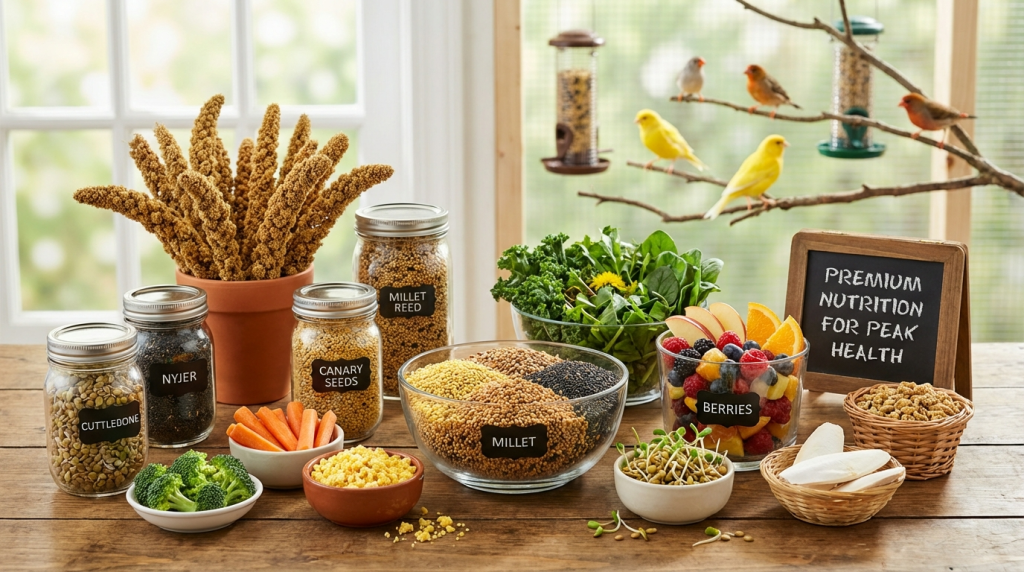
Common seeds include:
- Canary grass seed
- White millet
- Red millet
- Niger seed
- Oats
However, seeds contain high fat and limited vitamins. Therefore, relying solely on seeds can lead to obesity and deficiencies.
A good seed mix should be fresh, clean, and free from dust or mold. Rotate stock regularly. Additionally, store seed in airtight containers to maintain quality.
Although seeds provide energy, they should not be the only item in the cage.
Pellets: A Smart Addition When You Feed Finches and Canaries
Pellets offer balanced nutrition in every bite. Unlike selective seed eating, pellets prevent birds from picking only their favorite seeds.
When you feed finches and canaries pellets alongside seeds, you improve vitamin and mineral intake. As a result, overall health becomes more stable.
Transitioning to pellets must be gradual. Mix small amounts into existing seed. Over time, increase the ratio.
Some birds resist change. However, patience works. Eventually, most birds adapt.
Choose pellets specifically designed for small seed-eating birds. Avoid large parrot formulas, as they may be too dense.
Fresh Greens and Vegetables for Peak Health
If you truly want to feed finches and canaries for peak health, fresh produce is essential.
Leafy greens deliver vitamins A and K. They also support immune strength and feather condition.
Safe options include:
- Spinach in moderation
- Kale
- Romaine lettuce
- Swiss chard
- Dandelion greens
Introduce new greens slowly. Wash thoroughly to remove pesticides. Clip leaves to the cage bars or place them in shallow dishes.
Additionally, offer grated carrots or finely chopped broccoli. These vegetables provide antioxidants that support vibrant plumage.
Remove uneaten produce after a few hours to prevent spoilage.
Fruits: Occasional Treats When You Feed Finches and Canaries
Fruit contains natural sugars. Therefore, it should be offered sparingly.
Small portions of apple, pear, berries, or melon are safe. Always remove seeds from apples, as they contain trace toxins.
Fruit acts like dessert. While enjoyable, it must not replace core nutrition.
When you feed finches and canaries fruit occasionally, you provide enrichment and variety without excess sugar.
Protein Sources for Molting and Breeding
During molting or breeding season, protein needs increase.
In the wild, insects supplement the diet. At home, you can provide:
- Boiled egg mashed finely
- Commercial egg food
- Sprouted seeds
Protein strengthens feather regrowth. It also supports egg production in hens.
However, protein should be limited outside these periods. Too much can strain kidneys.
Balance is key. Therefore, adjust portions based on life stage and activity.
Calcium and Mineral Support
Strong bones and egg shells require calcium.
Cuttlebone is a common addition when owners feed finches and canaries. It allows birds to self-regulate intake.
Additionally, mineral blocks provide trace elements. These nutrients support metabolic health.
Because small birds have delicate skeletal systems, calcium must not be overlooked.
Fresh Water: The Overlooked Essential
Food gets attention, yet water is equally important.
Change water daily. Clean dishes thoroughly to prevent bacteria growth.
If water becomes contaminated by seed hulls, replace it immediately. Hydration affects digestion, feather health, and energy.
When you feed finches and canaries properly but ignore water quality, overall wellness still suffers.
Feeding Schedule and Portion Control
Consistency builds routine. Birds thrive on predictability.
Provide fresh seed and pellets daily. Offer greens in the morning when appetite is strongest.
Monitor how much is eaten. Remove empty hulls so bowls appear clean.
Because finches and canaries are small, overfeeding is easy. However, obesity can develop quietly. Therefore, watch body condition regularly.
You should feel a slight keel bone under feathers, not sharp or buried in fat.
Seasonal Adjustments When You Feed Finches and Canaries
Diet should shift slightly with seasons.
During molting, increase protein and leafy greens. In breeding season, add calcium and egg food. During rest periods, return to maintenance levels.
This seasonal rhythm mirrors nature. As a result, hormonal balance improves.
Additionally, light exposure influences appetite. Longer days may increase activity and food consumption.
Common Feeding Mistakes to Avoid
Even loving owners make mistakes.
One common error is feeding only seed. Another is offering too much fruit. Additionally, avocado and chocolate are toxic and must never be given.
Overcrowded food bowls can cause contamination. Likewise, dirty dishes invite bacteria.
When you feed finches and canaries thoughtfully, these mistakes are avoided.
Education protects your birds.
Encouraging Natural Foraging Behavior
Food should not only nourish the body. It should stimulate the mind.
Hide small greens in hanging clips. Scatter limited seed in foraging trays. Offer sprouted seeds in shallow dishes.
Because finches enjoy searching for food, enrichment reduces boredom.
A mentally stimulated bird sings more. It also displays healthier behavior.
Monitoring Health Through Diet
Diet influences appearance quickly.
Bright eyes and smooth feathers signal success. However, fluffed posture and dull color may indicate imbalance.
Track weight monthly. Observe droppings for consistency.
If changes occur, review how you feed finches and canaries. Sometimes small dietary adjustments restore vitality.
Veterinary consultation should be sought if symptoms persist.
Creating a Balanced Daily Feeding Plan
A simple daily structure works best.
Morning: fresh seed and pellets with leafy greens.
Afternoon: clean water refresh and small vegetable addition.
Evening: remove spoiled produce and tidy bowls.
Weekly: offer fruit once or twice. Provide protein supplement during molt or breeding.
This balanced approach ensures variety without chaos.
Conclusion: Nourish the Song, Strengthen the Life
When you learn how to feed finches and canaries properly, everything changes. Songs become clearer. Feathers shine brighter. Energy becomes consistent.
Nutrition is not complicated, yet it requires intention. Seeds form the base, but pellets, greens, protein, and minerals complete the picture.
Your birds rely on you entirely. Therefore, each bowl you prepare shapes their future.
Feed them wisely. Watch them thrive. And enjoy the vibrant life that proper nutrition makes possible.
FAQs
- How often should I feed finches and canaries fresh vegetables?
Offer fresh greens or vegetables daily in small portions, removing leftovers after a few hours. - Can finches and canaries eat only seed mixes?
No, seed-only diets lack essential vitamins and minerals needed for peak health. - Is fruit safe when I feed finches and canaries?
Yes, but fruit should be given sparingly due to natural sugar content. - Do finches need protein supplements year-round?
Protein is especially important during molting and breeding, but it should be limited during maintenance periods. - What foods should never be given to finches and canaries?
Avoid avocado, chocolate, caffeine, alcohol, and heavily salted or processed foods.