

Nutrient deficiencies in small pets are more common than many owners expect. Guinea pigs, hamsters, rabbits, rats, mice, ferrets, and other small companions rely entirely on their caregivers for proper nutrition. Unlike larger animals, they have little margin for error. A minor imbalance can quickly snowball into a serious health problem.
Because small pets often hide illness well, deficiencies develop quietly. At first, changes may seem harmless. Appetite shifts. Fur loses shine. Energy fades slightly. However, beneath the surface, the body struggles to function correctly.
Think of nutrition like fuel in a finely tuned engine. Even the smallest impurity affects performance. When key nutrients are missing, the system strains, then fails.
Understanding nutrient deficiencies in small pets empowers you to act early. With the right knowledge, prevention becomes part of daily care rather than a reaction to illness.
Understanding nutrient deficiencies in small pets
Nutrient deficiencies in small pets occur when essential vitamins, minerals, or macronutrients are lacking or imbalanced. This may result from poor diet, improper feeding practices, or environmental factors.
Small pets evolved to eat diverse, natural diets. In captivity, food choices are limited. Commercial foods simplify feeding, yet they may not meet every nutritional need when used incorrectly.
Additionally, some nutrients depend on others for absorption. Calcium, for example, requires vitamin D. Vitamin C must be consumed daily by guinea pigs because they cannot produce it themselves.
Deficiencies do not always appear immediately. Instead, the body compensates until reserves are depleted. Once that happens, symptoms emerge rapidly.
Recognizing this slow buildup explains why prevention is far more effective than treatment.
Why small pets are prone to nutritional imbalance
Nutrient deficiencies in small pets are influenced by size, metabolism, and lifestyle. Small bodies require precise balance. Too little or too much affects them faster than larger animals.
Metabolism also plays a role. Many small pets have rapid metabolic rates. Nutrients are used quickly, making consistent intake essential.
Captive environments further contribute. Limited space reduces natural foraging behaviors. Food becomes predictable. Variety disappears.
Owners often overestimate food quality. Seed mixes look appealing yet lack balance. Pellets are convenient but easily overfed.
Love also complicates things. Treats are given generously. Unfortunately, kindness without knowledge leads to imbalance.
All these factors combine, making small pets especially vulnerable.
Common nutrient deficiencies in small pets
Several nutrient deficiencies in small pets appear repeatedly across species.
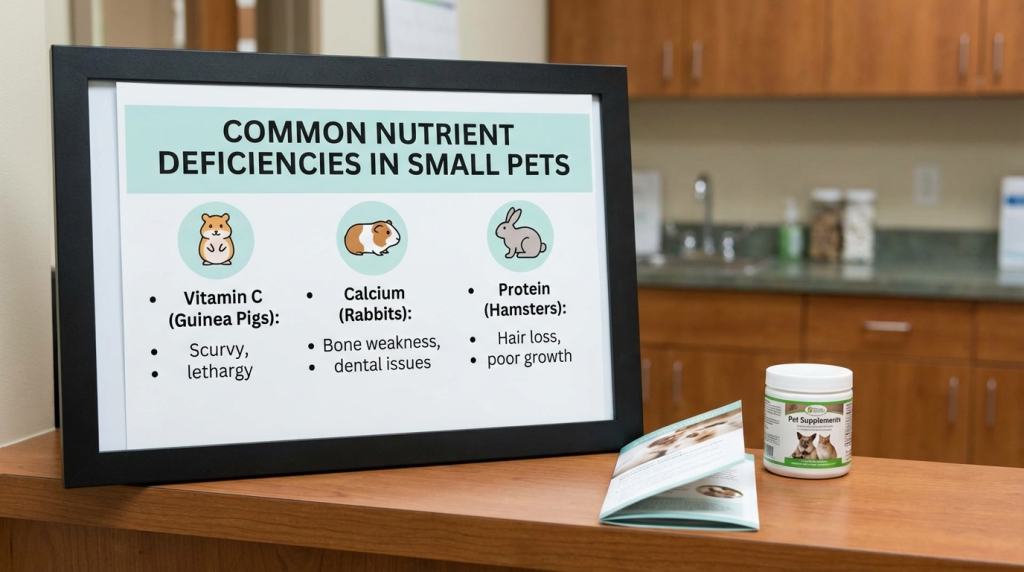
Vitamin C deficiency is well known in guinea pigs. Without daily intake, scurvy develops. Symptoms include lethargy, joint pain, and poor wound healing.
Calcium deficiency affects rabbits, rodents, and ferrets. Weak bones, dental issues, and fractures may occur.
Vitamin A deficiency appears in some rodents and ferrets. It impacts vision, skin health, and immune function.
Protein deficiency occurs when diets rely too heavily on low-nutrient fillers. Muscle loss and poor growth follow.
Fiber deficiency is common in herbivores. Insufficient fiber disrupts digestion and causes gastrointestinal stasis.
Each deficiency has unique signs, yet many overlap. That overlap often delays diagnosis.
How diet causes nutrient deficiencies
Diet is the primary driver of nutrient deficiencies in small pets. What is fed matters as much as how much.
Seed-heavy diets are a major culprit. Pets selectively eat high-fat seeds, ignoring nutritious components. Over time, imbalance becomes severe.
Pellets offer balanced nutrition when used correctly. However, unlimited pellets reduce hay and vegetable intake, creating gaps.
Fresh foods add nutrients but must be chosen carefully. Excess fruit introduces sugar without enough fiber or minerals.
Hay quality matters greatly. Old or dusty hay loses nutritional value. Fresh, fragrant hay supports digestion and mineral balance.
Portion control is essential. Overfeeding one food crowds out others, leading to deficiency through displacement.
Species-specific nutritional needs
Nutrient deficiencies in small pets vary by species, making tailored care essential.
Guinea pigs require daily vitamin C from fresh vegetables or supplements. Pellets alone are insufficient over time.
Rabbits need constant access to high-quality hay. Pellets should be limited. Excess pellets cause fiber deficiency.
Hamsters need varied protein sources. Insects, seeds, and vegetables should be balanced carefully.
Rats and mice require adequate protein and micronutrients. Diets too low in quality lead to weakness and poor immunity.
Ferrets are obligate carnivores. Plant-based foods cause deficiencies quickly due to poor digestion.
Understanding these differences prevents well-meaning mistakes.
The role of fiber in preventing deficiencies
Fiber is often underestimated, yet it plays a central role in preventing nutrient deficiencies in small pets.
In herbivores, fiber maintains gut movement. It supports beneficial bacteria that help synthesize certain nutrients.
Low fiber intake leads to digestive slowdown. Nutrients are not absorbed efficiently. Toxins build up.
Hay provides fiber without excess calories. It also supports dental health by promoting natural tooth wear.
When fiber intake drops, appetite changes. Pets may eat less overall, worsening deficiencies.
Prioritizing fiber stabilizes digestion and supports nutrient balance naturally.
Vitamin deficiencies and their effects
Vitamin C deficiency causes joint pain, weakness, and immune suppression. Guinea pigs suffer quickly without supplementation.
Vitamin A deficiency affects vision, skin, and reproduction. In severe cases, infections become frequent.
Vitamin D deficiency interferes with calcium absorption. Bone strength declines gradually.
B vitamin deficiencies impact energy levels and nervous system function. Lethargy and poor coordination may appear.
Because vitamins interact, imbalance in one often disrupts others. Balanced intake remains crucial.
Mineral deficiencies and skeletal health
Mineral-related nutrient deficiencies in small pets often manifest in bones and teeth.
Calcium deficiency weakens bones and causes dental disease. Teeth may overgrow or fracture.
Phosphorus imbalance interferes with calcium absorption. Many commercial foods contain excess phosphorus.
Trace minerals like zinc and magnesium support immune and muscle function. Deficiencies reduce resilience.
Minerals must be balanced carefully. Excess can be as harmful as shortage.
Providing appropriate foods and limiting processed diets supports mineral health.
Signs and symptoms of nutrient deficiencies
Early signs of nutrient deficiencies in small pets are subtle.
Energy levels drop. Grooming decreases. Fur loses shine.
Weight changes may occur. Either loss or gain can signal imbalance.
Behavior shifts appear. Pets hide more or react defensively.
Advanced symptoms include lameness, dental problems, diarrhea, or eye issues.
Because small pets mask illness, daily observation matters. Familiarity with normal behavior helps changes stand out.
Environmental factors affecting nutrition
Environment influences nutrient deficiencies in small pets more than many realize.
Stress reduces appetite. Crowded or noisy environments contribute to stress-related deficiencies.
Improper lighting affects vitamin D synthesis in some species.
Dirty enclosures discourage movement and feeding.
Limited enrichment reduces activity, impacting digestion and nutrient use.
Optimizing environment supports nutrition indirectly but effectively.
Preventing nutrient deficiencies through feeding habits
Preventing nutrient deficiencies in small pets starts with consistent feeding habits.
Measure portions rather than guessing. Consistency prevents imbalance.
Rotate fresh foods to increase nutrient diversity.
Limit treats intentionally. Treats should supplement, not replace, meals.
Ensure constant access to clean water. Hydration supports digestion and absorption.
When habits align with needs, deficiencies become rare.
Veterinary support and nutritional assessment
Veterinary care plays a vital role in managing nutrient deficiencies in small pets.
Exotic veterinarians understand species-specific nutrition.
Routine exams detect early imbalance through physical assessment.
Blood tests may reveal deficiencies before symptoms worsen.
Diet plans can be adjusted professionally, reducing guesswork.
Partnering with a veterinarian adds a layer of protection.
Long-term nutrition planning for small pets
Nutrient deficiencies in small pets are best prevented through long-term planning.
Nutritional needs change with age. Young pets require growth support. Seniors need maintenance diets.
Illness alters requirements temporarily or permanently.
Keeping records helps track trends. Adjustments become informed rather than reactive.
Think of nutrition as a lifelong strategy, not a fixed routine.
Conclusion
Nutrient deficiencies in small pets develop quietly but carry serious consequences. Through informed feeding, species-specific care, environmental support, and regular observation, these risks can be minimized or avoided entirely. Small pets depend on thoughtful nutrition for every heartbeat, step, and breath. When care is intentional and balanced, they reward us with vitality, comfort, and longer, healthier lives.
FAQ
- What are the most common nutrient deficiencies in small pets?
Vitamin C, calcium, fiber, and vitamin A deficiencies are among the most common. - Can commercial pet food prevent deficiencies on its own?
Commercial food helps, but improper portions or lack of variety can still cause imbalance. - How quickly do nutrient deficiencies develop?
Some develop within weeks, while others take months, depending on the nutrient and species. - Should supplements always be used?
Supplements should be used only when needed and ideally under veterinary guidance. - How can I monitor my pet’s nutritional health?
Regular weight checks, behavior observation, and routine vet visits help detect problems early.