
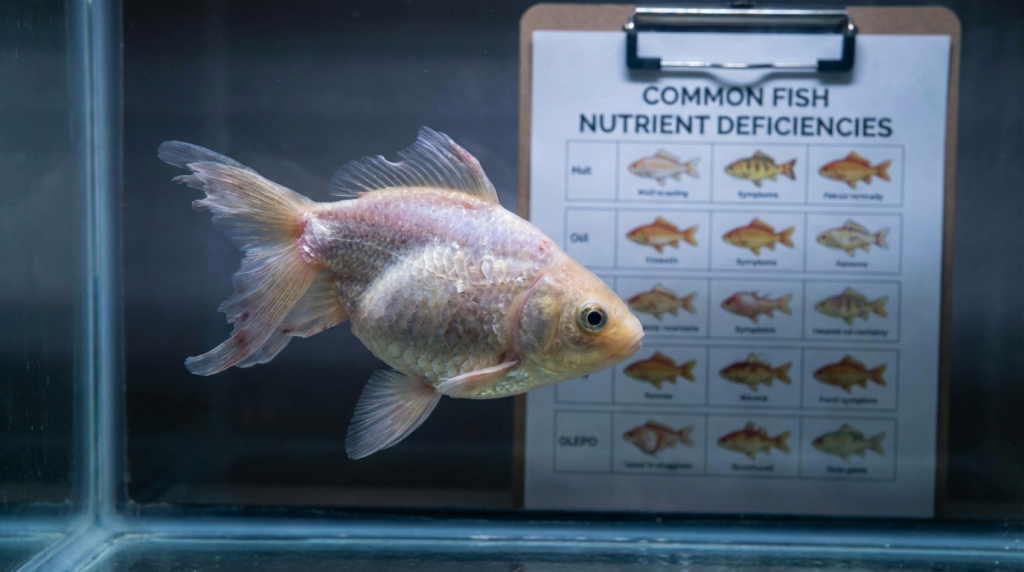

Fish often appear simple to care for. They swim, they eat, and they grow. Yet beneath that calm surface, complex biological systems are working constantly. When fish nutritional deficiencies occur, those systems struggle. Health declines quietly. Problems surface slowly.
Many aquarium issues are blamed on water quality alone. While water matters, nutrition plays an equally critical role. Food fuels immunity, supports growth, and maintains vibrant color. Without proper nutrients, even perfect water cannot save a fish.
Think of nutrition as the foundation of a house. Decorations may look fine, but cracks form when the base weakens. Fish experience the same slow breakdown.
Understanding these deficiencies changes how you feed forever.
Why Fish Nutritional Deficiencies Are So Common
Fish nutritional deficiencies develop easily for several reasons. First, many fish eat the same food daily. That monotony limits nutrient variety.
Second, processed fish foods lose potency over time. Vitamins degrade with light, air, and moisture exposure. Old food looks normal but lacks strength.
Another issue involves species mismatch. Not all fish need the same nutrients. Herbivores, omnivores, and carnivores differ greatly.
Finally, overfeeding can still cause deficiencies. Excess calories do not equal balanced nutrition. Fish may eat enough yet remain malnourished.
Awareness becomes the first step toward prevention.
The Link Between Nutrition and Fish Immunity
Healthy immune systems depend on nutrition. Fish nutritional deficiencies weaken defense mechanisms quickly.
Vitamins support cell repair. Minerals regulate metabolic processes. Proteins build antibodies.
When nutrients fall short, immune responses slow. Minor infections spread. Healing becomes delayed.
Fish under nutritional stress often appear normal at first. However, disease strikes suddenly. Prevention is far easier than treatment.
Balanced diets strengthen resistance naturally.
Protein Deficiency and Its Impact on Fish Health
Protein forms the building blocks of fish bodies. Muscles, organs, and enzymes rely on it.
When protein intake drops, growth slows. Juvenile fish suffer most. Deformities may appear.
Adults lose muscle mass. Energy levels decline. Reproductive success falls.
Fish nutritional deficiencies involving protein often occur in carnivorous species fed plant-heavy diets.
Matching food to species prevents these issues.
Vitamin Deficiencies That Harm Fish
Vitamins regulate essential functions. Each deficiency creates specific symptoms.
Vitamin A deficiency causes poor growth and eye issues. Vision weakens. Appetite drops.
Vitamin C deficiency leads to spinal deformities and fin erosion. Healing slows dramatically.
Vitamin D deficiency affects calcium absorption. Bone structure weakens.
Vitamin E deficiency causes muscle degeneration and reproductive problems.
These deficiencies often result from stale or single-source foods. Variety protects against them.
Mineral Imbalances and Their Consequences
Minerals support nerve function, bone strength, and enzyme activity. Fish nutritional deficiencies often involve calcium, phosphorus, and iodine.
Calcium deficiency weakens skeletal structure. Fins curl. Movement becomes awkward.
Phosphorus deficiency slows growth. Energy production suffers.
Iodine deficiency leads to thyroid issues. Goiters may develop in some species.
Balanced foods and proper water chemistry help maintain mineral stability.
Essential Fatty Acid Deficiency in Fish
Fats often get overlooked. Yet essential fatty acids support brain function, cell membranes, and reproduction.
When lacking, fish show dull coloration. Growth stalls. Fertility drops.
Skin and scales lose integrity. Infections increase.
Many low-quality foods lack adequate omega fatty acids. Supplementation through varied diets restores balance.
Healthy fats equal healthy fish.
Carbohydrate Misconceptions and Deficiencies
Fish digest carbohydrates differently than mammals. Still, carbohydrates provide energy.
Too little carbohydrate forces protein breakdown. Muscle loss occurs.
Too much causes fat buildup and water pollution.
Fish nutritional deficiencies linked to energy imbalance reduce stamina and immune strength.
Balanced formulations prevent these extremes.
Species-Specific Nutritional Deficiencies
Different fish species face different risks. Herbivores lack fiber and plant nutrients when fed meat-heavy diets.
Carnivores miss amino acids when fed flakes designed for omnivores.
Bottom dwellers suffer when surface foods dominate. They miss essential nutrients entirely.
Researching species needs eliminates guesswork. Targeted feeding prevents deficiencies.
Signs of Fish Nutritional Deficiencies
Symptoms appear gradually. Color fades first. Activity declines.
Fins fray. Scales lift. Eyes cloud.
Growth slows in juveniles. Breeding stops in adults.
Behavior changes signal distress. Hiding increases. Aggression rises.
Early recognition saves lives.
The Role of Live and Frozen Foods
Live and frozen foods offer nutritional diversity. They contain enzymes and nutrients absent in dry foods.
Bloodworms, brine shrimp, and daphnia provide protein and fats.
Vegetable-based frozen foods supply fiber and vitamins.
However, balance remains essential. Overreliance creates new deficiencies.
Rotation maintains completeness.
How Food Storage Affects Nutrition
Improper storage destroys nutrients. Heat, light, and moisture accelerate decay.
Fish nutritional deficiencies often trace back to expired food.
Seal containers tightly. Store in cool, dark places.
Buy smaller quantities. Freshness matters more than volume.
Nutrition begins before feeding.
Feeding Frequency and Nutrient Absorption
Overfeeding does not improve nutrition. Absorption limits exist.
Small, frequent meals enhance uptake. Large meals overwhelm digestion.
Fasting days support metabolic balance.
Timing influences health outcomes significantly.
Nutritional Deficiencies and Water Quality Interactions
Poor nutrition increases waste production. Water quality suffers.
Stressed fish excrete more ammonia. Filtration struggles.
Deficiencies weaken gills. Oxygen exchange decreases.
Nutrition and water quality form a loop. One affects the other constantly.
Address both together.
Correcting Fish Nutritional Deficiencies Safely
Correction requires patience. Sudden diet changes shock systems.
Introduce new foods gradually. Observe response.
Supplement vitamins sparingly. Excess causes toxicity.
Monitor water parameters during transitions.
Balance returns steadily when changes remain gentle.
Preventing Future Nutritional Problems
Prevention simplifies care. Rotate foods weekly.
Match diets to species. Observe behavior closely.
Replace old food regularly. Track feeding habits.
Education empowers better decisions.
Healthy fish reflect informed care.
Long-Term Effects of Chronic Nutritional Deficiencies
Chronic deficiencies shorten lifespan. Organs deteriorate silently.
Reproductive capacity declines permanently.
Genetic expression weakens. Color never fully returns.
Tank populations collapse eventually.
Prevention preserves vitality.
Building a Nutritionally Balanced Feeding Routine
Routine supports consistency. Plan meals intentionally.
Use varied food types. Include supplements naturally.
Observe fish responses. Adjust as needed.
Nutrition becomes proactive rather than reactive.
Conclusion
Fish nutritional deficiencies rarely appear overnight. They develop quietly, weakening health from the inside out. By understanding nutritional needs, rotating diets, and prioritizing freshness, you protect your fish long before illness appears. Balanced nutrition fuels vibrant color, strong immunity, and long life. In the end, thoughtful feeding becomes the strongest form of care you can offer.
FAQ
1. What are the most common fish nutritional deficiencies?
Vitamin C, protein, and essential fatty acid deficiencies are among the most common.
2. Can fish nutritional deficiencies be reversed?
Yes, many deficiencies improve with gradual dietary correction and proper care.
3. How often should I change my fish’s diet?
Rotating foods weekly helps prevent long-term deficiencies.
4. Do flakes provide complete nutrition?
High-quality flakes can help, but variety is still necessary for balance.
5. How long does fish food stay nutritionally fresh?
Most dry foods lose potency after six months once opened.