
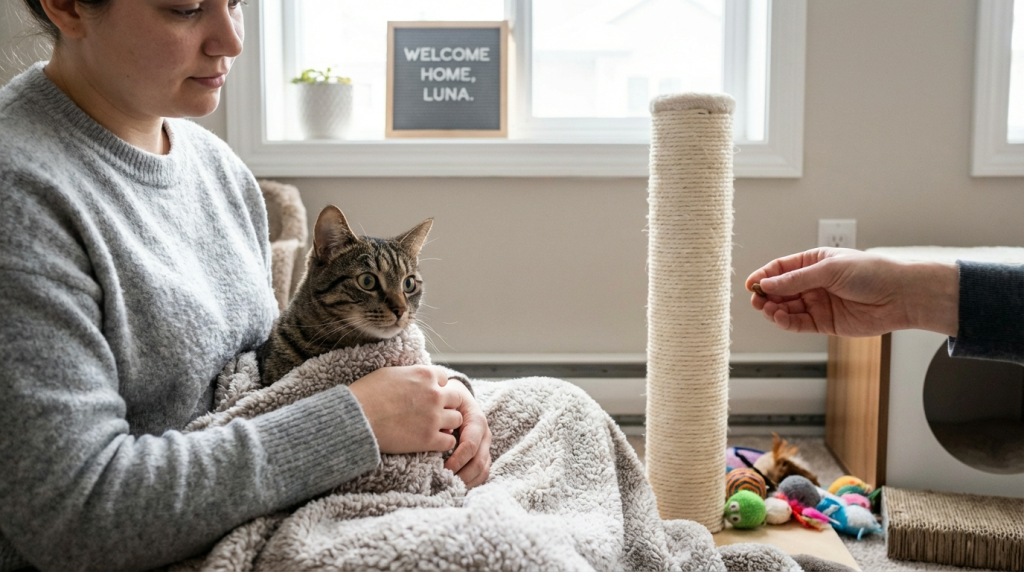

Cats thrive on familiarity. Their world feels safe when routines stay predictable and environments remain unchanged. Because of that, new people or pets can feel like an emotional earthquake to them. What seems exciting or harmless to you may feel overwhelming to your cat.
Learning how to help cat adjust to change is one of the most important skills a cat owner can develop. Whether you’re welcoming a new partner, a baby, a roommate, or another animal, the transition doesn’t have to be stressful. With the right approach, your cat can feel secure again.
Adjustment isn’t about forcing acceptance. Instead, it’s about creating safety, choice, and gradual exposure.
Why Cats Struggle With New People and Pets
Cats rely heavily on scent, territory, and routine. When something unfamiliar enters their space, it disrupts all three at once.
New people bring unfamiliar smells and behaviors. New pets introduce movement, sounds, and competition for resources. From a cat’s perspective, this change can feel like a threat rather than an addition.
Because cats are prey animals by nature, caution is hardwired. Helping your cat adjust means respecting that instinct rather than fighting it.
How Long It Takes to Help Cat Adjust
There is no universal timeline. Some cats adapt in days. Others take weeks or months.
Factors that influence adjustment include:
- Your cat’s age and personality
- Past experiences with people or animals
- The type of new pet or person involved
- How the introduction is handled
Patience is not optional. Progress happens in small steps, not leaps.
Preparing Your Cat Before the Change Happens
The best time to help cat adjust is before the new arrival enters the home.
Strengthening Routine and Predictability
Consistency builds confidence. Feeding times, play sessions, and rest periods should remain stable. This stability gives your cat something reliable to hold onto.
When the environment feels predictable, new elements feel less threatening.
Creating Safe Zones
Every cat needs escape routes and quiet spaces. These areas should remain off-limits to new people or pets.
High perches, closed rooms, or covered beds give cats control. Control reduces anxiety.
Preparation sets the emotional foundation for success.
Helping Your Cat Adjust to New People
New humans can be confusing for cats. Loud voices, sudden movements, and direct staring increase stress quickly.
First Impressions Matter
Allow your cat to observe from a distance. Never force interaction. Let curiosity guide the process.
Ask new people to ignore the cat at first. No reaching. No chasing. Calm presence works better than attention.
Over time, curiosity usually wins.
Using Scent to Build Familiarity
Scent is a cat’s primary language. Encourage new people to leave items like socks or blankets behind.
This passive exposure allows your cat to process the scent safely. Familiarity grows without pressure.
Gradually, that scent becomes part of the environment.
Positive Associations With New People
Treats and play should follow calm interactions. This pairing teaches your cat that good things happen when the new person is nearby.
Rewards reinforce trust far better than forced affection.
How to Help Cat Adjust to Visiting Guests
Short-term guests create repeated disruptions. However, similar principles apply.
Ask visitors to move slowly and speak softly. Provide your cat with escape routes. Avoid picking the cat up to “show” guests.
The goal isn’t friendliness. The goal is comfort.
Over time, tolerance often turns into acceptance.
Helping Your Cat Adjust to a New Cat
Introducing another cat is one of the biggest challenges for feline households.
Why Slow Introductions Are Essential
Cats are territorial. Sudden introductions trigger defensive behaviors.
Helping your cat adjust requires separating spaces at first. Each cat should have its own food, litter, and sleeping area.
Rushing this stage often causes setbacks.
Scent Swapping Before Visual Contact
Exchange bedding between cats daily. This process allows scent familiarity to develop safely.
Scent swapping builds recognition before confrontation.
Once reactions remain calm, visual introductions can begin.
Controlled Visual Introductions
Use baby gates or cracked doors. Short, positive sessions work best.
End interactions before stress appears. This strategy builds confidence gradually.
Patience during this phase prevents long-term conflict.
How to Help Cat Adjust to a New Dog
Dogs and cats communicate differently. That mismatch causes misunderstandings.
Managing Energy Levels
Dogs often move quickly. Cats interpret this as danger.
Leashed introductions keep dogs controlled. Calm behavior should be rewarded.
A tired dog is a calmer dog. Exercise beforehand helps.
Giving Cats Vertical Space
Vertical escape routes are essential. Shelves, trees, and counters give cats safety without isolation.
When cats feel physically safe, emotional safety follows.
This setup reduces defensive reactions.
Signs Your Cat Is Struggling to Adjust
Adjustment doesn’t always look dramatic. Subtle signs often appear first.
Watch for:
- Hiding for extended periods
- Reduced appetite
- Litter box changes
- Excessive grooming
- Aggression or withdrawal
These behaviors signal stress. Early intervention prevents escalation.
Mistakes That Make Adjustment Harder
Good intentions can sometimes cause harm.
Forcing Interaction
Picking up your cat to “get used to” someone backfires. Choice builds trust. Force destroys it.
Punishing Stress Behaviors
Hissing, hiding, or swatting are communication tools. Punishment increases fear and confusion.
Understanding beats correction every time.
Changing Too Much at Once
New people, new pets, new furniture, and new routines compound stress. When possible, stagger changes.
Less chaos equals faster adjustment.
Using Play to Help Cat Adjust
Play builds confidence and releases tension.
Interactive toys redirect nervous energy. Scheduled play sessions restore normalcy.
When play remains consistent, stress decreases naturally.
Play is emotional medicine for cats.
Feeding Strategies That Support Adjustment
Food creates powerful associations.
Feed your cat near the presence of the new person or pet, but at a safe distance. Gradually reduce distance over time.
This method builds positive emotional links.
Never withhold food to force interaction. That approach damages trust.
How Long Should You Expect the Adjustment to Take?
Helping your cat adjust is not linear. Progress may stall or regress.
Some days will feel successful. Others will feel frustrating.
Consistency matters more than speed.
Celebrate small victories. They add up.
When to Seek Professional Help
Sometimes, stress becomes overwhelming.
Consult a veterinarian or certified behaviorist if:
- Aggression escalates
- Appetite loss persists
- Litter box avoidance continues
- Fear responses intensify
Professional guidance prevents long-term trauma.
Helping Your Cat Adjust to Babies and Children
Children move unpredictably. Their energy can frighten cats easily.
Teaching Respectful Behavior
Children should learn to observe rather than chase. Gentle voices matter.
Supervision is critical. Cats should always have escape options.
Positive exposure builds tolerance over time.
Maintaining Your Bond During Transitions
Change can strain your relationship with your cat.
Make one-on-one time a priority. Quiet moments reassure your cat that your bond remains secure.
Your presence is a powerful anchor.
Long-Term Strategies to Help Cat Adjust Successfully
Adjustment doesn’t end after introductions.
Maintain:
- Stable routines
- Adequate resources
- Regular play
- Respect for boundaries
These habits prevent future stress.
A confident cat handles change better.
Conclusion: Helping Your Cat Adjust Is an Act of Trust
Change is inevitable. Stress doesn’t have to be.
When you help cat adjust with patience, empathy, and structure, you protect their emotional wellbeing. Every calm interaction builds trust. Every choice offered restores confidence.
Cats don’t need perfection. They need understanding.
With time, your cat can learn that new people and pets don’t threaten their world. Instead, they become part of it.
FAQ
1. How long does it take for a cat to adjust to new people?
Some cats adapt within days, while others need several weeks depending on personality and past experiences.
2. Can cats learn to accept new pets peacefully?
Yes, slow introductions and proper resource management greatly improve long-term harmony.
3. Should I separate my cat from new pets at first?
Yes, separation allows gradual scent and visual exposure without overwhelming stress.
4. Is hiding normal when cats adjust to change?
Hiding is common and usually temporary. It becomes concerning only if it persists for long periods.
5. Can stress from new people or pets affect a cat’s health?
Yes, prolonged stress can impact appetite, digestion, and behavior, making proper adjustment essential.