
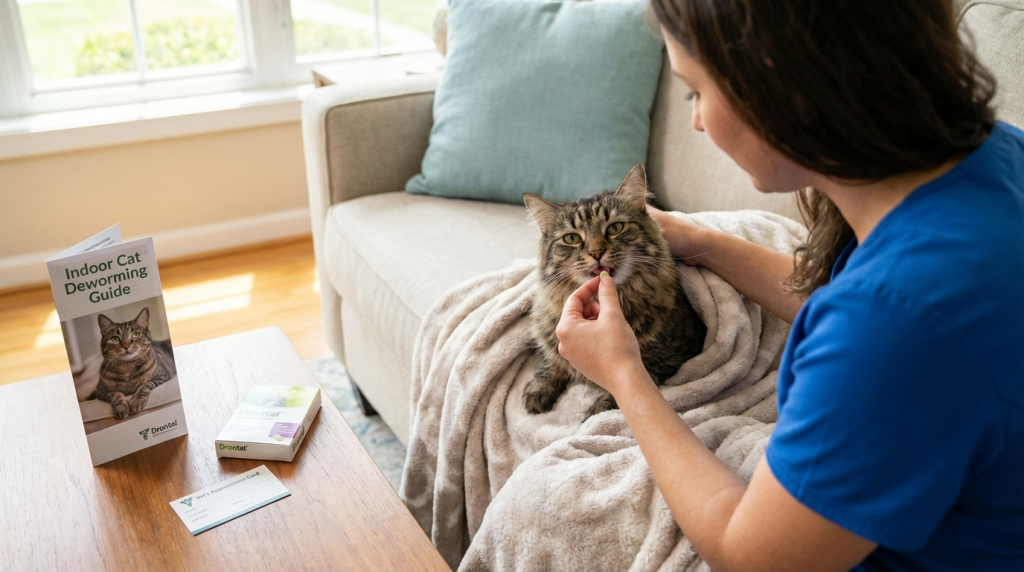

Indoor cats live sheltered lives. They nap on couches, watch birds from windows, and rarely step outside. Because of that, many cat owners assume parasites are not a concern. The idea of worms feels like an outdoor problem. However, that assumption can quietly put a cat at risk.
Deworming indoor cats is still an important part of preventive care. Parasites don’t always need dirt or grass to spread. They hitch rides on shoes, hide in prey insects, and even pass from mother to kitten. Understanding how often deworming is needed helps you protect your cat without overmedicating.
Let’s walk through the facts, the myths, and the best practices.
Why Deworming Indoor Cats Still Matters
Parasites are opportunists. They take advantage of small openings in routine. Even cats that never leave home can be exposed.
Eggs from intestinal worms are microscopic. They can enter homes on footwear, clothing, or other pets. Fleas are another common pathway. When a cat swallows an infected flea during grooming, tapeworm infection can follow.
Because symptoms often appear late, infestations may go unnoticed for months. Deworming indoor cats helps catch and prevent issues before they affect health.
Common Worms That Affect Indoor Cats
Not all parasites behave the same. Knowing the most common types helps clarify risk.
Roundworms
Roundworms are the most frequently diagnosed intestinal parasites in cats. Kittens often acquire them from their mother. Adult indoor cats can still be exposed through contaminated environments.
These worms can grow several inches long. Although alarming, infestations are often silent at first.
Tapeworms
Tapeworms are closely linked to fleas. When a cat ingests a flea while grooming, infection can occur. Indoor cats are not immune because fleas can enter homes easily.
Small rice-like segments near the litter box often signal tapeworms.
Hookworms
Hookworms are less common in strictly indoor cats. However, exposure can still happen in shared living spaces or multi-pet homes.
These parasites attach to the intestinal lining and feed on blood, which may cause anemia.
How Indoor Cats Get Worms Without Going Outside
This question surprises many owners. The answers are more common than expected.
Parasite eggs survive on surfaces for long periods. Shoes, bags, and clothing carry them indoors. Insects such as flies and cockroaches can also act as carriers.
Additionally, fleas don’t respect walls. A single flea can start a cycle that leads to tapeworm infection.
Because exposure is subtle, deworming indoor cats remains relevant even in clean homes.
General Guidelines for Deworming Indoor Cats
There is no single schedule that fits every cat. However, veterinarians follow general principles based on risk.
Healthy Adult Indoor Cats
For most adult indoor cats with no exposure risks, deworming once or twice per year is often sufficient. Some veterinarians recommend annual fecal testing instead of routine medication.
If parasites are detected, treatment is given as needed.
Kittens Raised Indoors
Kittens require more frequent deworming. Early exposure from the mother is common.
Typical kitten schedules include treatments every two to three weeks until about three months of age. After that, frequency decreases.
Early prevention builds a healthier foundation.
Indoor Cats With Flea Exposure
Any cat with a history of fleas faces higher tapeworm risk. In these cases, deworming may be recommended more often.
Consistent flea prevention reduces the need for repeated deworming.
The Role of Fecal Exams in Deworming Decisions
Deworming indoor cats doesn’t always mean automatic medication. Fecal exams provide clarity.
A fecal test checks stool samples for parasite eggs. This approach avoids unnecessary treatments while catching hidden infections.
Many veterinarians suggest annual fecal exams for indoor cats. More frequent testing may be advised for multi-cat households.
Testing and targeted treatment work hand in hand.
Signs That an Indoor Cat May Need Deworming
Cats hide discomfort well. Still, subtle clues may appear.
Watch for signs such as:
- Weight loss despite normal appetite
- Vomiting or diarrhea
- Dull coat appearance
- Scooting or licking the rear
- Visible worms or segments
These symptoms don’t always mean worms. However, they justify veterinary evaluation.
Early treatment prevents complications.
Risks of Not Deworming Indoor Cats
Ignoring parasites doesn’t make them disappear. Over time, infestations can affect overall health.
Chronic worms may cause nutrient deficiencies. In severe cases, intestinal blockages or anemia develop. Kittens and senior cats are especially vulnerable.
Some parasites also pose zoonotic risks. That means humans can be affected, particularly children.
Deworming indoor cats protects everyone in the household.
Can You Deworm an Indoor Cat Too Often?
Yes, overuse is possible. That’s why balance matters.
Unnecessary medication increases the risk of side effects. It may also contribute to parasite resistance over time.
Veterinary guidance ensures treatment is appropriate. Deworming should be purposeful, not automatic.
Testing helps strike that balance.
Natural vs Prescription Dewormers: What Works Best
Natural remedies often circulate online. However, effectiveness varies widely.
Prescription Dewormers
Veterinary-approved medications target specific parasites. Dosages are precise. Safety is well-studied.
Most treatments are given orally and work quickly.
Natural Products
Herbal options lack consistent evidence. Some may cause digestive upset. Others may be ineffective.
Relying solely on natural remedies can allow infestations to worsen.
For reliable results, prescription options remain the gold standard.
Deworming Indoor Cats in Multi-Pet Homes
Shared spaces increase exposure. Dogs may bring parasites indoors. Litter boxes become shared risk zones.
In these homes, coordinated prevention matters. Deworming schedules may be aligned. Fecal exams may be done more frequently.
Good hygiene and parasite control reduce spread.
Special Considerations for Senior Indoor Cats
Older cats process medications differently. Immune function also changes with age.
Because of that, deworming decisions should be individualized. Some seniors benefit from testing rather than routine medication.
Comfort and safety guide every choice.
Indoor Cats and Human Health Concerns
Some intestinal worms can infect people. Children are at higher risk due to close contact and developing hygiene habits.
Regular deworming and litter box hygiene reduce this risk significantly.
Handwashing and cleaning routines add another layer of protection.
How Flea Prevention Reduces the Need for Deworming
Fleas are a major source of tapeworms. Preventing fleas breaks the cycle.
Monthly flea prevention is one of the most effective strategies for indoor cats. Even cats that never leave home benefit.
Less exposure means fewer treatments later.
How Often Should You Really Deworm an Indoor Cat?
The answer depends on risk, age, and lifestyle.
For most adult indoor cats, once or twice per year is typical. Some may only need treatment if parasites are detected. Kittens require more frequent care early on.
Veterinary guidance personalizes the schedule.
There is no shame in asking questions. Informed owners make better decisions.
Creating a Parasite Prevention Plan That Fits Your Cat
Deworming indoor cats works best as part of a broader plan.
That plan may include:
- Annual wellness exams
- Regular fecal testing
- Consistent flea prevention
- Clean litter box habits
Together, these steps create strong protection without excess treatment.
Conclusion: Smart Deworming Protects Indoor Cats Long-Term
Indoor living reduces risk, but it doesn’t eliminate it. Parasites find quiet ways inside. Because of that, deworming indoor cats remains an important part of responsible care.
The goal isn’t frequent medication. The goal is informed prevention. With veterinary guidance, testing, and thoughtful scheduling, you protect your cat’s health without unnecessary intervention.
Peace of mind comes from knowing you’re prepared, not guessing.
FAQ
1. Do indoor cats really need deworming?
Yes, indoor cats can still be exposed to parasites through fleas, insects, or contaminated surfaces.
2. How often should adult indoor cats be dewormed?
Most adult indoor cats are dewormed once or twice per year, depending on risk and veterinary advice.
3. Are fecal exams better than routine deworming?
Fecal exams help target treatment and avoid unnecessary medication, especially for low-risk cats.
4. Can humans get worms from indoor cats?
Some parasites are zoonotic, but proper hygiene and regular veterinary care greatly reduce risk.
5. Do kittens need more frequent deworming than adult cats?
Yes, kittens require more frequent deworming early in life due to higher exposure risks.


