Feeding rabbits and chinchillas looks simple on the surface. A bag of pellets. Some hay. Maybe a treat here and there. Yet diet is the single most important factor in their health. When nutrition is wrong, problems appear quickly. When it’s right, these animals thrive quietly and confidently.
Rabbits and chinchillas share many dietary needs, yet they are not identical. Both rely on fiber, both have continuously growing teeth, and both have delicate digestive systems. However, small differences in food choices matter more than many owners realize.
This guide explains the best rabbit chinchilla diet in practical, easy-to-follow terms. You’ll learn what foods form the foundation, which items should be limited, and how diet directly affects lifespan, comfort, and behavior.
Why Diet Matters So Much for Rabbits and Chinchillas
Food fuels every system.
Rabbits and chinchillas are hindgut fermenters. That means their digestive systems rely on constant fiber intake to function correctly. Without it, digestion slows, harmful bacteria grow, and life-threatening conditions can develop.
At the same time, their teeth never stop growing. Proper diet naturally wears teeth down. Poor diet leads to overgrowth, pain, and infections.
The rabbit chinchilla diet is not flexible. It’s precise by necessity.
Understanding Their Natural Diet in the Wild
Wild diets provide important clues.
In nature, rabbits and chinchillas graze constantly. They eat grasses, leaves, bark, and fibrous plants. These foods are low in sugar, low in fat, and extremely high in fiber.
There are no pellets in the wild. There are no sugary treats either. Instead, their bodies evolved to process rough, dry plant matter all day long.
Captive diets must mimic this pattern as closely as possible.
Hay: The Foundation of the Rabbit Chinchilla Diet
Hay is non-negotiable.
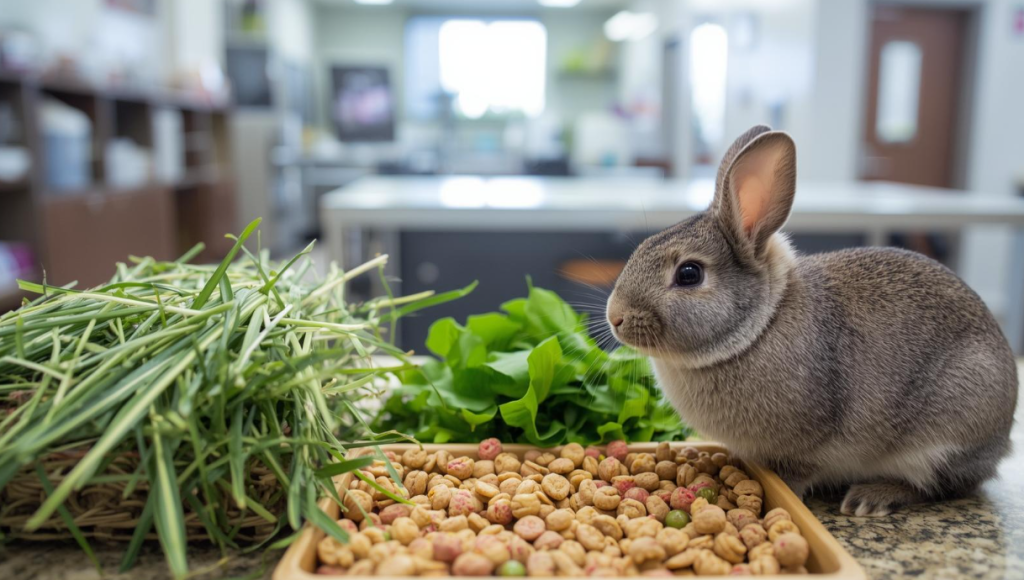
For both rabbits and chinchillas, hay should make up at least 80 to 90 percent of the diet. It supports digestion, prevents GI stasis, and keeps teeth worn naturally.
Timothy hay is the gold standard for adults. It’s balanced, fibrous, and widely available. Orchard grass and meadow hay also work well.
Hay must be available at all times. Unlimited access is essential.
Why Alfalfa Hay Is Limited
Not all hay is equal.
Alfalfa is higher in protein and calcium. While that’s beneficial for growing babies, it’s problematic for adults. Excess calcium can lead to bladder stones and kidney issues.
Adult rabbits and chinchillas should not eat alfalfa hay regularly. Instead, it’s reserved for juveniles, pregnant females, or animals needing weight gain.
Choosing the right hay protects long-term health.
Pellets: A Supporting Role, Not the Main Course
Pellets are often misunderstood.
High-quality pellets provide vitamins and minerals that may be missing from hay alone. However, pellets should never replace hay.
For rabbits, pellets should be plain, high-fiber, and fed in small portions. For chinchillas, pellets should be even more limited due to their sensitive digestion.
Think of pellets as supplements, not staples.
How Much Pellets Should Rabbits Eat
Portion control matters.
Most adult rabbits need about ¼ cup of pellets per 5 pounds of body weight per day. Smaller rabbits need less. Larger rabbits may need slightly more.
Overfeeding pellets leads to obesity, dental problems, and digestive imbalance.
Less pellets often mean better health.
Pellet Guidelines for Chinchillas
Chinchillas require restraint.
They thrive on very small amounts of pellets, often just one to two tablespoons per day. Excess pellets increase the risk of bloat and soft stool.
Chinchillas are especially sensitive to dietary changes. Consistency is key.
Simple diets work best.
Fresh Greens for Rabbits
Rabbits benefit from fresh vegetables.
Leafy greens provide hydration, enrichment, and additional nutrients. Safe options include romaine lettuce, cilantro, parsley, and dandelion greens.
Introduce new greens slowly. Sudden changes upset digestion.
Variety matters, but moderation protects balance.
Why Chinchillas Rarely Eat Fresh Greens
Chinchillas differ here.
Their digestive systems are far more sensitive to moisture and sugar. Fresh vegetables often cause bloating or diarrhea.
Most chinchillas do best without fresh greens entirely. Dry, fibrous foods suit them better.
Respecting species differences prevents illness.
Treats: Where Most Diet Problems Begin
Treats cause trouble.
Fruits, seeds, yogurt drops, and colorful snacks are marketed aggressively. Unfortunately, these items are often loaded with sugar or fat.
For rabbits, fruit should be rare and minimal. For chinchillas, fruit is generally avoided altogether.
Treats should never replace nutrition.
Safe Treat Options for Rabbits
If treats are given, choose wisely.
Small pieces of apple, banana, or berries can be offered occasionally. The key word is occasional.
Treats should be less than five percent of the total diet.
Moderation protects digestion.
Why Chinchillas Should Avoid Sugary Treats
Sugar is dangerous for chinchillas.
Their digestive systems cannot process it efficiently. Even small amounts increase the risk of bloating and fatal digestive upset.
Stick to hay-based treats or chew items designed for dental wear.
Safety outweighs indulgence.
Water: Often Overlooked, Always Essential
Hydration supports digestion.
Fresh, clean water must be available at all times. Water bottles are common, but bowls may encourage better drinking in some rabbits.
Check bottles daily for blockages. Dehydration worsens digestive issues quickly.
Water completes the diet.
Chewing and Dental Health
Chewing is not optional.
Hay provides most dental wear. However, safe wooden chews and hay toys add enrichment and prevent boredom.
Avoid treated wood or plastic.
Natural chewing supports natural teeth.
Foods That Are Dangerous for Both Species
Some foods should never be offered.
Avoid chocolate, bread, cereal, nuts, seeds, dairy, onions, and processed human food. These items disrupt digestion and can be toxic.
Marketing does not equal safety.
When in doubt, skip it.
Diet and Digestive Disorders
Digestive health reflects diet quality.
GI stasis in rabbits and bloat in chinchillas are often linked to low fiber intake or sudden food changes.
High-fiber, consistent diets reduce these risks dramatically.
Prevention begins with proper feeding.
How to Transition Diets Safely
Changes must be slow.
Introduce new hay, pellets, or greens gradually over one to two weeks. Sudden changes shock the gut.
Monitor stool closely during transitions.
Patience prevents emergencies.
Obesity and Diet Management
Extra weight shortens lifespan.
Overfeeding pellets and treats leads to obesity. Obese rabbits and chinchillas develop joint pain, heart strain, and grooming problems.
Hay-first feeding prevents most weight issues.
Lean bodies move better.
Special Dietary Needs for Young Animals
Babies need extra support.
Young rabbits and chinchillas require more protein and calcium for growth. Alfalfa hay and slightly higher pellet portions are appropriate during this stage.
Transition to adult diets gradually.
Growth requires structure.
Senior Diet Considerations
Aging changes needs.
Older rabbits may need softer hay options if dental issues arise. Senior chinchillas may need closer monitoring of intake and weight.
Diet adjustments should be guided by a veterinarian.
Comfort becomes priority.
Common Diet Myths
Myths cause harm.
“Pellets are complete food.” False.
“Treats show love.” Not always.
“Chinchillas eat like rabbits.” Incorrect.
Facts protect health.
Building a Simple Daily Feeding Routine
Routine supports digestion.
Hay available all day. Pellets measured once daily. Greens offered at the same time each day for rabbits.
Predictability reduces stress.
Simple routines work best.
Signs of a Healthy Diet
Healthy animals show it.
Bright eyes, steady weight, firm droppings, active behavior, and good appetite indicate success.
Diet success is visible.
Warning Signs of Diet Problems
Problems show early.
Soft stool, reduced appetite, lethargy, tooth grinding, or bloating signal trouble.
Act quickly when signs appear.
Time matters.
Why Less Is Often More
Minimalism works.
Simple diets reduce digestive stress. Fancy foods add risk.
Hay, limited pellets, and careful supplementation create balance.
Nature favors simplicity.
Long-Term Benefits of the Right Diet
Proper nutrition extends life.
Rabbits and chinchillas fed correctly live longer, healthier lives with fewer vet visits.
Diet is daily medicine.
Conclusion
The best rabbit chinchilla diet is simple, consistent, and fiber-focused. Hay forms the foundation, pellets play a supporting role, and treats remain minimal. While rabbits and chinchillas share many needs, respecting their differences prevents serious health issues.
By feeding with intention rather than impulse, you protect digestion, dental health, and overall wellbeing. Diet is not just about food. It’s about giving your rabbit or chinchilla the chance to live comfortably, confidently, and fully every day.
FAQ
1. Can rabbits and chinchillas eat the same food?
They share hay and some pellet similarities, but rabbits eat fresh greens while chinchillas usually do not.
2. How much hay should rabbits and chinchillas eat?
Hay should be available at all times and make up most of their diet.
3. Are pellets necessary for rabbits and chinchillas?
Yes, but only in small amounts as a supplement, not the main food.
4. Can chinchillas eat fruit as treats?
Fruit is generally avoided due to high sugar and digestive risk.
5. What is the most important part of their diet?
Unlimited high-quality hay is the most important component.