When the doorbell rings, everything changes. Your dog bolts toward the door, barking, spinning, or leaping like the moment is a holiday parade. Meanwhile, guests hesitate, and you scramble to regain control. If this scene feels familiar, you’re not failing as an owner. You’re dealing with a very normal canine response.
Teaching dog calm around guests is less about obedience and more about emotional regulation. Dogs react because guests disrupt routine, invade space, and trigger excitement or uncertainty. However, with structure and consistency, that chaos can turn into calm.
Rather than suppressing behavior, effective training channels it. Over time, calm responses replace frantic ones, and your home feels welcoming again.
Why Dogs React So Strongly to Guests
From a dog’s perspective, guests are unpredictable. They smell different, move differently, and often speak loudly. As a result, your dog’s brain switches into alert mode immediately.
For some dogs, the reaction is pure excitement. For others, it’s cautious anxiety. Either way, arousal spikes fast. Because of this, calm behavior cannot be expected without guidance.
Understanding this emotional surge helps you respond with patience instead of frustration.
Excitement and Anxiety Are Not the Same
Although both look chaotic, excitement and anxiety need different solutions.
An excited dog may wag wildly, jump, and bark happily. In contrast, an anxious dog may retreat, stiffen, or bark defensively. Therefore, training must match the emotion behind the behavior.
Loose movement usually signals excitement. Meanwhile, rigid posture or avoidance suggests anxiety. Once you identify the difference, progress becomes clearer.
Why Punishment Undermines Calm Behavior
Punishment feels tempting in the moment. However, it often creates the opposite result.
When dogs are corrected harshly, stress increases. Consequently, guests become linked with negative emotions. Over time, this association worsens reactions instead of improving them.
Reward-based training works because it teaches dogs what to do, not just what to avoid. Calm behavior grows when it feels safe.
Setting Your Dog Up for Success Before Guests Arrive
Preparation changes outcomes dramatically.
First, help your dog release excess energy. A walk, play session, or mental game beforehand lowers baseline excitement. Next, prepare a calm area with a bed or mat where your dog can relax.
Additionally, having treats ready prevents rushed reactions. Preparation reduces emotional spikes before the door even opens.
Teaching a Default Calm Behavior
Dogs need clarity.
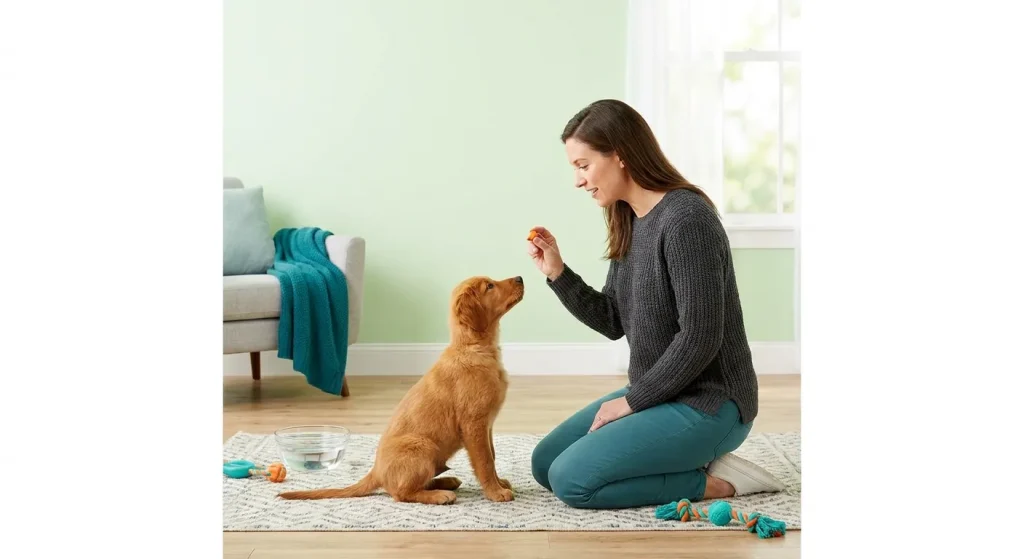
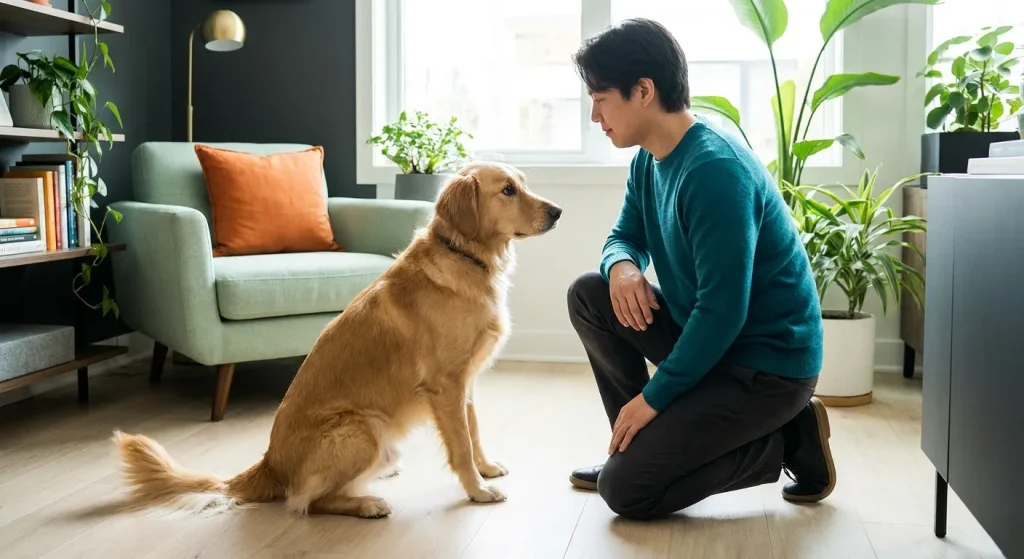
Instead of guessing how to behave, your dog should have a clear default action. “Go to your mat” works especially well. Begin training this behavior without guests present. Reward your dog for lying calmly.
Once the behavior is reliable, introduce it during guest arrivals. Familiar actions feel safe, even in exciting moments.
Using Distance to Lower Arousal
Distance acts like a volume knob.
Rather than forcing greetings, use gates, leashes, or closed doors. This allows your dog to observe guests calmly. As excitement fades, closer interaction becomes possible.
Distance prevents overload and gives the nervous system time to settle.
Rewarding Calm Choices, Not Just Commands
Dogs repeat what pays off.
When your dog chooses to sit, lie down, or simply stay quiet, reward immediately. Treats, praise, or gentle attention reinforce success.
Importantly, reward calm behavior before excitement escalates. Early reinforcement prevents reactive spirals.
Managing Jumping Without Creating Frustration
Jumping is often friendly, not defiant. Still, it must be managed.
Instead of pushing your dog away, guide behavior. Keep your dog on a leash if needed. Ask for a sit. Reward feet-on-the-floor moments.
Clear guidance replaces impulse with control.
Helping Guests Support Calm Behavior
Guests often mean well, but their actions matter.
Ask guests to ignore your dog initially. No eye contact. No talking. No touching. This removes pressure and reduces excitement.
Once your dog settles, calm interaction can begin naturally.
Using Leashes Indoors as a Training Tool
Leashes provide quiet control.
Indoors, a leash helps you guide your dog without confrontation. You can redirect gently and prevent rehearsal of unwanted behavior.
Control increases safety and confidence.
Desensitizing Doorbell and Knocking Sounds
For many dogs, the sound itself is the trigger.
Practice door sounds without guests present. Ring the bell, then reward calm behavior. Repeat gradually.
Over time, the sound loses its emotional punch. Practice turns triggers into background noise.
Teaching Calm Greetings Gradually
Progress works best in stages.
Start with brief visits from calm guests. Use the same routine every time. As your dog improves, increase duration and complexity.
Gradual exposure builds confidence without overwhelm.
Using Treat Stations for Focus and Redirection
Treat stations change priorities.
Placing treats near the entrance allows immediate reinforcement of calm behavior. Your dog learns that staying grounded pays off.
Redirection works best when planned.
Addressing Barking Without Escalation
Barking communicates emotion.
Instead of reacting emotionally, redirect barking into a known behavior. Ask for a sit or mat stay. Reward compliance.
Over time, barking decreases as alternatives become habitual.
Supporting Anxious Dogs Around Guests
Anxious dogs need choice.
Never force interaction. Provide safe zones where guests never enter. Allow your dog to approach on their own terms.
Choice builds confidence faster than reassurance alone.
Why Predictable Routines Create Calm
Dogs thrive on patterns.
Using the same routine every time guests arrive creates predictability. Predictability lowers stress and speeds learning.
Consistency builds trust.
Patience and Repetition Drive Lasting Change
One calm greeting doesn’t equal success.
Training requires repetition. Some days feel easier than others. However, each successful moment builds momentum.
Patience always outperforms pressure.
Common Mistakes That Slow Progress
Some habits sabotage results.
Allowing uncontrolled greetings, changing rules, or expecting instant calm creates confusion. Awareness helps you adjust before frustration builds.
Small changes restore progress.
When Professional Training Helps Most
Sometimes, guidance accelerates success.
Certified trainers or behaviorists offer tailored plans. Seeking help early prevents ingrained patterns.
Support strengthens outcomes.
Maintaining Calm Behavior Over Time
Maintenance matters.
Continue rewarding calm behavior occasionally. Refresh training routines. Reinforce expectations consistently.
Habits stay strong when supported.
Conclusion
Teaching your dog to stay calm around guests takes time, structure, and empathy. By preparing ahead, rewarding calm choices, and reducing emotional overload, you guide your dog toward better behavior without fear or force.
Dogs don’t need perfection. They need clarity and consistency. When calm behavior becomes predictable and rewarding, excitement fades naturally. Over time, your dog learns that guests are just another normal part of life, not a reason to lose control.
FAQ
1. How long does it take to train a dog to stay calm around guests?
Most dogs improve within weeks, although consistency determines long-term success.
2. Should I crate my dog when guests arrive?
Crating can help if it feels safe and positive, but it should never be used as punishment.
3. Is jumping always bad behavior?
No, jumping often reflects excitement or confusion rather than disobedience.
4. Can older dogs learn to stay calm around guests?
Yes, dogs of any age can learn calm behavior with proper training.
5. What if my dog reacts only to certain guests?
Selective reactions often indicate fear or uncertainty, which gradual exposure can address.