Guinea pigs are sweet, social animals, yet handling often feels like their least favorite activity. One moment they’re munching hay, and the next they’re darting away like tiny escape artists. That reaction can feel discouraging, especially when your intentions are gentle. Still, fear doesn’t mean failure. It simply means trust hasn’t been built yet.
To train guinea pigs handling successfully, you need to think from their perspective. In the wild, being lifted equals danger. As a result, instinct takes over before learning can begin. However, instincts can soften with consistency, patience, and positive experiences. Over time, handling stops feeling scary and starts feeling predictable.
This article walks you through how to train guinea pigs handling in a way that feels safe, respectful, and rewarding for both of you.
Why Guinea Pigs Are Naturally Nervous About Handling
Guinea pigs are prey animals, which explains much of their behavior. Their survival depends on quick reactions and avoiding anything that looks like a predator. Since hands approach from above, fear is triggered instantly.
Unlike pets that seek physical affection, guinea pigs value security first. Because of that, handling must be taught gently. When safety is established, fear slowly fades.
Therefore, training handling isn’t about forcing calm. Instead, it’s about creating repeated moments where nothing bad happens.
Preparing the Environment Before You Train Handling
Before any handling begins, the environment must feel safe. A stressed guinea pig cannot learn trust.
Start with a spacious enclosure that includes hides, soft bedding, and room to move. Hiding spots give guinea pigs control, which lowers anxiety. At the same time, place the enclosure in a calm but social area. Total silence can be just as stressful as constant noise.
Additionally, routines matter. Feeding, cleaning, and interaction should happen at similar times each day. Predictability helps guinea pigs relax.
Once the environment feels secure, handling training becomes far easier.
Start With Presence Instead of Touch
The first step to train guinea pigs handling requires patience rather than physical contact.
Spend time sitting near the enclosure every day. Speak softly. Move slowly. Let your guinea pigs observe you without pressure. Over several days, your presence becomes familiar instead of alarming.
Eventually, curiosity replaces fear. At that point, trust has begun to form.
This stage cannot be rushed, but it sets the tone for everything that follows.
Using Food to Create Positive Associations
Food is a powerful teacher. Guinea pigs are highly motivated by fresh vegetables, which makes training easier.
Begin by offering treats through the enclosure bars. Allow them to approach at their own pace. Next, place food near your hand inside the enclosure. Keep your hand still and relaxed.
Over time, guinea pigs learn that your hand brings good things. As a result, fear decreases naturally.
Food doesn’t just motivate behavior. It reshapes emotional responses.
Encouraging Voluntary Approach
Once guinea pigs feel comfortable eating near your hand, encourage voluntary interaction.
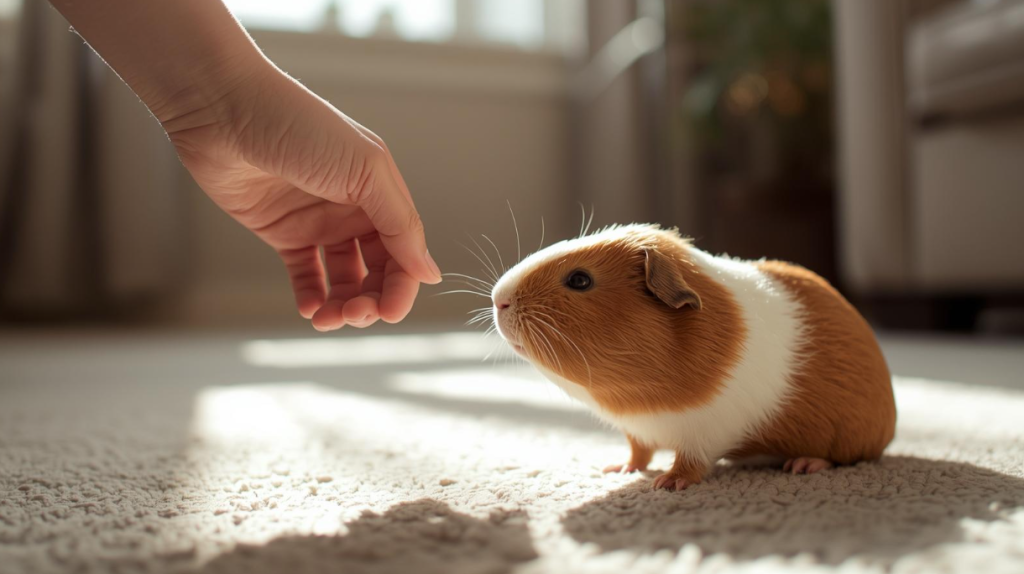
Hold a treat in your open palm and wait. Avoid moving toward them. Instead, let them decide when to step closer. Choice builds confidence faster than any forced interaction.
When a guinea pig approaches willingly, you’re making real progress. Trust is forming because control remains with the animal.
This step is essential when you train guinea pigs handling long term.
How to Lift a Guinea Pig Safely and Calmly
Proper lifting technique prevents panic and injury.
Always support the entire body. One hand should cradle the chest while the other supports the hindquarters. Avoid grabbing from above. Instead, slide your hands underneath gently.
Lift smoothly and confidently. Hesitation increases fear, while calm movement reassures them. Keep your guinea pig close to your body so they feel supported.
Safe lifting builds confidence on both sides.
Keep Early Handling Sessions Short
Short sessions create positive outcomes.
Begin with 10 to 20 seconds of holding, then gently return your guinea pig to the enclosure. Ending early prevents stress from building.
Gradually increase duration over days and weeks. Progress should feel easy, not forced.
When training handling, consistency matters more than length.
Reading Guinea Pig Body Language While Handling
Body language provides constant feedback.
Relaxed guinea pigs breathe evenly and remain still. Soft vocalizations may signal comfort. On the other hand, tense muscles, loud squealing, or frantic movement indicate stress.
When stress appears, calmly end the session. Returning them safely reinforces trust instead of fear.
Listening to signals prevents setbacks and builds understanding.
Lap Time as a Transition Step
Lap time often feels safer than being held in the air.
Sit on the floor or couch with a towel on your lap. Place your guinea pig gently on the towel and offer a treat. The towel provides warmth and a sense of hiding.
Because they remain supported, anxiety decreases. Over time, lap time becomes a favorite part of interaction.
This step bridges the gap between cage and confident handling.
Consistency Is the Key to Training Handling
Consistency creates predictability, which reduces fear.
Handle your guinea pigs several times per week. Use the same movements and routines whenever possible. Random interaction confuses learning and slows progress.
When guinea pigs know what to expect, they relax more quickly.
Routine transforms fear into familiarity.
How Long It Takes to Train Guinea Pigs Handling
Training timelines vary.
Some guinea pigs relax within days. Others require several weeks. Rescue guinea pigs or older individuals may take longer.
Progress is rarely linear. Good days and hesitant days both happen.
Patience always produces better results than pressure.
Common Mistakes That Increase Fear
Certain mistakes slow trust-building.
Chasing guinea pigs around the enclosure creates panic. Lifting without full support causes insecurity. Handling only for nail trims or cleaning creates negative associations.
Instead, focus on gentle, positive interactions.
Small changes often produce big improvements.
Handling Multiple Guinea Pigs
Guinea pigs are social animals, so companionship affects confidence.
Sometimes handling one guinea pig at a time works best. In other cases, handling them near cage mates reduces anxiety.
Observe their behavior closely. Let comfort guide your approach.
Social security supports handling success.
Teaching Children to Handle Guinea Pigs Safely
Children must be guided carefully.
Teach slow movements, gentle hands, and respect for signals. Always supervise handling sessions.
Explain that guinea pigs are fragile and easily frightened. Education builds empathy and safety.
Proper teaching protects both child and pet.
Why Handling Improves Overall Wellbeing
Handling isn’t just about bonding.
Comfort with handling makes health checks easier. Nail trimming becomes less stressful. Vet visits feel calmer.
Lower stress improves immunity and quality of life. Over time, confident guinea pigs appear more relaxed and curious.
Trust enhances wellbeing in subtle but powerful ways.
When Handling Should Be Reduced
Certain situations require restraint.
Illness, injury, pregnancy, or recovery periods call for minimal handling. During these times, comfort matters more than training.
Once health stabilizes, gentle interaction can resume.
Respecting limits preserves trust.
Building Long-Term Trust Through Daily Interaction
Trust grows through repetition.
Daily feeding routines, calm presence, and gentle handling combine to form a predictable pattern. Over time, your guinea pigs learn that you are safe.
Eventually, approach becomes voluntary. Fear fades into familiarity.
That transformation defines success.
Signs Your Guinea Pig Is Comfortable With Handling
Comfort appears quietly.
Approaching you willingly. Remaining calm when lifted. Accepting food during lap time.
Some guinea pigs even relax fully once trust is established.
Comfort, not affection, is the goal.
Conclusion
To train guinea pigs handling effectively, patience outweighs technique. By creating a safe environment, moving slowly, and using positive associations, fear gradually dissolves. Handling becomes predictable instead of frightening.
Guinea pigs may never crave cuddles like dogs. However, they can learn to feel calm, secure, and comfortable in your hands. When trust replaces fear, handling turns into a peaceful experience that strengthens your bond for years to come.
FAQ
1. How long does it take to train guinea pigs handling?
Most guinea pigs show improvement within a few weeks, although some take longer depending on personality.
2. Do guinea pigs ever enjoy being held?
Many guinea pigs tolerate handling calmly, and some enjoy lap time once trust is built.
3. Should I handle my guinea pig every day?
Yes, gentle and consistent handling helps reduce fear and build familiarity.
4. Why does my guinea pig squeak when picked up?
Squeaking often signals nervousness, especially early in the training process.
5. Can older guinea pigs still learn to enjoy handling?
Yes, age does not prevent trust-building when patience and consistency are used.