When the doorbell rings, everything changes. Your dog bolts toward the door, barking, spinning, or leaping like the moment is a holiday parade. Teaching dog calm around guests can feel overwhelming, especially when visitors hesitate and chaos follows. However, this reaction doesn’t mean you’ve failed as an owner. Instead, it reflects a very normal canine response to excitement or uncertainty.
Helping your dog stay calm around guests is less about strict obedience and more about emotional regulation. Guests disrupt routine, invade space, and create sudden stimulation. Still, with structure, consistency, and the right training approach, that chaos can slowly turn into calm. Over time, your home can feel welcoming again for both people and pets.
Why Dog Calm Around Guests Is So Challenging
From a dog’s perspective, guests are unpredictable. They smell different, move differently, and often speak loudly. As a result, your dog’s brain switches into alert mode immediately. Because of this, expecting instant calm behavior around guests is unrealistic without guidance.
Some dogs react with excitement, while others respond with anxiety. Either way, emotional arousal spikes fast. Understanding this reaction allows you to respond with patience rather than frustration, which is essential when teaching dog calm around guests.
Dog Calm Around Guests: Excitement vs Anxiety
Although excitement and anxiety can look similar, they require different solutions. An excited dog may jump, bark, and wag wildly. On the other hand, an anxious dog may freeze, retreat, or bark defensively.
Loose body movement usually signals excitement. In contrast, stiff posture or avoidance often points to anxiety. Once you identify the underlying emotion, training becomes far more effective and humane.
Why Punishment Prevents Dog Calm Around Guests
Punishment may feel tempting, but it often backfires. When dogs are scolded during emotional moments, stress increases instead of decreasing. Consequently, guests become linked with negative experiences.
Reward-based training works better because it teaches dogs what to do rather than what not to do. Calm behavior grows when it feels safe and rewarding. According to the American Veterinary Society of Animal Behavior, positive reinforcement leads to more reliable behavior changes.
Preparing for Dog Calm Around Guests Before Arrival
Preparation dramatically changes outcomes. First, help your dog burn excess energy with a walk or play session. Then, prepare a calm space with a mat or bed where your dog can relax.
Additionally, having treats ready allows you to reinforce calm behavior immediately. Preparation reduces emotional spikes before the door even opens and sets your dog up for success.
Internal resource: Learn more about pre-visit routines in our guide on creating calm dog routines.
Teaching a Default Behavior for Dog Calm Around Guests
Dogs need clarity. Instead of guessing how to behave, your dog should have a default response. “Go to your mat” is one of the most effective tools.
Start training this behavior without guests present. Reward your dog for calmly lying on the mat. Once reliable, practice during guest arrivals. Familiar actions feel safe, even during exciting moments.
Using Distance to Encourage Dog Calm Around Guests
Distance works like a volume knob. Rather than forcing greetings, use gates, leashes, or closed doors. This gives your dog space to observe guests calmly.
As arousal decreases, closer interaction becomes possible. Distance prevents emotional overload and allows the nervous system to settle naturally.
Rewarding Calm Choices Around Guests
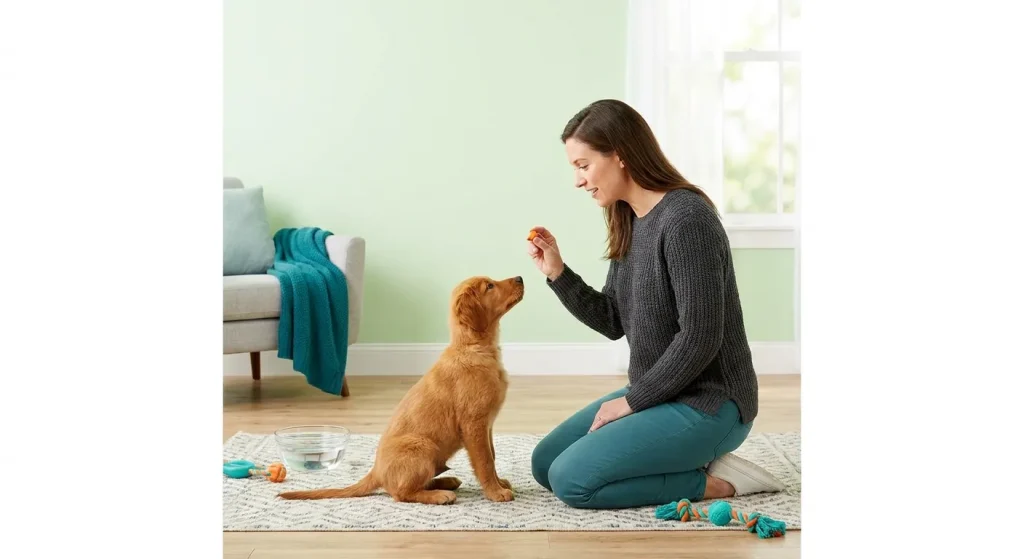
Dogs repeat what pays off. Whenever your dog chooses calm behavior—sitting, lying down, or remaining quiet—reward immediately. Treats, praise, or gentle attention all reinforce success.
Importantly, reward calm behavior before excitement escalates. Early reinforcement prevents reactive spirals and supports long-term dog calm around guests.
Managing Jumping Without Frustration
Jumping is often friendly, not defiant. Still, it must be managed to maintain calm interactions.
Instead of pushing your dog away, guide behavior. Use a leash if needed. Ask for a sit and reward feet-on-the-floor moments. Clear guidance replaces impulse with control.
How Guests Can Support Dog Calm Around Guests
Guests often unknowingly increase excitement. Ask them to ignore your dog at first. No eye contact. No talking. No touching.
Once your dog settles, calm interaction can begin. This approach reduces pressure and allows your dog to self-regulate more easily.
Using Indoor Leashes for Calm Guest Training
Indoor leashes provide gentle control without confrontation. They allow redirection and prevent unwanted behavior rehearsal.
Used correctly, leashes increase safety and confidence while maintaining a calm atmosphere during guest visits.
Desensitizing Doorbells to Improve Dog Calm Around Guests
For many dogs, the sound itself triggers chaos. Practice ringing the doorbell without guests present. Reward calm behavior immediately.
Over time, the sound loses its emotional impact. Repetition turns triggers into background noise.
Supporting Anxious Dogs Around Guests
Anxious dogs need choice. Never force interaction. Provide safe zones where guests never enter.
Allow your dog to approach at their own pace. Choice builds confidence far faster than reassurance alone.
Why Predictable Routines Improve Dog Calm Around Guests
Dogs thrive on predictability. Using the same routine every time guests arrive lowers stress and speeds learning.
Consistency builds trust. Trust builds calm.
Common Mistakes That Disrupt Dog Calm Around Guests
Allowing uncontrolled greetings, changing rules, or expecting instant calm creates confusion. Awareness helps you adjust before frustration builds.
Small changes restore progress and support learning.
When Professional Help Improves Dog Calm Around Guests
Some dogs benefit from expert guidance. Certified trainers or veterinary behaviorists provide tailored strategies and prevent long-term issues.
The American Kennel Club offers excellent training resources for behavior challenges.
Maintaining Dog Calm Around Guests Long-Term
Continue reinforcing calm behavior occasionally. Refresh routines. Reward good choices even after improvement.
Consistency keeps habits strong and reliable.
Conclusion
Teaching dog calm around guests takes time, structure, and empathy. By preparing ahead, rewarding calm choices, and reducing emotional overload, you guide your dog toward better behavior without fear or force.
Dogs don’t need perfection. They need clarity. When calm behavior becomes predictable and rewarding, excitement fades naturally. Over time, your dog learns that guests are just another normal part of life.
FAQ
1. How long does it take to train dog calm around guests?
Most dogs show improvement within weeks, although consistency determines long-term success.
2. Should I crate my dog when guests arrive?
Crating can help if it feels safe and positive, but it should never be used as punishment.
3. Is jumping always bad behavior?
No. Jumping often reflects excitement or confusion rather than disobedience.
4. Can older dogs learn dog calm around guests?
Yes. Dogs of any age can learn calm behavior with consistent training.
5. What if my dog reacts only to certain guests?
Selective reactions often indicate fear or uncertainty, which gradual exposure can address