
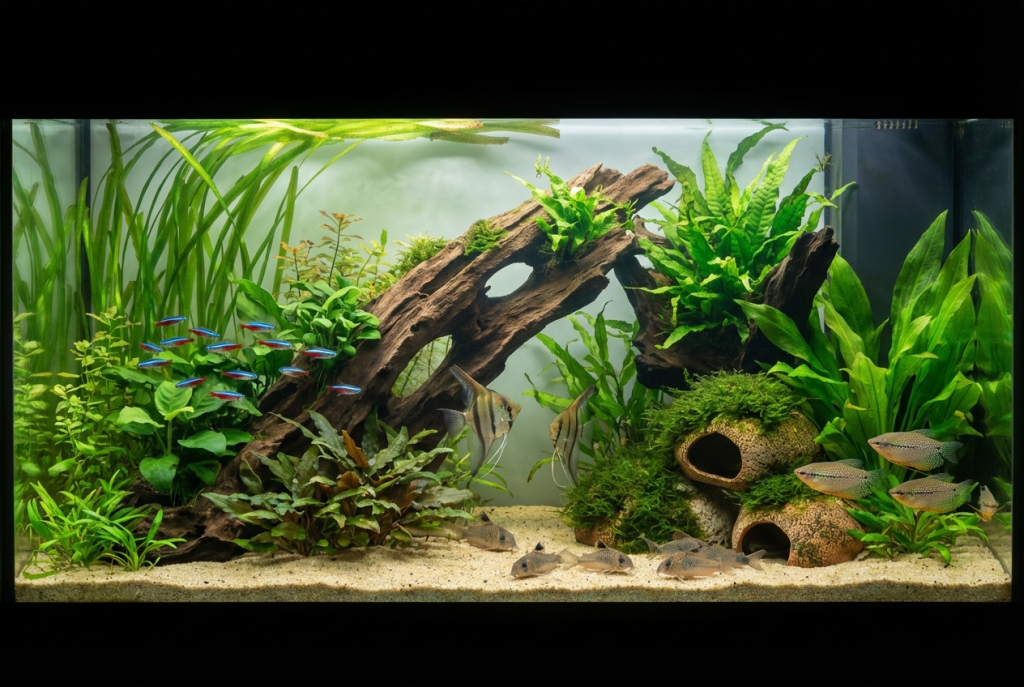

Creating a calm, balanced aquarium starts with one essential step: choosing peaceful tank mates that can live together comfortably. Many fish owners discover too late that not all species get along. A beautiful tank can quickly become chaotic when aggression appears. However, when you understand temperament, space needs, and environmental preferences, you can build a stress-free aquarium where every fish thrives.
Fish behave differently depending on species, size, territory needs, and social habits. Some prefer groups, while others insist on personal space. A few are curious but harmless, while others nip fins or guard territory fiercely. Because of these differences, selecting peaceful tank mates becomes one of the most important decisions you make. It directly affects health, stress levels, growth, and overall tank harmony.
In this guide, you’ll learn how to choose peaceful tank mates with confidence. You’ll discover which factors matter most, how to prevent conflict, and how to create a stable aquarium environment where aggression remains low and your fish remain healthy.
Why Peaceful Tank Mates Matter for Long-Term Success
When you choose peaceful tank mates, you protect both the emotional and physical health of your fish. Stress weakens the immune system, making fish more vulnerable to disease. Aggression may cause torn fins, infections, or death. Even mild chasing alters feeding patterns and lowers activity levels.
Selecting compatible species brings several benefits:
- Reduced conflict and injuries
- A calmer swimming environment
- Better feeding behavior
- Improved coloration and vitality
- Stronger immune function
- Longer lifespans
Because peaceful communities rely on balance, thoughtful planning helps your aquarium stay beautiful and stable.
Understand Fish Temperament Before Choosing Tank Mates
Each species has its own temperament, which determines how peaceful tank mates will interact. Understanding these traits helps you avoid mismatches.
Temperaments generally fall into three categories:
- Peaceful: calm, social, non-aggressive
- Semi-aggressive: territorial or fin-nippers
- Aggressive: dominant, predatory, or highly territorial
When choosing peaceful tank mates, prioritize species known for gentle behavior. Avoid mixing aggressive or semi-aggressive fish unless you fully understand their needs. Even a small mismatch can disrupt the entire tank.
Match Fish by Size to Maintain Peace
Size differences often spark conflict. Larger fish may view small tank mates as food or intruders. Smaller fish may feel threatened constantly and hide instead of exploring.
For peaceful tank mates, aim for:
- Similar adult sizes
- Balanced swimming levels
- Species that don’t prey on smaller fish
Because size also affects feeding behavior, mismatched groups may compete unevenly for food, creating additional stress.
Consider Swimming Zones to Reduce Tension
Aquariums have three general swimming zones:
- Top-dwellers
- Mid-level swimmers
- Bottom-dwellers
Peaceful tank mates often coexist better when they occupy different zones. This separation reduces crowding and helps maintain harmony.
Well-balanced communities often include a mix of:
- Surface fish like hatchetfish
- Mid-level swimmers like tetras
- Bottom dwellers like Corydoras
Because each group uses different spaces, they avoid direct competition.
Match Water Parameters for True Compatibility
Even the most peaceful tank mates cannot thrive in incompatible water conditions. Every species has preferred ranges for temperature, pH, and hardness.
Before selecting new fish, compare their needs:
- Temperature range
- pH preference
- Water hardness
- Flow level
- Oxygen requirements
When species share similar water parameters, they stay healthy and calm. Stress declines dramatically when their environment feels stable and predictable.
Understand Schooling and Shoaling Needs
Some species only feel secure when living in groups. Without enough companions, schooling fish become stressed, skittish, or aggressive.
Peaceful tank mates often include:
- Tetras
- Rasboras
- Danios
- Corydoras
- Barbs (peaceful varieties)
Keeping these fish in groups of at least six encourages natural movement and reduces tension inside the tank.
Avoid Fin-Nippers and Known Bullies
Many aquarium owners accidentally choose semi-aggressive species, believing they are peaceful. However, certain fish nip fins, chase others, or guard territory aggressively.
Common fin-nippers include:
- Tiger barbs
- Some tetras (depending on species)
- Serpae tetras
- Certain danios
When selecting peaceful tank mates, double-check whether your candidates have nipping tendencies. Even a single fin-nipper can alter the entire atmosphere of the aquarium.
Choose Peaceful Tank Mates Known for Community Behavior
Some species have earned a reputation for being excellent community members.
Popular peaceful tank mates include:
- Neon tetras
- Guppies
- Platies
- Mollies
- Corydoras catfish
- Otocinclus catfish
- Cherry barbs
- Harlequin rasboras
- White Cloud Mountain minnows
- Honey gouramis
Because these fish handle shared environments well, they contribute to a stable and relaxed community tank.
Research Species Behavior Before Adding New Fish
Even peaceful tank mates may behave differently in various setups. Before adding a new species, research:
- Adult size
- Territorial habits
- Compatibility with your current fish
- Whether they prefer hiding spaces
- Whether they require specific tank mates
Taking time to research prevents future conflict and ensures compatibility.
Provide Enough Space to Support Peaceful Tank Mates
Crowding increases aggression. Even peaceful fish become territorial when space is limited.
To support harmony:
- Follow proper gallon-per-fish guidelines
- Avoid overstocking
- Use horizontal space for active swimmers
- Prioritize long tanks for schooling fish
Space allows each species to create comfortable territory, lowering stress.
Use Plants and Hiding Spots to Reduce Tension
A well-decorated aquarium makes peaceful tank mates feel secure. Plants, caves, rocks, and driftwood create visual barriers. Because fish can hide, escape, and rest, they avoid unnecessary conflict.
Great additions include:
- Live plants like Java fern or Anubias
- Rock caves
- Coconut huts
- Driftwood arches
- Floating plants for shade
Hiding spaces help shy fish feel confident while giving active species more structure to explore.
Monitor Aggression Daily
Even with careful planning, occasional conflicts arise. Observing your aquarium daily allows you to catch issues early.
Watch for:
- Chasing
- Nipping
- Guarding food
- Hiding excessively
- Torn fins
- Stress stripes
If aggression appears, identify the cause. Sometimes rearranging decorations or adding extra fish from the same species can resolve tension. Other times, removing the aggressive fish becomes necessary.
Feed Strategically to Keep Peaceful Tank Mates Happy
Food competition often triggers aggression. Because different species eat at different speeds and levels, feeding strategies matter.
Use these methods:
- Feed sinking pellets for bottom dwellers
- Offer floating food for surface feeders
- Spread food across the tank
- Use feeding rings for structure
- Provide multiple feeding zones
Well-fed fish behave more peacefully, especially in community tanks.
Introduce New Tank Mates Slowly
When adding new fish, sudden introductions may overwhelm peaceful tank mates. Introducing fish slowly prevents stress.
Follow this process:
- Quarantine new fish for two weeks
- Acclimate them to water conditions
- Add them during dim lighting
- Rearrange décor to break territory patterns
- Watch behavior for several hours
Slow introductions help all fish adjust safely and calmly.
Balance Male-to-Female Ratios for Harmony
Some species become aggressive when male-to-female ratios are unbalanced. For example, male livebearers may chase females relentlessly if numbers are unequal.
To maintain peace:
- Keep one male for every two or three females
- Avoid male-heavy groups
- Choose species with predictable social dynamics
Balanced ratios reduce stress and encourage natural social behavior.
Choose Bottom Dwellers Carefully
Bottom dwellers often enhance peaceful communities, but compatibility still matters. Some species guard caves or burrows.
Look for peaceful bottom dwellers such as:
- Corydoras
- Kuhli loaches
- Bristlenose plecos
- Otocinclus
Avoid aggressive species like red-tailed sharks or Chinese algae eaters when creating a serene environment.
Add Algae Eaters and Cleanup Fish Wisely
Algae eaters help maintain the tank but are not automatically peaceful tank mates. Some grow large or become territorial.
Safe options include:
- Amano shrimp
- Nerite snails
- Mystery snails
- Otocinclus catfish
Because these species contribute to cleanliness and remain peaceful, they support a balanced ecosystem.
Test Water Regularly to Avoid Stress
Poor water quality causes mood changes in fish. When ammonia or nitrite rises, peaceful tank mates may become aggressive or lethargic.
Maintain stability by testing for:
- Ammonia
- Nitrite
- Nitrate
- pH
- Temperature
Consistent water quality prevents unnecessary stress and supports long-term harmony.
Create a Routine That Supports Calm Behavior
Fish thrive on consistency. When daily routines remain predictable, peaceful tank mates stay relaxed.
A balanced routine includes:
- Consistent feeding times
- Stable lighting cycles
- Gentle cleaning habits
- Quiet surroundings
- Regular equipment checks
Predictability lowers stress and encourages natural, calm behavior.
Conclusion
Building a community tank filled with peaceful tank mates is one of the most rewarding parts of fishkeeping. When you understand compatibility, temperaments, space needs, and water requirements, your aquarium becomes a calm, thriving ecosystem. Each species contributes to the peaceful balance, and you enjoy a relaxing, beautiful environment where your fish can flourish.
Harmony begins with thoughtful choices, and every decision you make supports the long-term health of your aquatic pets. With patience, care, and smart planning, a stress-free aquarium becomes easy to achieve and even easier to maintain.
FAQ
1. How many peaceful tank mates can I add to my aquarium?
It depends on tank size, species needs, and water capacity. Avoid overcrowding to maintain harmony.
2. Can aggressive fish live with peaceful species?
Generally no. Aggressive fish often stress or injure gentle species, disrupting the tank balance.
3. How do I know if fish are compatible?
Compare size, temperament, water needs, and social behavior before adding new species.
4. What should I do if aggression appears suddenly?
Check water quality, rearrange decorations, add hiding spots, or separate the aggressor if needed.
5. Are schooling fish always peaceful tank mates?
Usually yes, but they must be kept in proper group sizes to remain calm and social.