Birds are intelligent, sensitive creatures that thrive when communication feels clear and consistent. Yet many owners struggle to guide their bird’s behavior without frustration. That’s where clicker training for birds becomes a powerful tool. Clicker training gives you a simple way to “mark” and reward good behavior at the exact moment it happens. Because it relies on positive reinforcement, it builds trust, reduces anxiety, and helps birds learn new skills quickly.
Although clicker training is often associated with dogs, it works beautifully for parrots, parakeets, cockatiels, finches, and many other species. Birds naturally respond to sound cues, making the clicker an ideal communication bridge. When you combine timing, patience, and encouragement, your bird becomes more relaxed, more engaged, and more willing to cooperate.
In this guide, you’ll learn how to use clicker training for birds to improve behavior, strengthen your bond, and create a peaceful daily routine.
Why Clicker Training for Birds Works So Well
Clicker training for birds succeeds because it relies on clear signals. The click marks the exact moment your bird does something right. Many birds struggle when owners use vague or delayed reactions. However, the clicker removes confusion and makes learning predictable.
This method works because:
- The click sound is distinct and consistent
- Birds quickly link the click with a reward
- You reinforce behavior instantly
- Your bird gains confidence with every success
- Learning becomes enjoyable rather than stressful
Since birds respond well to structure, clicker training gives them direction in a way they understand.
How Positive Reinforcement Supports Clicker Training
Clicker training for birds uses positive reinforcement. Instead of punishing mistakes, you reward desirable actions. Because of this approach, fear declines and trust grows.
Positive reinforcement helps birds by:
- Encouraging calm behavior
- Reducing aggression
- Supporting independence
- Creating enthusiasm for learning
- Lowering stress levels
Birds repeat behaviors that bring rewards, making training smoother and more effective.
Choosing the Right Clicker for Bird Training
You only need a simple tool to begin clicker training for birds. However, choosing the right clicker helps your bird respond confidently.
Look for:
- A quiet or adjustable click sound
- A comfortable grip
- Lightweight construction
- A wrist strap for secure handling
Some species, like smaller parrots or shy birds, may prefer softer clicks. If your bird startles easily, begin with a quieter sound and increase volume gradually.
Introduce the Clicker Slowly and Gently
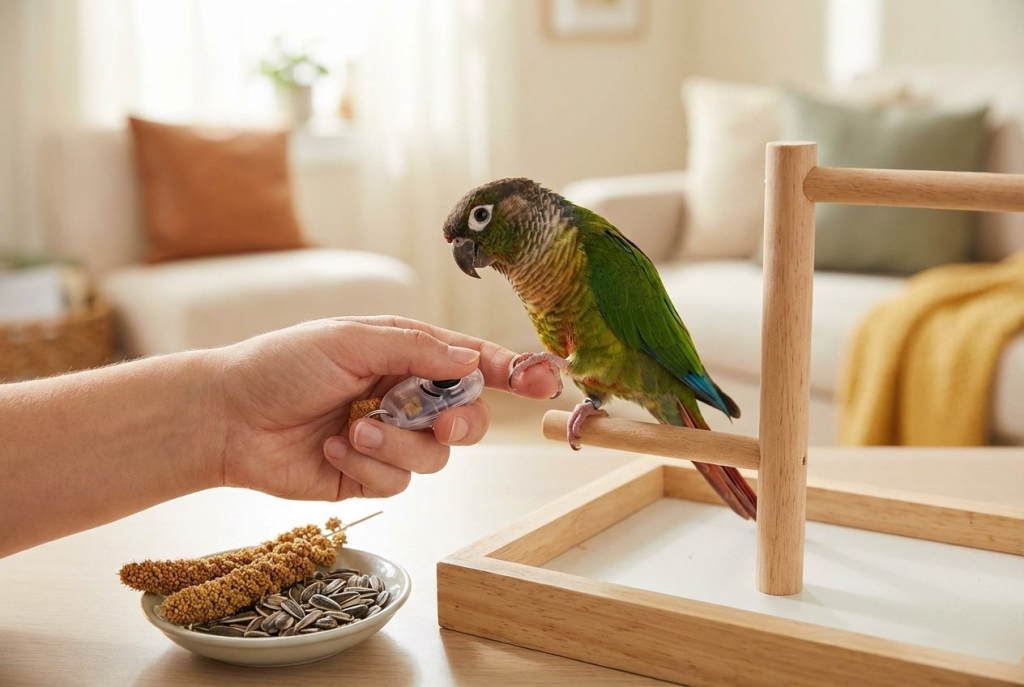
Before clicker training for birds can begin, your bird must understand that the click predicts something wonderful. This step is called “charging the clicker.”
To introduce it:
- Sit near your bird calmly
- Click once
- Immediately offer a treat
- Repeat for several minutes
- Keep the session short and positive
Because birds thrive on consistency, they quickly learn that a click equals a reward. Once your bird understands this connection, real training can start.
Pick the Right Rewards to Improve Bird Behavior
Food motivation varies across species, but most birds enjoy earning small, safe treats. Rewards must be irresistible, but they should also be tiny to avoid overfeeding.
Excellent reward choices include:
- Millet sprays
- Sunflower seeds (sparingly)
- Nut pieces
- Small fruit bites
- Commercial training treats for birds
Keep treats small enough that your bird stays hungry for learning rather than becoming too full to continue.
Start Clicker Training for Birds with Simple Behaviors
Begin with easy actions your bird already performs naturally. This creates early success and builds excitement.
Common first behaviors include:
- Stepping up
- Touching a target stick
- Turning toward you
- Moving to a perch
- Remaining calm during hand approach
Choose one behavior at a time. Click the moment your bird performs it, then offer a reward. Since birds learn quickly, even a few minutes per day can produce progress.
Use Target Training to Guide Your Bird Effectively
Target training works beautifully with clicker training for birds. It involves teaching your bird to touch a small stick or object with its beak. Once they understand the concept, you can guide movement gently without pressure or force.
Target training helps with:
- Reducing aggression
- Encouraging step-up behavior
- Teaching tricks
- Improving handling
- Moving your bird without stress
Target training even prepares birds for veterinary visits and grooming, making care easier.
Shape Behavior Gradually for Reliable Results
Birds learn best through shaping—rewarding small steps toward a final behavior. Instead of expecting instant perfection, break tasks into manageable pieces.
For example, if teaching your bird to step up:
- Reward looking at your hand
- Reward leaning toward it
- Reward lifting one foot
- Reward touching your hand
- Reward stepping up fully
Because shaping builds confidence, birds feel proud of their accomplishments and want to continue learning.
Use Consistent Timing to Improve Behavior
Timing is crucial in clicker training for birds. The click must happen at the exact moment the desired behavior occurs. If timing is off, your bird may learn the wrong behavior.
Helpful timing tips:
- Keep your eyes on your bird
- Click immediately, even if you deliver the treat a moment later
- Practice clicking during simple actions
- Stay present and engaged
Consistent timing helps your bird understand exactly what you want.
Reduce Problem Behaviors with Clicker Training
Clicker training for birds doesn’t just teach tricks—it solves behavioral challenges too. Because you reinforce calm choices, your bird naturally avoids negative habits.
Clicker training reduces:
- Biting
- Screaming
- Lunging
- Fear-based reactions
- Territorial behavior
Rather than punishing bad behavior, you teach your bird a positive alternative.
Use Clicker Training During Handling Sessions
Handling can be stressful for birds who lack confidence. However, clicker training transforms handling into a positive, rewarding activity.
Use it to:
- Build trust during touch
- Encourage stepping onto a hand or perch
- Teach your bird to accept grooming tools
- Prepare for travel or vet visits
When handling becomes rewarding, cooperation improves dramatically.
Create Calm Environments to Support Training
Even perfect clicker technique won’t work if the environment overwhelms your bird. The setting should be calm and predictable.
Ensure stability by:
- Lowering noise
- Avoiding sudden movements
- Reducing bright, harsh lights
- Maintaining comfortable temperatures
- Keeping training areas clutter-free
Birds focus best when they feel safe.
Keep Training Sessions Short and Positive
Long sessions lead to frustration or fatigue. Birds learn much faster when training stays brief and enjoyable.
Ideal training structure:
- 3–7 minutes per session
- Multiple mini-sessions throughout the day
- Ending while your bird is still motivated
- Celebrating small successes
Short bursts of learning encourage enthusiasm and progress.
Encourage Independence and Confidence
Confidence plays a huge role in bird behavior. Clicker training for birds strengthens confidence by giving them control over their learning. When your bird chooses to perform a behavior, they feel empowered.
This independence reduces:
- Clinginess
- Anxiety
- Possessive behaviors
- Fear responses
A confident bird behaves more calmly and adapts better to new situations.
Add Variety to Keep Training Fun
Repetition helps learning, yet too much repetition becomes dull. Birds love novelty, so adding variation keeps them engaged.
Change things by:
- Using new toys
- Training in different rooms
- Rotating between trick training and behavior training
- Offering surprise rewards
- Switching perch heights
Because variety stimulates the mind, your bird develops sharper focus and greater resilience.
Work Through Setbacks with Patience
Even well-trained birds have off days. Hormones, noise, visitors, or boredom can affect behavior. Setbacks are normal. The key is staying patient and consistent.
When problems arise:
- Pause and let your bird calm down
- Return to an easier behavior
- Reinforce small successes
- Avoid forcing interactions
- Repeat simple steps from earlier sessions
Parrots learn best when training remains gentle and reassuring.
Strengthen Your Bond Through Clicker Training
At its core, clicker training for birds builds connection. You become a source of safety, fun, and clarity. Every click strengthens communication and trust.
Benefits include:
- A calmer, happier bird
- A more harmonious home
- Smoother daily interactions
- Better veterinary experiences
- Greater confidence for both you and your bird
Training becomes a shared language between you and your pet.
Conclusion
Learning how to use clicker training for birds gives you a powerful, positive way to shape behavior and deepen your bond. With patience, consistency, and compassion, your bird becomes more confident, better behaved, and more joyful in everyday life. Every click marks a step toward mutual understanding, and each training session creates new opportunities for growth. When you train with kindness and clarity, your bird thrives—emotionally, mentally, and socially.
FAQ
1. How long does it take for a bird to learn clicker training?
Most birds learn the clicker association within a few minutes and begin training within a day or two.
2. Can clicker training stop biting?
Yes. By rewarding calm alternatives, you can dramatically reduce biting behavior.
3. What if my bird is scared of the clicker sound?
Use a quieter clicker, move it farther away, or muffle the sound with fabric until your bird adjusts.
4. How often should I train my bird?
Short, frequent sessions—around three per day—produce the best results.
5. Can small birds like finches learn clicker training?
Absolutely. With the right treat size and gentle timing, even tiny birds can learn quickly.