
Parrots express themselves loudly and clearly, yet many owners misunderstand their behavior. Biting, lunging, screaming, and territorial displays often get labeled as “bad behavior,” but these actions tell a deeper story. Parrots use body language, sound, and personal boundaries to communicate how they feel. When those signals go unnoticed, they rely on aggression to protect themselves. Learning how to prevent aggression in parrots allows you to build a peaceful, trusting relationship based on respect rather than fear.
It’s natural for parrots and other pet birds to experience fear, frustration, or hormonal changes. Even small shifts in the environment can influence behavior. Aggression rarely appears without reason, and once you uncover the cause, it becomes far easier to guide your bird toward calmer habits. With patience, empathy, and the right strategies, you can reshape your parrot’s emotional landscape and support their long-term well-being.
This article explores effective ways to prevent aggression in parrots and other pet birds through better communication, proper training, thoughtful handling, and smart environmental design.
Why Parrots Become Aggressive
Aggression in parrots often looks sudden, but the emotional buildup usually begins long before the bite happens. Understanding common triggers helps you respond with compassion and calm leadership.
Common causes include:
- Fear or insecurity
- Territorial behavior
- Hormonal changes
- Noise sensitivity
- Boredom
- Lack of mental stimulation
- Inconsistent handling
- Poor socialization
- Health issues
- Confusing body language signals
Wild parrots rely on complex social rules to stay safe. When living with humans, those rules still apply, yet owners may not recognize the signals. Because of this gap, preventing aggression in parrots requires learning how they communicate.
Recognize Early Signals to Prevent Aggression in Parrots
Parrots rarely bite without warning. They give subtle—and sometimes not-so-subtle—signals when they feel overwhelmed. When you recognize these signals early, you can redirect the situation before aggression develops.
Signs of rising stress include:
- Pinning eyes
- Raised feathers
- Fanned tail
- Stiff posture
- Leaning away
- Growling sounds
- Beak gaping
- Rapid head movements
- Lunging without contact
Although each species expresses stress differently, the overall pattern remains the same: your bird is uncomfortable. When you step back at the first sign, you prevent escalation and show your parrot that you respect their boundaries.
Build Trust Slowly and Consistently
Trust is the foundation of preventing aggression in parrots. Birds do not tolerate forced interactions well. They thrive in relationships built on predictable, calm behavior from their humans.
To build trust:
- Approach slowly and speak softly
- Offer your hand for scent and observation
- Avoid reaching from above, which mimics predators
- Reward curiosity with treats
- Allow plenty of choice and space
- End interactions while the bird remains comfortable
Trust forms when the bird learns that you will not push past their comfort level. Over time, confidence grows and aggression decreases.
Create a Stable Routine to Reduce Aggression
Parrots love routine. Predictability calms their nervous system and gives structure to their day. When the environment feels unpredictable, insecurity grows and aggression follows.
A strong routine includes:
- Consistent feeding times
- Regular sleep schedules
- Daily play and training sessions
- Predictable handling
- Quiet periods
- Scheduled out-of-cage time
Parrots relax when they know what comes next, and this stability reduces anxiety-based aggression dramatically.
Provide Proper Socialization to Prevent Aggression in Parrots
Socialization doesn’t end after the first few weeks of ownership. Parrots continue learning throughout life, and positive experiences shape their confidence.
Healthy socialization includes:
- Meeting new people gradually
- Experiencing different rooms safely
- Introducing new toys slowly
- Teaching independence
- Allowing supervised exploration
When parrots lack positive exposure, unfamiliar events trigger fear. Because fear quickly becomes aggression, ongoing socialization is essential.
Offer Mental Stimulation to Prevent Aggression in Parrots
A bored parrot becomes frustrated, loud, and sometimes aggressive. Their brains crave challenge. When they don’t receive it, they create their own outlets—often through destructive or aggressive behavior.
Enrichment ideas include:
- Puzzle toys
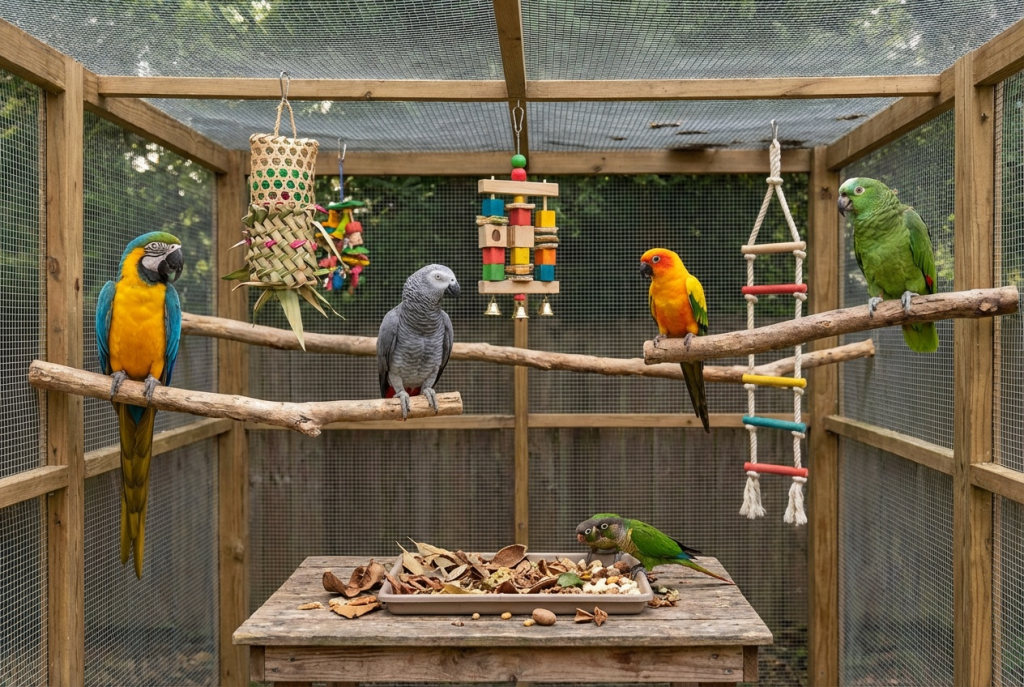
- Foraging opportunities
- Rotating toy selections
- Trick training
- Safe chewing materials
- Music or nature sounds
- Interactive play
Because mental stimulation channels energy productively, your parrot becomes calmer and less reactive.
Minimize Hormonal Triggers in Pet Birds
Hormones play a major role in aggression. Some parrots become territorial or possessive during certain times of year. Even small environmental cues can intensify hormonal behavior.
Prevent hormonal aggression by:
- Limiting shadowy nesting spaces
- Avoiding warm, mushy foods during peak seasons
- Reducing petting to head and neck only
- Ensuring 10–12 hours of darkness for sleep
- Rearranging toys and perches regularly
- Removing nesting materials
These adjustments reduce hormone-driven territoriality, especially during spring and breeding cycles.
Use Positive Reinforcement to Shape Calm Behavior
Punishment increases fear, which increases aggression. In contrast, positive reinforcement teaches a bird what to do instead of what not to do.
Reward calm choices such as:
- Relaxed body posture
- Soft vocalizations
- Approaching you willingly
- Allowing gentle touch
- Stepping up without hesitation
Offer high-value treats, verbal praise, or brief play. Parrots quickly repeat behaviors that bring positive results.
Teach Safe Handling Techniques to Prevent Aggression in Parrots
Safe handling builds confidence. Poor handling, however, creates fear and triggers biting. To prevent aggression, always handle your parrot with respect and awareness.
Use these techniques:
- Approach from the side rather than from above
- Move slowly and predictably
- Support the bird’s body fully
- Keep handling sessions brief and positive
- Allow the bird to step up voluntarily
- Avoid restraining unless medically necessary
Gentle handling teaches your bird that being touched or approached is safe, not threatening.
Reduce Environmental Stress to Prevent Aggression in Parrots
Environmental stress is one of the most overlooked causes of parrot aggression. Simple adjustments often yield immediate improvements.
Reduce stress by:
- Maintaining comfortable lighting
- Keeping noise levels moderate
- Preventing drafts and sudden temperature changes
- Avoiding sudden movements near the cage
- Providing high perches for security
- Offering visual barriers for shy birds
Even minor changes help parrots feel more control over their surroundings.
Prevent Territorial Aggression in Parrots
Many parrots guard cages, perches, or favorite people. Territorial behavior is natural, yet it becomes problematic without boundaries.
To reduce territorial aggression:
- Avoid reaching into the cage unnecessarily
- Invite the bird out before interacting
- Rearrange cage items periodically
- Provide multiple perches and stations
- Teach target training to move the bird calmly
With structured boundaries, your parrot becomes less defensive.
Address Screaming and Lunging with Calm, Consistent Responses
Reacting emotionally to screaming or lunging reinforces these behaviors. Parrots read energy well. When you stay calm, you model emotional stability.
Try:
- Ignoring attention-seeking screams
- Rewarding quiet moments
- Redirecting lunges into target training
- Offering chew toys to relieve tension
- Moving slowly around reactive birds
Because parrots respond to emotional tone, your calmness helps them regulate their own feelings.
Schedule Regular Health Checks
Sometimes aggression comes from pain or illness. Birds hide discomfort instinctively, so behavior often changes before physical symptoms appear.
Watch for:
- Sudden irritability
- Biting during handling
- Changes in vocalization
- Loss of appetite
- Favoring one foot
- Fluffed feathers
A yearly avian vet exam helps identify hidden health issues that may contribute to aggression.
Use Target Training to Redirect Aggressive Behavior
Target training teaches your parrot to touch a stick or object on cue. This simple behavior becomes a powerful tool for building focus and preventing aggression.
Benefits include:
- Redirecting unwanted behavior
- Encouraging confident movement
- Creating positive associations
- Preventing lunging
- Building trust
Target training gives your bird a productive task during stressful moments.
Teach Boundaries to Prevent Aggression in Parrots
Just like children, parrots need limits to feel secure. Boundaries help reduce confusion and frustration.
Effective boundaries include:
- No shoulder time for unpredictable birds
- No access to certain rooms
- Controlled petting zones
- Clear step-up expectations
- Safe play spaces
Boundaries replace chaos with clarity.
Encourage Independence to Prevent Clingy Aggression
Some parrots become nippy or demanding when overly attached to one person. Encouraging independence prevents possessiveness and reduces anxiety.
Try:
- Offering solo play areas
- Encouraging foraging activities
- Allowing time away from the favorite human
- Introducing varied enrichment
A confident, independent bird behaves more calmly with everyone.
Conclusion
Learning how to prevent aggression in parrots starts with understanding their perspective. Parrots react to fear, confusion, hormonal changes, and unmet needs—not malice. When you build trust, offer structure, enrich their environment, and communicate clearly, aggression naturally decreases. With patience and empathy, your parrot transforms into a calmer, more confident companion. Every positive interaction deepens your bond and encourages a lifelong partnership built on respect, understanding, and love.
FAQ
1. Why is my parrot suddenly aggressive?
Sudden aggression often results from fear, hormonal changes, environmental stress, or health issues.
2. How long does it take to reduce parrot aggression?
Improvement varies, but many parrots respond within weeks when methods are consistent.
3. Is punishment effective for aggressive parrots?
No. Punishment increases fear and often strengthens aggressive habits.
4. Can toys help reduce aggression?
Yes. Enrichment relieves boredom and frustration, which helps stabilize behavior.
5. When should I consult a vet or behaviorist?
Seek professional help if aggression intensifies, becomes dangerous, or appears suddenly.