
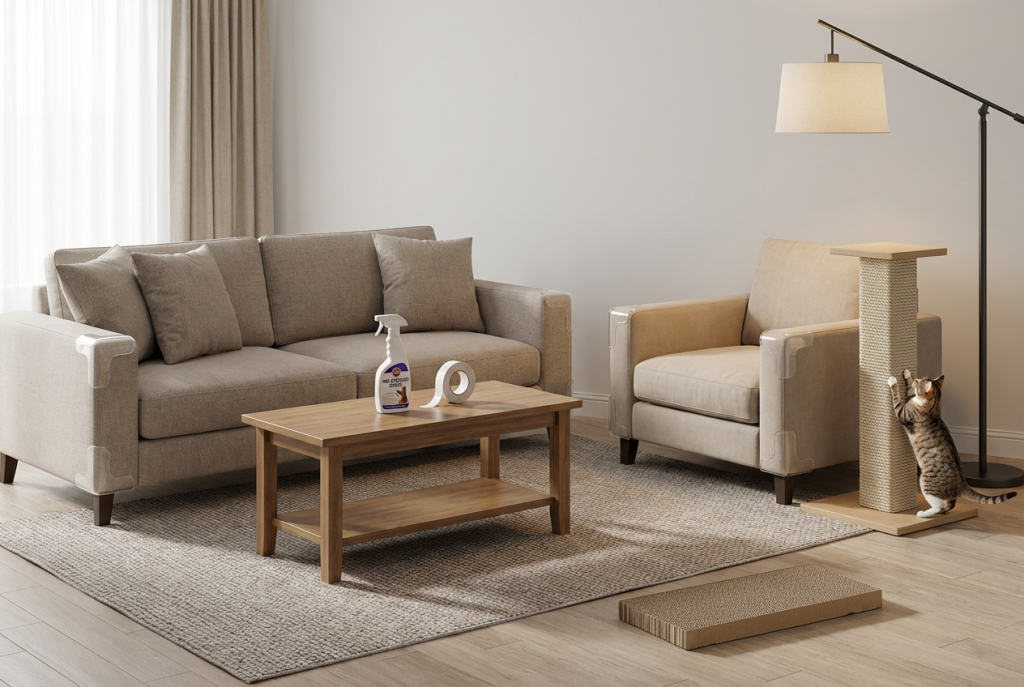

If you’ve ever walked into a room and found your sofa freshly shredded, you’re not alone. Cats scratch instinctively, and while this behavior may frustrate you, it isn’t a sign of misbehavior or defiance. It’s simply a natural feline need. The good news? You can stop cats scratching furniture without yelling, punishing, or feeling helpless. When you work with your cat’s instincts instead of against them, you create harmony in your home and reduce stress for both of you.
Cats depend on scratching for many essential reasons. They stretch their muscles, release energy, mark their territory, and maintain their claws. Yelling only increases anxiety and often leads to even more scratching. Instead, your goal is to understand what motivates the behavior, then guide your cat toward appropriate alternatives. Once your cat learns where scratching is encouraged, the destructive habits fade.
In this extensive guide, you’ll learn exactly how to stop cats scratching furniture with positive techniques, redirection, enrichment, and smart environment choices. You’ll also discover why emotions matter, how to encourage good habits, and how to transform your home into a scratch-friendly space your cat truly enjoys.
Why Cats Scratch Furniture in the First Place
Before you can stop cats scratching furniture, you need to understand why they do it. Scratching is not a bad behavior. It’s a biological requirement.
Cats scratch to:
- Stretch muscles after waking
- Sharpen and shed outer claw layers
- Mark territory visually and with scent
- Relieve stress or frustration
- Engage in natural enrichment
- Enjoy pleasing textures
Furniture often becomes a prime target simply because it meets these needs. Sofas offer stability, resistance, height, and inviting texture. Instead of fighting nature, the solution is to provide scratching options that are even more compelling than your furniture.
Why Yelling Doesn’t Work
Many cat owners instinctively raise their voice when they see their cat scratching the wrong thing. Yet yelling has the opposite effect of what you want. It may startle your cat temporarily, but it never teaches the correct behavior.
Yelling doesn’t work because:
- Cats don’t link punishment with the action
- The stress can trigger even more unwanted scratching
- Cats may scratch when you’re not watching
- It harms trust and increases fear-based behaviors
A calm environment leads to calmer cats. When you stop cats scratching furniture through gentle teaching, your home becomes more peaceful and your bond remains strong.
Offer Scratching Posts That Cats Actually Want to Use
To stop cats scratching furniture, your first step is to give them scratching posts that truly satisfy their needs. Not all posts are equal. Many are too short, too light, or made with unappealing materials.
Choose scratching posts with:
Height and Stability
Cats love to stretch fully when scratching. A scratching post should be tall enough for a complete body extension and sturdy enough not to tip over.
Irresistible Textures
The best textures include:
- Sisal rope
- Sisal fabric
- Cardboard
- Seagrass
- Carpet (less ideal but some cats love it)
Experiment until you discover your cat’s favorite texture.
Multiple Options
One post is rarely enough, especially in multi-cat homes. Place posts near your cat’s favorite scratching zones rather than in random corners.
Horizontal Options
Some cats prefer horizontal scratching. Scratch pads, ramps, and corrugated boards satisfy this preference.
When scratching posts are appealing, accessible, and stable, your cat uses them without hesitation.
Use Strategic Placement to Stop Cats Scratching Furniture
Cats scratch where it’s convenient, visible, and emotionally meaningful. If the scratching post is in a corner behind a plant, your cat will ignore it.
Place scratching posts:
- Near furniture your cat targets
- At entrances or transitions between rooms
- Close to windows or perches
- Near their sleeping spots (cats often scratch when waking up)
Proper placement instantly increases use and decreases frustration.
Attract Cats to the Post with Irresistible Cues
After choosing the right posts, you can stop cats scratching furniture by making scratching posts more appealing.
Use techniques like:
Catnip and Silvervine
Sprinkle or spray catnip or silvervine on the post. Most cats become more curious and engaged immediately.
Interactive Play Around the Post
Drag a wand toy up and down the post to show your cat how to engage with it. This also builds positive associations.
Treat Trails and Rewards
Reward your cat whenever they use the scratching post. A single treat or verbal praise encourages repetition.
Scent Transfer
Rub your cat’s scent on the new post by using a cloth or your hands. Familiar smells encourage use.
These small steps make scratching posts feel like natural choices.
Protect Furniture While You Retrain Behavior
While teaching your cat new habits, you can still protect your home. These temporary solutions reduce damage while redirection takes effect.
Furniture Protectors
Use:
- Clear plastic guards
- Sticky furniture tape
- Couch protector wraps
- Slipcovers
Sticky textures discourage scratching because cats dislike the feel.
Furniture Sprays
Natural deterrent sprays—for example lavender or citrus-based sprays—can reduce scratching interest. However, always confirm the ingredients are cat-safe.
Rearrange Layouts
Pull furniture away from walls or temporarily block the most tempting areas during training.
Even small barriers can give your cat new habits time to form without temptation.
Redirect Scratching Calmly and Consistently
When you see your cat scratching the wrong object, avoid yelling. Instead, gently interrupt and redirect.
Step 1: Interrupt Softly
Make a gentle noise, such as a light clap, or tap the floor. Keep your energy calm.
Step 2: Guide Your Cat to the Post
Encourage your cat toward the scratching post by walking over or tapping the post lightly.
Step 3: Reward Immediately
As soon as your cat touches or scratches the post, reward them with treats, praise, or petting.
Step 4: Repeat Often
Consistency is how cats understand what’s expected. Calm repetition leads to lasting change.
Cats love predictability, so clear expectations help them adapt quickly.
Use Positive Reinforcement to Build Lasting Habits
Positive reinforcement remains one of the most powerful ways to stop cats scratching furniture.
Reward calm scratching behaviors using:
- Treats
- Gentle praise
- Soft brushing
- Petting
- Playtime
Cats repeat actions that earn rewarding outcomes. When you reinforce scratching posts, your cat views them as the new preferred option.
Reduce Stress Triggers That Increase Scratching
Scratching isn’t just physical—it’s emotional. Cats scratch more when stressed.
Common stress triggers include:
- New pets
- Loud noises
- Visitors
- Boredom
- Territory changes
- Lack of enrichment
By reducing stress, you naturally reduce unwanted scratching.
Support calm behavior by offering:
- Predictable routines
- Quiet retreats
- Window perches
- Interactive toys
- Vertical climbing posts
- Puzzle feeders
Emotionally fulfilled cats scratch appropriately and feel safer in their environment.
Keep Your Cat’s Claws Healthy
Healthy claws reduce the urge to scratch excessively. Although scratching is essential, maintenance helps protect your furniture.
Trim Claws Regularly
Trim claws every 2–3 weeks. Shorter claws do less damage and reduce furniture snags.
Use Nail Caps
Soft nail caps protect furniture while still allowing scratching behavior. They’re harmless and easy to apply.
Check for Dryness or Damage
If claws become brittle, consider omega-rich foods or supplements to support nail health.
Healthy claws lead to healthier habits.
Understand Your Cat’s Scratching Style
Some cats scratch high surfaces, others scratch horizontally, and some prefer corners. Observing your cat’s scratching patterns lets you offer the right solutions.
Watch for:
- Favorite textures
- Preferred height
- Common scratching locations
- Daily scratching times
By tailoring your environment to match their preferences, you stop cats scratching furniture naturally.
Use Pheromone Support for Stressed or Anxious Cats
When stress plays a role, synthetic feline pheromones can help.
Options include:
- Diffusers
- Sprays
- Wipes
These products mimic natural feline scent markers, creating a sense of safety.
Calm cats scratch for healthy reasons—not stress relief.
Create a Multi-Layered Enriched Environment
A mentally stimulated cat scratches more appropriately. Enrichment reduces boredom, frustration, and stress-driven habits.
Offer:
- Window seats
- Scratching towers
- Hideouts
- Climbing shelves
- Automatic toys
- Feather wands
- Treat puzzles
When your home meets your cat’s instinctual needs, unwanted behaviors disappear naturally.
Build a Routine That Reinforces Good Behavior
Cats thrive on routine. When you incorporate scratching sessions, playtime, and positive interactions into your daily schedule, your cat feels secure and calm.
Establish a pattern that includes:
- Morning play
- Claw-friendly activities
- Predictable feeding times
- Evening cuddles
- Reward sessions at scratching posts
Routine reduces anxiety and reinforces positive habits more quickly.
Conclusion
Learning how to stop cats scratching furniture without yelling is completely achievable. When you respect your cat’s instincts, offer better scratching alternatives, reduce stress, and use positive reinforcement, your cat naturally shifts toward appropriate behavior. The key is patience, calm redirection, and an enriched environment that supports your cat’s needs.
By working with—not against—your cat’s nature, you protect your home while strengthening the bond you share. A peaceful home, a confident cat, and furniture that stays intact are all possible with the right approach.
FAQ
1. Why does my cat scratch furniture even with a scratching post?
Your cat may prefer a different texture, height, or location. Adjusting these factors usually solves the issue.
2. How long does it take to train a cat to stop scratching furniture?
Most cats improve within two to four weeks with consistent redirection and positive reinforcement.
3. Are scratching posts better than cardboard scratchers?
Neither is universally better. Cats simply have personal preferences, so offering both is helpful.
4. Does trimming claws stop destructive scratching?
It reduces damage but doesn’t stop the need to scratch. Cats still require posts and enrichment.
5. Should I punish my cat for scratching furniture?
No. Punishment increases stress and makes the problem worse. Positive redirection works far better.