
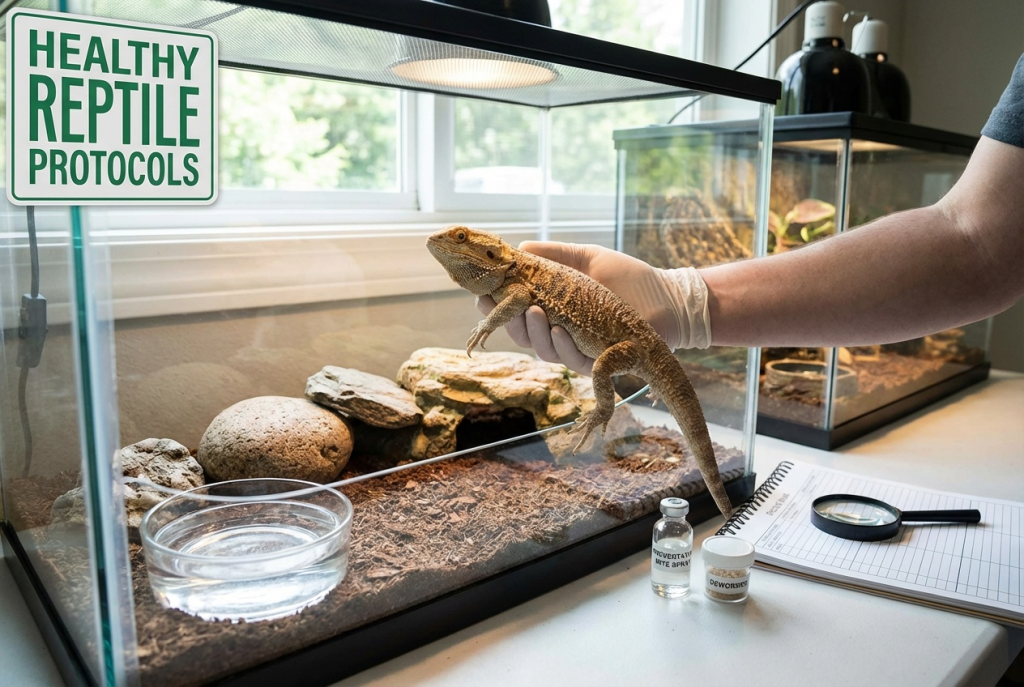

If you own a reptile, you already know how fascinating, gentle, and sensitive these animals can be. They depend on a stable environment, predictable routines, and clean habitats to stay healthy. However, one of the biggest threats to their well-being is often hidden. Parasites—both internal and external—thrive in conditions that many reptile owners don’t notice until symptoms appear. When you learn how to prevent parasite infections in reptiles, you give your pet the best defense possible.
Parasites don’t appear out of nowhere. They spread through poor hygiene, contaminated feeders, unclean water sources, new animals, and bedding that harbors microscopic organisms. Because reptiles hide discomfort to stay safe in the wild, many symptoms go unnoticed. That is why prevention matters far more than treatment. Treatment can help, but prevention shields your reptile long before illness has the chance to develop.
This article walks you through simple, effective strategies to prevent parasite infections in reptiles. You’ll learn what parasites do, why they spread, and how smart husbandry habits keep your reptile healthy, alert, and strong. With these routines, your pet can thrive in a clean, stable, and parasite-free environment.
Why Prevent Parasite Infections in Reptiles Early
Preventing parasite infections in reptiles is easier, safer, and far more effective than treating a full-blown outbreak. Parasites weaken the immune system, cause digestive issues, and make reptiles lethargic. Left untreated, they may lead to dehydration, weight loss, or organ damage. Because reptiles mask early symptoms, problems often escalate before you even notice anything is wrong.
Parasite infections usually come from:
• Contaminated food
• Dirty enclosures
• Improper humidity
• New reptiles that aren’t quarantined
• Unwashed décor or substrate
• Poor handling hygiene
However, consistent care allows you to stop these problems before they start. When you prevent parasite infections in reptiles, you support strong immune responses, healthy digestion, and long-term wellness. You protect your reptile from discomfort and reduce costly vet visits.
Use Quarantine to Prevent Parasite Infections in Reptiles
One of the simplest and most effective ways to prevent parasite infections in reptiles is to quarantine any new addition. Even healthy-looking reptiles can carry hidden parasites without showing symptoms.
A proper quarantine includes:
• A separate enclosure
• Dedicated tools, bowls, and cleaning supplies
• Daily monitoring of appetite and stool
• Fecal exams during the quarantine period
• A 30–90 day isolation timeline
Quarantine creates a barrier that protects your existing reptiles. Because many parasites spread through direct contact or contaminated surfaces, isolation prevents accidental transmission. New animals stay separated until they test parasite-free.
Keep the Habitat Clean to Prevent Parasite Infections
Cleanliness is one of the strongest defenses you have. Parasites thrive in warm, damp, and dirty environments. They hide in leftover food, rotting vegetation, old bedding, feces, and hidden crevices.
To prevent parasite infections in reptiles, clean the enclosure by:
• Spot-cleaning daily
• Removing feces immediately
• Washing bowls and hides weekly
• Disinfecting surfaces regularly
• Replacing substrate on a schedule
Use reptile-safe disinfectants and let everything dry completely before returning your reptile. Cleanliness lowers parasite survival rates and reduces the chance of eggs or larvae spreading.
Monitor Substrate to Prevent Parasite Infections
Substrate is one of the top sources of contamination. Because parasites often live in soil-like environments, dirty or moist substrate becomes a breeding ground.
Keep substrate safe by:
• Avoiding mold-prone materials
• Removing wet spots immediately
• Replacing substrate regularly
• Using kiln-dried or heat-treated options
A healthy substrate helps maintain balance and prevents the growth of harmful organisms.
Feed Safely to Prevent Parasite Infections in Reptiles
Feeder insects, greens, and rodents can carry parasites if not sourced responsibly. Many internal parasites begin in food. Because of this, safe feeding practices are essential.
To reduce risks:
• Purchase feeders from reputable suppliers
• Avoid wild-caught insects
• Wash greens thoroughly
• Inspect rodents before feeding
• Freeze rodents for 48 hours before use
• Remove uneaten food quickly
Gut-loading insects and washing produce also improve nutrition, which strengthens your reptile’s immune system.
Maintain Proper Temperature and Humidity Levels
Environmental stress makes reptiles vulnerable to parasites. When temperatures or humidity fall outside the ideal range, your reptile becomes stressed. Stress weakens the immune system, making parasite infections more likely.
To prevent parasite infections in reptiles, maintain:
• Species-appropriate humidity levels
• A stable daytime temperature
• A consistent nighttime drop
• A properly heated basking zone
Use thermometers and hygrometers in multiple locations. Accurate tools prevent daily fluctuations that lead to stress.
Clean Water Sources Regularly to Prevent Parasite Spread
Dirty water bowls are hotspots for parasites. Fecal contamination, saliva, and spilled food all create opportunities for organisms to thrive.
Keep water clean by:
• Washing bowls daily
• Scrubbing biofilm buildup
• Refilling with fresh, safe water
• Using disinfectants weekly
Reptiles that soak—such as turtles and bearded dragons—need even more frequent water changes. Clean soaking areas reduce parasite exposure significantly.
Use Routine Health Checks to Prevent Parasite Infections
Healthy reptiles have clear eyes, smooth skin, steady appetite, and firm stools. Changes often suggest a problem brewing. Early detection helps you prevent parasite infections before they spread or worsen.
During weekly checks, look for:
• Weight changes
• Runny stools
• Undigested food
• Lethargy
• Visible mites or ticks
• Reduced appetite
• Mucus or irritation around the mouth
If symptoms persist, consult a reptile veterinarian.
Schedule Vet Visits to Prevent Parasite Infections
Annual or semiannual fecal exams help detect internal parasites early. Many infections remain invisible for months. Because of this, routine vet checks offer powerful protection.
A reptile vet may:
• Perform fecal tests
• Check hydration
• Examine skin and scales
• Evaluate diet and environment
Professional exams act as a safety net, catching issues before they affect health.
Handle Reptiles Safely to Reduce Parasite Spread
Good hygiene prevents cross-contamination. Parasites can cling to your hands, tools, and clothing.
To prevent parasite infections in reptiles:
• Wash hands before and after handling
• Avoid handling multiple reptiles back-to-back
• Use separate cleaning tools for separate enclosures
• Disinfect tweezers, tongs, and bowls
Simple hygiene keeps parasites from spreading across your collection.
Prevent External Parasites with Regular Inspections
External parasites like mites and ticks spread quickly. They irritate your reptile’s skin, cause stress, and transmit diseases.
Check your reptile for:
• Tiny crawling mites
• Black or red specks
• Irritated or swollen eyes
• Restless behavior
• Frequent soaking
• Scale discoloration
If you find mites, isolate your reptile and clean the enclosure immediately. Early intervention prevents a full infestation.
Control Enclosure Traffic to Prevent Parasite Infections
Parasites spread through contact, air exchange, and shared tools. Because of this, limiting traffic around your reptile room helps.
Try to:
• Keep visitors away from enclosures
• Avoid exchanging supplies with other reptile owners
• Clean hands after touching any enclosure
• Separate reptiles by species
Controlled environments reduce contamination risks.
Buy Supplies Carefully to Prevent Parasite Infections
Branches, rocks, hides, and décor can carry unwanted organisms. If you bring items from outside or purchase unclean gear, parasites may enter your enclosure.
Safe supply guidelines include:
• Cleaning natural décor thoroughly
• Baking wood at safe temperatures
• Boiling stones before use
• Disinfecting all new décor
• Avoiding porous materials that trap moisture
Clean supplies ensure that parasites never gain access to your reptile’s enclosure.
Reduce Stress to Strengthen Immunity
A calm reptile is a healthier reptile. Stress weakens the immune system, making parasite infections more likely.
Lower stress by:
• Offering plenty of hiding spots
• Avoiding sudden changes in the enclosure
• Keeping noise levels low
• Maintaining predictable feeding routines
• Preventing overcrowding
Consistent care supports a strong immune response, which keeps parasites from taking hold.
Monitor Shedding to Prevent Parasite Infections
Shedding issues increase infection risk. Stuck shed creates areas where parasites hide and thrive. When shedding becomes difficult, your reptile may become stressed.
Prevent shedding problems by:
• Increasing humidity during shed cycles
• Offering rough surfaces for rubbing
• Providing warm baths for species that tolerate soaking
• Checking toes, tail tips, and eye caps
Healthy shedding means healthier skin and stronger natural defenses.
Conclusion
Learning how to prevent parasite infections in reptiles gives you the power to protect your pet from hidden dangers. With consistent routines—clean habitats, proper feeding, stable environments, and regular health checks—you stop parasites before they ever become a threat. Preventive care strengthens immunity, reduces stress, and helps your reptile live a long, comfortable life. By practicing smart husbandry, you create an environment where parasites can’t thrive and your reptile can flourish.
FAQ
1. How often should reptiles have fecal exams?
Once or twice a year is ideal, though young or newly acquired reptiles may need more frequent tests.
2. Can feeder insects carry parasites?
Yes. Insects may carry parasites, so buying from reputable suppliers is essential.
3. How do I know if my reptile has parasites?
Signs include changes in stool, weight loss, lethargy, mites, and a reduced appetite.
4. Does humidity affect parasite risk?
Improper humidity increases stress, which makes reptiles more vulnerable to parasite infections.
5. Can parasites spread between reptiles?
Yes. Parasites spread through direct contact, contaminated tools, and shared environments, making quarantine vital.