
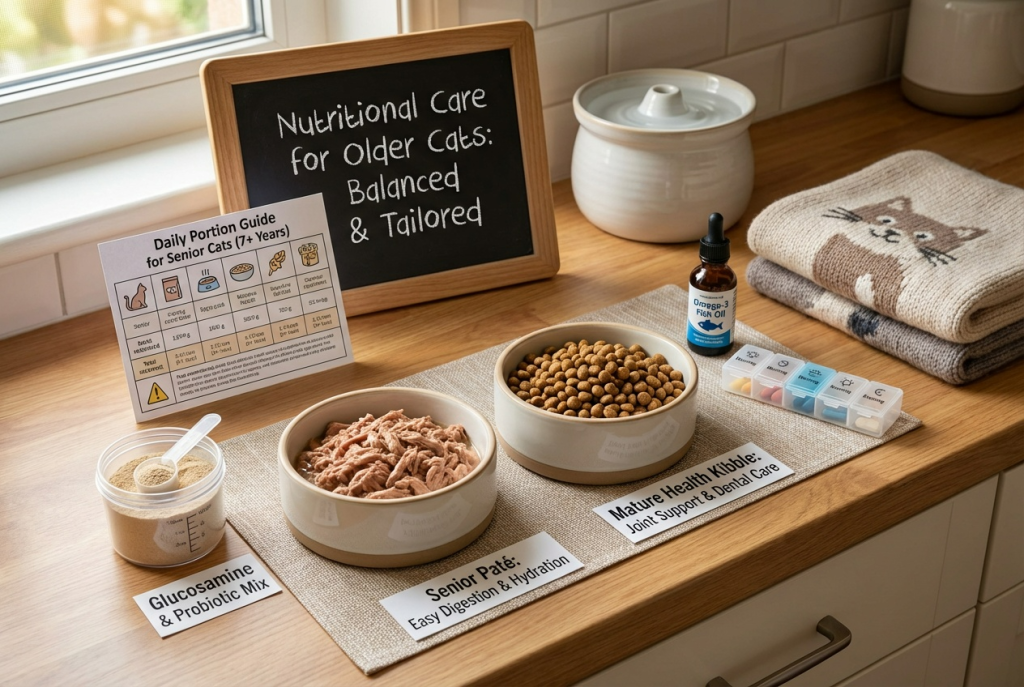

Learning the right diet tips for senior cats with kidney problems can make a significant difference in their comfort, energy, and overall health. Kidney disease is one of the most common conditions affecting older cats, and it often progresses slowly. Because the kidneys handle waste removal, hydration balance, and many metabolic tasks, dietary support becomes essential when they start to weaken. Although this condition cannot be cured, the right feeding approach slows progression and improves quality of life.
Cats with kidney problems often experience nausea, reduced appetite, muscle loss, and increased thirst. They may become more sensitive to textures, smells, and flavors. Because of these changes, feeding them becomes both an art and a science. You must strike the perfect balance between nutrition, palatability, and digestive comfort. With the right routine, you can support healthier kidney function, reduce toxin buildup, and make daily life brighter for your aging cat.
This guide simplifies what to feed, how to encourage consistent eating, and which adjustments help most. When you understand the essential diet tips for senior cats with kidney problems, you help your cat maintain strength, hydration, and calm throughout every stage of care.
Understanding Kidney Disease Before Applying Diet Tips for Senior Cats
Before exploring specific diet tips, it’s important to understand how kidney problems affect your cat. Senior cats often experience chronic kidney disease (CKD), which reduces the kidneys’ ability to filter blood effectively. Because waste builds up in the bloodstream, your cat may feel nauseous or fatigued.
Common signs include:
• Increased thirst
• Frequent urination
• Weight loss
• Dull coat
• Bad breath
• Lower appetite
• Vomiting
• Muscle weakness
Diet becomes the most powerful tool you have. The right nutritional changes reduce the kidneys’ workload and support better hydration. Diet adjustments also reduce nausea and improve appetite, helping your cat maintain a healthier weight.
Why Diet Tips for Senior Cats with Kidney Problems Matter
Every dietary choice influences kidney function. Unlike medications, which treat symptoms, diet directly affects how much stress the kidneys must handle. Food impacts hydration levels, toxin production, inflammation, energy, and digestion.
Key dietary goals include:
• Lower phosphorus
• Moderate, high-quality protein
• Higher moisture content
• Controlled sodium
• Increased omega-3 intake
These goals support kidney function and help your cat feel comfortable. When you follow proven diet tips for senior cats with kidney problems, you slow disease progression and maintain stable health longer.
Choose Kidney-Supportive Foods First
The cornerstone of effective dietary care is choosing food that supports kidney health. Veterinary kidney diets lead the way because they are scientifically formulated. They offer balanced protein, reduced phosphorus, and added omega-3 fatty acids.
Why Low-Phosphorus Food Helps
Phosphorus builds up when kidneys weaken. Excess phosphorus accelerates kidney damage and increases discomfort. Lowering phosphorus reduces toxin load and protects remaining kidney function.
Good kidney diets contain significantly less phosphorus than regular foods. Always check labels when selecting food brands.
Moderate, High-Quality Protein Is Essential
Cats need protein, even when they have kidney disease. However, they need protein that is digestible and gentle on their system. High-quality proteins like chicken, turkey, eggs, sardines, and rabbit support muscle health without straining the kidneys.
Avoid extremely high-protein diets, especially those designed for athletic or growing cats. They add unnecessary stress.
Hydration Is the Most Important Part of Diet Tips for Senior Cats
Kidneys need water to filter waste. Senior cats often struggle with hydration, so increasing moisture is essential.
Offer:
• Wet food instead of dry
• Broth-enhanced meals
• Water fountains
• Small water bowls in multiple rooms
Adding water directly to meals improves hydration while softening the food for easier eating.
Wet Food vs. Dry Food for Kidney Support
One of the most important diet tips for senior cats with kidney problems is transitioning to wet food. Dry food contains less moisture, making it harder for your cat to stay hydrated. Wet food supports hydration naturally and often feels easier to digest.
Benefits of Wet Food
• Hydrates with every bite
• Reduces kidney stress
• Soft texture suits older cats
• Improves appetite
• Mixes well with supplements
If your cat strongly prefers dry food, transitioning gradually or mixing the two helps encourage acceptance.
Using Toppers and Flavors to Increase Appetite
Cats with kidney problems often lose interest in food. Encouraging appetite becomes critical to prevent weight loss and muscle decline.
Helpful toppers include:
• Bone broth (unsalted)
• Tuna water (not oil)
• FortiFlora
• Small amounts of baby food (meat only)
• Warm water mixed into wet food
Always check ingredients for onions or garlic, which are unsafe for cats.
Warming food slightly enhances aroma, making meals more tempting. Because smell is deeply tied to appetite, this small step often boosts interest in eating.
Offer Smaller, More Frequent Meals
Another essential part of diet tips for senior cats with kidney problems is adjusting feeding frequency. Large meals may overwhelm a sensitive stomach. Smaller meals reduce nausea and help maintain steady energy.
Try offering:
• Four small meals
• Two moderate meals plus snacks
• A mix of wet meals throughout the day
This reduces digestive discomfort and encourages better overall intake.
Add Omega-3 Fatty Acids to Support Kidney Function
Omega-3s from fish oil reduce inflammation and protect kidney tissue. They also improve coat condition and joint comfort. However, always consult your veterinarian before adding any supplement because dosages vary.
Benefits include:
• Reduced inflammatory damage
• Better hydration retention
• Improved appetite signaling
• Increased comfort
Choose formulas specifically intended for cats for safe dosing.
Why Sodium Control Matters in Kidney Diets
Sodium affects blood pressure, and cats with kidney problems often experience elevated blood pressure naturally. Lower-sodium foods reduce strain on the kidneys and heart. Many veterinary kidney diets already include controlled sodium levels.
Avoid offering salty foods, including:
• Deli meats
• Cheese
• Chicken broth with salt
• Processed meats
These hidden sources can worsen symptoms.
Support Digestive Comfort Alongside Kidney Health
Digestive issues frequently accompany kidney disease. Constipation, loose stool, or nausea become common. Adjusting the diet supports smoother digestion.
Helpful strategies include:
• Adding pumpkin
• Increasing water intake
• Offering gentle probiotics
• Choosing easily digestible proteins
Digestive comfort encourages consistent eating, which is vital for maintaining weight.
Monitor Weight and Muscle to Adjust the Diet Properly
Weight loss is common in senior cats with kidney disease. Maintaining muscle mass becomes essential because muscle loss worsens weakness and energy decline.
Check for:
• Visible spine
• Sunken hips
• Loose skin over muscle
• Declining appetite
• Reduced mobility
If your cat loses weight, adjust calories slowly using nutrient-rich wet foods or supplements recommended by your vet.
Transition Food Slowly for Better Acceptance
Senior cats dislike sudden changes. Abrupt diet shifts may cause stomach upset or food refusal. Transition new kidney-friendly foods gradually.
Use a 7–10 day transition:
• Days 1–3: 25% new, 75% old
• Days 4–6: 50% new, 50% old
• Days 7–9: 75% new, 25% old
• Day 10: 100% new food
Gradual changes maintain trust and reduce stress.
Avoid Foods That Stress the Kidneys
Some foods increase toxin buildup, phosphorus levels, or sodium load. Avoid offering:
• Organ meats
• High-phosphorus fish like sardines (unless directed)
• Dry food with high carbohydrate content
• Processed treats
• Table scraps
• Bone-based broths
• High-sodium snacks
These items may worsen symptoms or accelerate disease progression.
Hydration Boosters to Support Kidney Function
Hydration drives nearly every diet tip for senior cats with kidney problems. Cats with CKD often cannot drink enough on their own.
Helpful hydration tools include:
• Cat water fountains
• Ice cubes made from tuna water
• Wet food soups
• Hydration gels
• Frequent, fresh water bowl changes
Encouraging drinking reduces toxin concentration in the bloodstream and helps cats feel more comfortable.
Work With Your Vet to Personalize Diet Tips for Senior Cats
Each cat’s condition is unique. While general guidelines help, personalized advice ensures the safest approach. Vets may recommend specialized diets, phosphorus binders, appetite stimulants, or hydration supplements based on lab results and symptoms.
Regular checkups help adjust the diet as the disease progresses, ensuring your cat remains as comfortable and stable as possible.
Conclusion
Applying the right diet tips for senior cats with kidney problems can dramatically improve your cat’s comfort, hydration, and long-term wellbeing. With thoughtful food selection, proper hydration support, and consistent feeding routines, you can slow the progression of kidney disease and help your cat maintain energy and strength. Although managing this condition requires patience, the rewards are immense. When you provide a diet built around love, understanding, and nutritional balance, you give your senior cat a better life—one with more comfort, warmth, and meaningful daily moments.
FAQ
1. Should all senior cats with kidney problems eat prescription diets?
Veterinary diets are recommended because they offer the ideal nutrient balance, but some non-prescription foods also help.
2. Can I give treats to a cat with kidney disease?
Yes, but choose low-phosphorus and low-sodium treats in small amounts.
3. Do cats with kidney problems need more water?
Absolutely. Hydration is essential for reducing kidney stress and improving comfort.
4. Should protein be eliminated from the diet?
No. Cats need high-quality protein in moderated amounts to maintain muscle.
5. How often should senior cats with kidney problems eat?
Small, frequent meals support digestion, energy, and appetite stability.


