
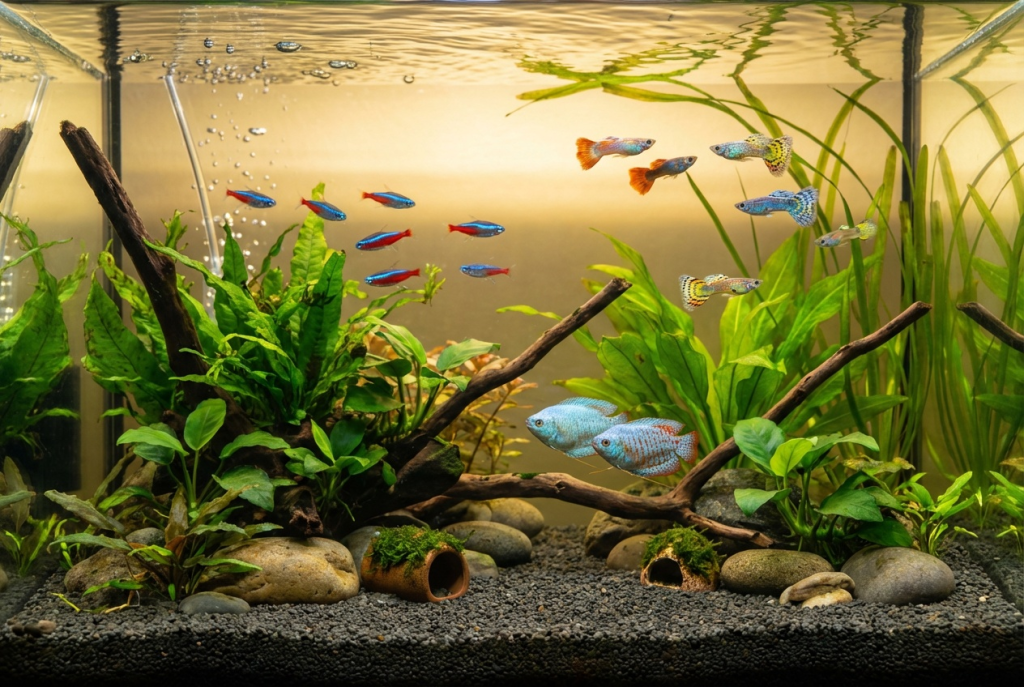

Creating a harmonious tank starts with choosing the right peaceful community aquarium fish. A calm, balanced aquarium isn’t created by chance — it’s built intentionally through smart species selection, thoughtful tank setup, and an understanding of how different fish behave. When you bring home fish that naturally get along, your aquarium becomes more than a display. It becomes a thriving, stress-free ecosystem full of color, movement, and personality.
Many aquarists dream of owning a community tank, yet they worry about aggression, territorial behavior, or fish that simply refuse to coexist. The good news is that countless species love living alongside others. These peaceful community aquarium fish bring life to your tank without clashing with their neighbors. They appreciate stable conditions, gentle tankmates, and environments that reflect their natural habitat.
You don’t need a massive aquarium to build a peaceful community. With the right planning, even modest-sized tanks can house cooperative fish that enjoy swimming, exploring, and socializing together. The key lies in understanding which species naturally live in schools, which prefer calm environments, and which thrive with minimal competition.
A well-designed community tank becomes one of the most rewarding home aquariums. Every fish interacts peacefully, every plant sways calmly, and every corner feels alive with gentle energy.
Why Choosing Peaceful Community Aquarium Fish Matters
When you choose peaceful community aquarium fish, you protect the health and happiness of every creature in your tank. Fish that feel safe behave naturally. They swim confidently, show bright colors, eat consistently, and live longer.
Aggression, however, creates stress. Stress weakens immunity, disrupts appetite, and shortens lifespan. Even small nips or territorial disputes can escalate. That’s why proper species selection is the foundation of a successful community tank.
Peaceful fish thrive because they:
• Reduce tension
• Encourage natural schooling behavior
• Create a calm environment
• Support stable social structure
• Make tank maintenance easier
Community tanks work best when all fish share similar temperaments, water requirements, and activity levels. Once these needs align, your aquarium becomes a fully functioning, serene underwater world.
Characteristics of Peaceful Community Aquarium Fish
Before choosing species, it helps to understand what defines peaceful community aquarium fish. Although each species has unique traits, most peaceful fish share several core characteristics.
They Are Non-Territorial
Peaceful species rarely defend specific areas of the tank. They explore freely, share space, and tolerate tankmates.
They Enjoy Group Living
Many peaceful fish are shoalers or schoolers. Being in groups helps them feel safe and reduces stress.
They Show Mild, Predictable Behavior
These fish communicate gently and avoid sudden aggression. They rarely chase or nip at tankmates.
They Prefer Stable Environments
Peaceful community aquarium fish thrive when water parameters stay consistent. Stability helps maintain calm interactions.
They Occupy Different Levels
Peaceful species often inhabit different tank zones, reducing competition for space.
By identifying these traits, you can confidently select fish that coexist beautifully.
Top Peaceful Community Aquarium Fish for Beginners and Experts
Whether you’re building your first aquarium or upgrading an established tank, these peaceful community aquarium fish adapt easily, stay calm, and add charm to your tank.
Neon Tetras
Neon tetras are iconic peaceful fish. Their bright blue and red stripes bring life to any tank. They enjoy schooling and thrive in groups of at least six. When kept together, they move in elegant schools across the mid-level of your aquarium.
Neon tetras rarely bother tankmates and pair well with many peaceful species.
Guppies
Guppies are cheerful, active, and peaceful community aquarium fish that bring vibrant color to the surface and mid-level. Their flowing tails and curious personalities make them entertaining to watch.
They reproduce easily, so consider balancing males and females or choosing same-gender groups to avoid overcrowding.
Corydoras Catfish
Corydoras catfish are gentle bottom dwellers that clean leftover food and keep the substrate tidy. They thrive in groups of at least four and stay peaceful even in busy tanks.
Their calm, friendly nature makes them perfect for community aquariums.
Harlequin Rasboras
Harlequin rasboras are calm, elegant schoolers that add movement without causing conflict. They prefer peaceful tankmates and swim mainly in the mid-to-upper levels.
Because they school tightly, they create beautiful synchronized patterns that enhance the visual harmony of your tank.
Cherry Barbs
Unlike some barbs, cherry barbs are peaceful community aquarium fish that behave gently. They display beautiful red and gold tones and enjoy being in groups.
Their quiet temperament makes them suitable for a wide variety of tank setups.
Platies
Platies are friendly, colorful, and highly adaptable. They get along well with most peaceful species and enjoy moderate activity.
They’re easy to care for, making them ideal for beginners who want low-maintenance community fish.
Otocinclus Catfish (Otos)
Otocinclus catfish are small algae-eaters that stay peaceful and unobtrusive. They prefer groups and feel safest when surrounded by others.
Their calm presence and helpful cleaning habits make them valuable additions to any community tank.
Kuhli Loaches
Kuhli loaches look like tiny eels but behave like gentle cleaners. They hide often during the day and explore peacefully at night.
Their non-aggressive nature pairs well with calm surface and mid-level fish.
Celestial Pearl Danios
These tiny, beautifully patterned fish remain peaceful community aquarium fish throughout their lives. They prefer stable conditions and thrive in small groups.
Their gentle behavior makes them suitable for nano tanks as well.
Honey Gouramis
Honey gouramis are among the most peaceful gourami species. They glide gracefully across the tank and interact beautifully with calm fish.
Because they prefer quiet environments, they fit perfectly into peaceful community setups.
Creating the Perfect Environment for Peaceful Fish
Even peaceful fish can become stressed if their environment doesn’t suit their needs. Building the right tank setup helps them coexist effortlessly.
Choose the Right Tank Size
Overcrowding leads to stress. Even peaceful community aquarium fish need space to swim, hide, and interact. Research the recommended size for each species before adding them.
Provide Plenty of Plants and Hiding Spots
Plants reduce stress by offering shelter and privacy. They also create natural partitions that prevent accidental confrontations.
Use:
• Live plants
• Driftwood
• Caves
• Rock structures
These elements make the tank feel safe and balanced.
Maintain Stable Water Conditions
Consistency keeps peaceful fish relaxed. Test water regularly and maintain stable parameters for your chosen species.
Avoid sudden temperature changes or chemical fluctuations.
Feed a Balanced Diet
Peaceful community aquarium fish thrive when they receive proper nutrition. Offer:
• High-quality flakes
• Pellets
• Frozen foods
• Live treats (in moderation)
A balanced diet supports immunity and reduces stress-induced behavior.
How to Introduce New Peaceful Fish Properly
The way you introduce new fish affects community harmony. Even peaceful fish need careful acclimation.
Quarantine First
Quarantine new fish for at least two weeks to prevent disease spread.
Acclimate Slowly
Float the bag, then gradually mix tank water into it over 20–30 minutes. This helps new arrivals adjust gently.
Add Fish During Calm Hours
Choose times when tank lighting is low and activity is minimal.
Monitor First Interactions
Watch closely for signs of stress, chasing, or fin nipping. Peaceful community aquarium fish typically settle quickly.
Common Mistakes to Avoid in Community Tanks
Even well-meaning aquarists sometimes make mistakes that disrupt harmony. Avoid these problems to maintain a peaceful environment.
Mixing Aggressive Species
Aggressive tankmates may bully peaceful fish. Always research compatibility first.
Overfeeding
Excess food leads to water pollution, increased aggression, and health issues.
Ignoring Tank Personality
Some fish thrive in large groups, while others prefer quiet corners. Understanding these differences prevents conflict.
Ensuring Long-Term Success in Peaceful Community Tanks
Stability is the secret to maintaining harmony. The longer your tank remains consistent, the more your peaceful community aquarium fish flourish.
Routine Maintenance
Weekly water changes, filter cleaning, and plant trimming keep the environment healthy.
Observing Behavior
Watch daily for changes in behavior, appetite, or coloration. Early detection prevents problems.
Balancing the Ecosystem
Ensure each species has enough space, food, and stimulation.
With thoughtful care, your community tank becomes a thriving underwater sanctuary.
Conclusion
Choosing peaceful community aquarium fish allows you to create a calm, beautiful tank filled with cooperation instead of conflict. When you understand each species’ temperament, needs, and natural behaviors, you can design an environment where every fish thrives. Peaceful fish bring harmony, color, and life to your aquarium, turning it into a serene aquatic world. With the right setup, balanced diet, and mindful introductions, your tank becomes a safe haven where fish can flourish together for years.
FAQ
1. How many peaceful fish can I keep in a community tank?
It depends on tank size and species. Always research space requirements before adding fish.
2. Are tetras good peaceful community aquarium fish?
Yes. Most tetra species are excellent community fish when kept in groups.
3. Can I mix livebearers with tetras?
Yes. Guppies, platies, and mollies coexist well with peaceful tetras and rasboras.
4. How do I stop fin nipping in a community tank?
Increase group numbers for schooling fish and avoid mixing nippy species.
5. What water conditions do peaceful community fish prefer?
Stable temperature, clean water, and steady parameters support all peaceful species.