
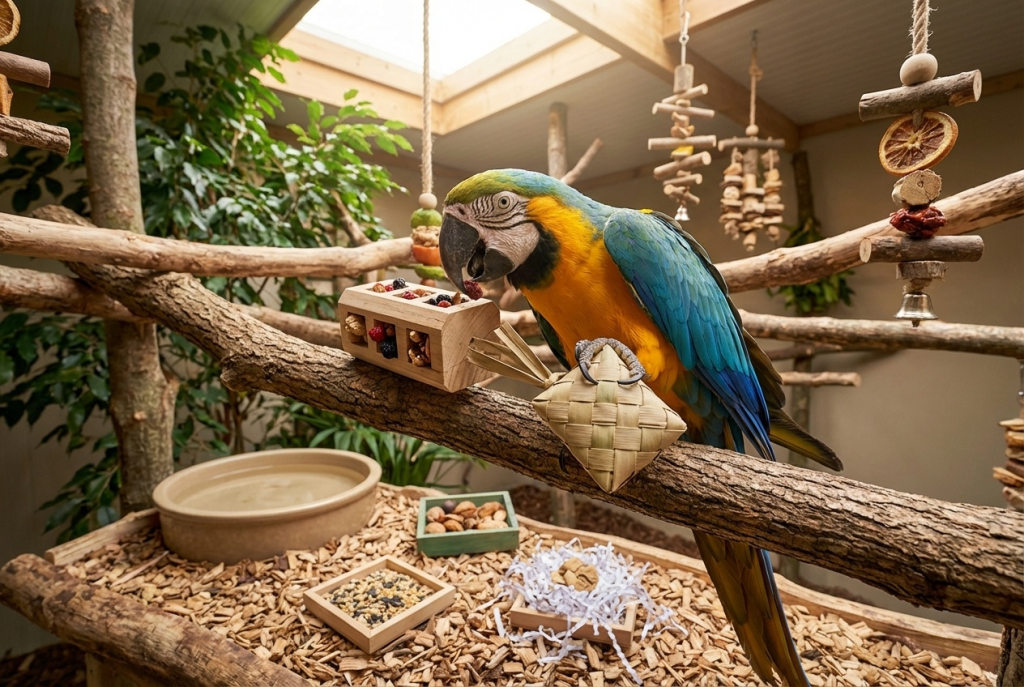

Foraging for parrot health is one of the most important yet overlooked aspects of avian care. In the wild, parrots spend hours each day searching, shredding, climbing, tasting, sorting, and problem-solving to find their food. Every movement engages their mind. Every challenge strengthens their instincts. But in captivity, many parrots receive food in bowls — predictable, easy, and mentally unstimulating. Although well-intentioned, this convenience removes one of the most important behaviors parrots rely on to stay emotionally balanced.
Mental health plays as big a role in your parrot’s quality of life as physical well-being. When parrots cannot express natural behaviors, stress builds, boredom creeps in, and frustration grows. These emotions often show up in feather plucking, aggression, screaming, pacing, depression, or destructive chewing. Yet, something as simple as adding foraging back into their daily routine can transform their entire world.
Foraging for parrot health isn’t just enrichment — it’s essential survival behavior. When you give your parrot opportunities to search, explore, tear apart, and solve problems, you activate the mental pathways evolution created for them. Your parrot becomes more confident, calmer, happier, and more engaged with their environment. And the best part? Foraging can be adapted for any home, any parrot species, and any skill level.
Why Foraging Is Essential for Parrot Mental Health
Parrots are intelligent animals with emotional depth and cognitive ability comparable to toddlers. They need stimulation, novelty, and challenge to feel fulfilled. When their environment lacks complexity, their mind becomes underworked — like a brilliant student stuck in a classroom with no books, no projects, and no conversation.
Foraging satisfies their need for:
• Mental challenge
• Physical movement
• Environmental exploration
• Emotional security
• Natural instinct expression
In the wild, parrots spend up to 70% of their day foraging. That means the majority of their mental energy is devoted to searching and manipulating their environment. When we remove this behavior, we unintentionally create a huge gap in their daily activity. Foraging for parrot health fills that gap.
In captivity, food bowls offer zero challenge. There is no climbing, no movement, no problem-solving, and no excitement. But once you introduce foraging opportunities into your parrot’s environment, everything changes. Stress decreases. Joy increases. Their confidence grows. They begin using their brain the way nature intended.
How Foraging Reduces Stress and Anxiety in Parrots
Parrots experience stress when their environment lacks enrichment, variety, or natural outlets for energy. Stress in parrots often shows up subtly at first: reduced vocalization, repetitive behaviors, or clinginess. Over time, the stress can escalate into self-destruction, aggression, or withdrawal.
Foraging reduces stress through:
• Predictable activity
• Mental focus
• Physical engagement
• Confidence-building success
• Sensory stimulation
When parrots forage, they stay busy without feeling overwhelmed. They choose where to climb, which toy to chew, and how to access their food. This sense of agency increases emotional wellbeing. The act of solving simple food puzzles generates mental satisfaction and relaxation. Foraging for parrot health ultimately becomes one of the strongest tools you can use to decrease anxiety.
Even parrots with past trauma or fear often respond positively to foraging. Because the activity is self-paced and rewarding, it gently encourages emotional healing. It allows them to redirect nervous energy into exploration rather than stress behaviors.
Foraging Keeps Parrots Physically Active
Indoor parrots often don’t get enough physical exercise. Foraging naturally encourages stretching, climbing, hanging, chewing, exploring, and balancing. Each of these movements improves muscle tone, joint flexibility, and coordination.
Foraging for parrot health supports:
• Foot dexterity
• Wing strength
• Balance and agility
• Core muscle use
• Healthy weight maintenance
Parrots that don’t move enough often gain weight or lose muscle tone. Foraging solves this by adding daily movement without forcing exercise. Instead of sitting near a food bowl, parrots climb, explore, and navigate toys to access their food — an instinct that reinforces both physical and mental health.
How Foraging Prevents Boredom and Destructive Behaviors
A bored parrot is not a peaceful parrot. Because they’re so intelligent, parrots need constantly changing stimulation. Without it, they find ways to entertain themselves — often in destructive ways.
Common boredom behaviors include:
• Chewing furniture
• Screaming
• Excessive vocalizing
• Biting
• Feather plucking
• Cage bar chewing
• Pacing
Foraging interrupts these patterns by replacing unwanted behaviors with healthy, natural activities. When parrots stay busy, their mind doesn’t wander into stress or frustration. Foraging for parrot health redirects their energy into productive play, which reduces destructive tendencies.
Even parrots with severe behavioral issues can benefit. Foraging challenges the brain and provides relief from the monotony that triggers harmful behaviors. It stimulates curiosity, which often softens aggression and improves mood.
Foraging Enhances Problem-Solving Skills
Parrots are natural problem-solvers. In the wild, they figure out how to open tough seeds, remove husks, navigate branches, and examine new objects. Foraging activities recreate these challenges at home.
When you add puzzle feeders, food-hidden toys, or DIY foraging setups, your parrot learns how to:
• Manipulate objects
• Analyze patterns
• Make decisions
• Persevere through challenges
• Adapt to new environments
Foraging strengthens cognitive pathways and prevents mental stagnation. Parrots that regularly engage in problem-solving remain sharp, confident, and emotionally balanced. Foraging for parrot health gives them constant learning opportunities, which supports lifelong mental vitality.
Foraging Builds Confidence and Independence
Confidence is essential for a happy parrot. Many behavior problems arise from insecurity or fear. Foraging helps build your parrot’s confidence because each success — even opening a simple treat wrapper — reinforces their problem-solving abilities. They begin to trust their instincts and feel more capable in their environment.
Foraging also supports independence. Parrots that rely on constant human attention become anxious or demanding when their owner is unavailable. But when you create a foraging-rich environment, your parrot gains the ability to entertain themselves.
A confident, independent parrot:
• Plays calmly alone
• Explores without fear
• Handles new situations better
• Shows fewer signs of anxiety
• Interacts with humans more positively
Foraging for parrot health strengthens your bird’s emotional foundation, allowing them to thrive with or without constant supervision.
Types of Foraging Every Parrot Should Experience
There are many forms of foraging, and the best enrichment combines multiple types to mimic natural variety. Parrots enjoy exploring the world through sight, sound, touch, and taste. Each foraging style taps into different instincts.
1. Shredding and Destructive Foraging
Parrots love tearing things apart. Provide:
• Shreddable boxes
• Paper toys
• Palm leaf toys
• Soft wood blocks
• Cardboard tubes
This satisfies chewing instincts and reduces furniture destruction.
2. Food Puzzle Foraging
Puzzle toys challenge cognitive skills. They come in rotating wheels, drawers, sliding panels, or spinning trays.
3. Natural Foraging
Hide foods in:
• Fresh branches
• Foraging bowls
• Leafy greens
• Hanging bundles
Parrots search using beaks and feet, just like in the wild.
4. Ground Foraging
Scatter pellets or small treats on foraging mats. This mimics natural grazing and keeps parrots busy.
5. Advanced Foraging Challenges
Increase complexity by wrapping treats in paper, placing food inside small containers, or hanging toys overhead to encourage climbing.
Each method strengthens different skills and keeps your parrot mentally stimulated.
Safe Foods for Foraging Activities
Safety is essential when offering foraging foods. Always choose parrot-safe options and avoid anything toxic.
Safe foods include:
• Mixed vegetables
• Nuts (unsalted)
• Seeds (in moderation)
• Sprouts
• Fresh fruits
• Dried fruits (unsweetened)
• Pellets
• Natural herbs
Avoid avocado, chocolate, onion, garlic, caffeine, and anything salted or sugary.
When you combine safe foods with creative foraging setups, you support your parrot’s physical and mental health.
How to Introduce Foraging to Your Parrot
If your parrot has never foraged before, start slowly. Introduce simple challenges and gradually increase difficulty as your parrot gains confidence.
Begin by:
• Hiding food lightly under paper
• Using shallow foraging dishes
• Offering easy puzzle toys
• Placing treats inside open containers
Once your parrot understands the concept, move to more advanced activities like wrapped treats or hanging food toys.
The goal is to build success step-by-step. Parrots discouraged by difficult tasks may give up, so patience is essential. When you tailor challenges to your parrot’s ability, you support steady emotional growth.
Foraging for Cage-Bound or Fearful Parrots
Some parrots hesitate to explore due to fear, trauma, or unfamiliarity. Foraging can help gently rebuild trust. Create calm environments and start with passive, easy options like putting favorite foods in slightly different locations.
Place foraging toys near areas your parrot feels safe. Gradually increase distance as they grow more confident. Celebrate small victories. Over time, even timid parrots learn to participate in foraging for parrot health with enthusiasm.
The Role of Foraging in Multi-Parrot Households
Multiple parrots add complexity, but foraging enriches all birds and reduces tension. Provide multiple stations so no bird feels the need to guard resources. Separate dominant birds temporarily if needed.
Foraging promotes harmony by giving each parrot a purposeful, absorbing task. This reduces jealousy, competition, and conflict.
How Often Should Parrots Forage?
Daily foraging is ideal. Since wild parrots forage most of the day, consistent enrichment keeps your bird’s mind and body active. Rotate toys weekly and introduce new ones regularly to maintain excitement.
Foraging for parrot health becomes most effective when treated as part of your daily routine, not an occasional activity.
Conclusion
Foraging for parrot health is essential, not optional. It enriches your parrot’s life by stimulating their mind, engaging their instincts, reducing stress, and strengthening independence. When you give your parrot daily opportunities to explore, shred, solve, and discover, you transform their emotional wellbeing. Foraging supports confidence, reduces destructive behavior, and nurtures a deeper bond between you and your bird. With patience, creativity, and variety, you can create a foraging-rich environment that keeps your parrot happy, balanced, and thriving.
FAQ
1. How often should I offer foraging activities to my parrot?
Daily foraging is ideal because it mirrors natural behavior and reduces stress.
2. Can beginner parrots learn to forage?
Yes. Start with simple tasks and build up gradually as they gain confidence.
3. What foods are best for foraging?
Healthy options include nuts, vegetables, pellets, herbs, and unsweetened dried fruit.
4. Does foraging help reduce feather plucking?
Yes. Foraging redirects stress and prevents boredom, both major causes of plucking.
5. Are puzzle toys necessary for foraging?
Not always. Boxes, paper, branches, and homemade setups can work just as well.