
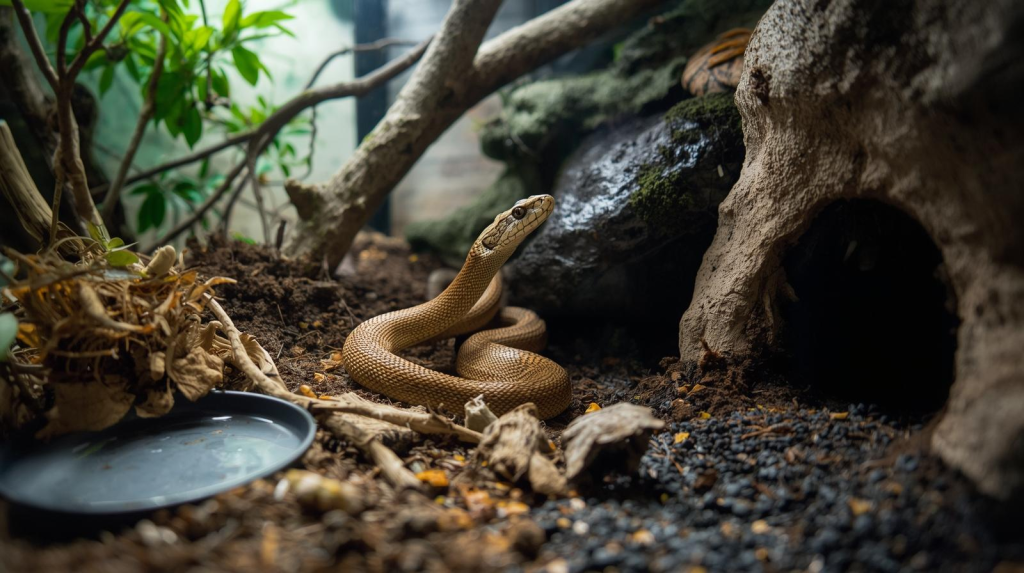

When most people think of animal enrichment, they picture dogs chasing toys or parrots solving puzzles—not snakes slithering through tubes or exploring logs. But just because snakes aren’t furry or expressive doesn’t mean they don’t need stimulation. In fact, modern reptile science is uncovering how vital enrichment is for their health and wellbeing.
Let’s dive into what enrichment means for snakes, what studies reveal, and how you can create a more dynamic, enriching environment for your pet.
What Does Enrichment Mean for Snakes?
Animal enrichment refers to any environmental or behavioral enhancement that promotes natural instincts. For snakes, enrichment doesn’t mean playing fetch—it means giving them opportunities to explore, hunt, hide, and climb like they would in the wild.
In the wild, snakes spend their days doing far more than just sitting still. They navigate through complex environments, hunt, thermoregulate, and interact with scents and textures. In captivity, however, most snakes live in static enclosures where little changes day to day. Without enrichment, this monotony can lead to stress, lethargy, and even stereotypic behaviors like nose rubbing or pacing.
So, yes—snakes absolutely benefit from enrichment. But how much and what type depends on their species and natural habits.
The Science Behind Snake Enrichment
For years, reptile care focused on survival, not behavioral health. But recent research is shifting that perspective. Studies from animal behaviorists and herpetologists show that enrichment can enhance both physical and mental well-being in captive reptiles.
A 2020 study published in Applied Animal Behaviour Science found that snakes provided with environmental changes—like varied textures, scents, and climbing options—displayed more exploratory behaviors and fewer signs of stress. Another experiment with ball pythons showed that snakes given opportunities to choose between multiple hiding spots were more active and ate more consistently than those kept in bare enclosures.
In other words, enrichment isn’t a luxury—it’s a necessity for psychological health.
Why Enrichment Matters for Captive Snakes
Captive snakes live under controlled conditions that often strip away the challenges and stimuli of nature. This can make them prone to boredom, stress, and even immune suppression. Here’s why enrichment matters:
- Reduces stress: A varied environment allows snakes to express natural behaviors, which lowers cortisol levels.
- Encourages exploration: Physical enrichment encourages movement, helping maintain muscle tone and digestion.
- Stimulates the mind: Introducing scents or puzzles promotes natural curiosity and cognitive engagement.
- Prevents health issues: A mentally and physically active snake is less likely to suffer from obesity or inactivity-related illnesses.
Imagine living in a single empty room forever. You’d stay alive—but would you thrive? The same principle applies to snakes.
Types of Enrichment That Benefit Snakes
Enrichment can take many forms. The key is to mimic a snake’s natural environment as closely as possible while keeping safety in mind.
1. Environmental Enrichment
This focuses on modifying the physical habitat. Add climbing branches, cork bark tunnels, foliage, or natural substrate. Rearranging elements every few weeks keeps the habitat new and stimulating.
Different species need different setups—arboreal snakes thrive with vertical branches, while burrowing species prefer deep, loose substrate.
2. Sensory Enrichment
Snakes rely heavily on their sense of smell and touch. Introducing new scents (like safe herbs or non-toxic animal bedding) can trigger natural foraging behavior. Even changing substrate texture can make a big difference.
You can also use controlled light variation or day-night cycles to simulate natural conditions.
3. Feeding Enrichment
Instead of always offering pre-killed prey in a bowl, try hiding it in foliage or using feeding tongs to encourage natural hunting behaviors. For some snakes, even varying prey type or size adds an enriching challenge.
4. Cognitive Enrichment
Though snakes aren’t problem-solvers in the same way mammals are, they can still benefit from mild challenges. For example, providing multiple hiding spots or new climbing routes requires them to explore and make choices—small decisions that keep their brains active.
5. Social or Routine Enrichment
While most snakes are solitary, they do react positively to predictable routines. Regular, gentle handling (for species that tolerate it) and occasional supervised exploration outside their enclosure offer safe ways to add variety.
Common Myths About Snake Enrichment
There’s a long-standing myth that snakes don’t need enrichment because they’re “simple” animals with limited intelligence. Science disagrees.
Studies in reptile cognition have shown that snakes can learn from experience, recognize feeding cues, and even develop preferences for certain environments. They’re far from emotionless automatons.
Another misconception is that enrichment stresses snakes. While sudden changes can startle them, controlled, gradual enrichment actually reduces stress. The trick is consistency—introducing new elements slowly and allowing the snake time to adjust.
How to Tell if Your Snake Is Enriched
It’s not always obvious when a snake is happy, but you can look for subtle signs:
- Increased exploration and activity during appropriate times (day or night depending on species).
- Consistent feeding and shedding patterns.
- Calm behavior during handling.
- Less pacing or glass-surfing (attempts to escape).
If your snake appears alert, curious, and relaxed, you’re likely meeting its enrichment needs. Conversely, signs of stress like refusal to eat, frequent hiding, or frantic movement suggest the environment might need adjustment.
Creating an Enrichment Plan for Your Snake
Think of enrichment as an ongoing process, not a one-time setup. Here’s a simple plan to get started:
- Research your species: Know whether your snake is arboreal, terrestrial, or fossorial to tailor the environment.
- Start small: Add one or two new elements, like a climbing branch or hide.
- Rotate regularly: Change layouts or swap decorations monthly to maintain novelty.
- Track behavior: Observe how your snake reacts to changes to identify preferences.
- Maintain safety: Avoid sharp objects, toxic plants, or unsecured items.
Over time, you’ll learn what excites your snake the most—whether it’s exploring a new tunnel or hunting for hidden prey.
The Future of Snake Enrichment Research
Reptile welfare science is still evolving, but it’s clear that enrichment plays a major role in overall health. As more keepers adopt evidence-based care, we’re likely to see better guidelines for species-specific enrichment and welfare standards.
In the coming years, studies may uncover more about how snakes perceive their environment, make choices, and even form environmental preferences—helping us understand them not just as fascinating reptiles, but as sentient beings with genuine behavioral needs.
Conclusion
So, do snakes need enrichment? The science says yes—absolutely. Enrichment helps snakes live fuller, healthier lives by stimulating their instincts, reducing stress, and promoting exploration.
If you keep snakes as pets, think beyond the basics of heating and feeding. Their world doesn’t need to be static. By adding texture, scent, and choice, you transform a simple enclosure into a habitat where your snake can truly thrive.
FAQ
1. Do all snake species need enrichment?
Yes, but the type of enrichment depends on their natural behavior. Arboreal species need climbing opportunities, while burrowing species prefer substrate depth and hiding spaces.
2. Can enrichment stress out my snake?
Only if introduced too quickly. Gradual changes and consistency allow snakes to explore safely without becoming overwhelmed.
3. How often should I change enrichment items?
Rotating elements every 3–4 weeks keeps your snake curious and prevents boredom while maintaining a sense of security.
4. Are live plants safe for snake enclosures?
Many live plants are safe, but always research species first. Avoid toxic varieties and ensure they can tolerate enclosure humidity.
5. What’s the easiest enrichment for beginners?
Start with extra hides, textured logs, or climbing branches. Even small changes can make a big difference in your snake’s quality of life.Output in