
Creating a low-stress bearded dragon habitat is more than arranging a tank—it’s about building a home where your reptile feels safe, secure, and at peace. A calm environment not only reduces anxiety but also helps your bearded dragon stay active, eat well, and enjoy life. Let’s explore how to design the perfect setup for your scaly companion.
Understanding Bearded Dragon Stress
Before setting up your bearded dragon’s home, it’s essential to recognize what stress looks like. Just like people, dragons have body language that tells a story. When they’re relaxed, they bask confidently, explore curiously, and eat regularly. When stressed, their color darkens, they hide excessively, or refuse food.
Stress can come from various sources—improper lighting, loud noises, temperature fluctuations, or even being handled too much. Building a low-stress habitat means anticipating these triggers and creating an environment that prevents them.
Choosing the Right Enclosure
The enclosure is your dragon’s entire world, so choosing the right one sets the foundation for everything else.
Tank Size and Shape
Bearded dragons need room to move, climb, and bask. For an adult, aim for a 40–120-gallon tank, depending on size. The tank should be longer than it is tall—dragons love to roam horizontally more than vertically. A 4-foot-long enclosure gives them enough space to explore and stretch.
Material and Ventilation
Glass tanks are common, but ensure there’s proper airflow. Poor ventilation traps heat and humidity, creating discomfort. Mesh lids work well for ventilation while keeping temperatures manageable. Avoid plastic bins or small terrariums—they can quickly become too warm or claustrophobic.
Placement in Your Home
Where you place the tank matters. Keep it away from windows, vents, and loud areas like TVs. Vibrations and temperature shifts can cause stress. Choose a quiet corner where your dragon can watch without being startled.
Setting Ideal Temperature and Lighting
Temperature and light play a massive role in your dragon’s mood and health. They come from Australia’s arid regions, where the sun dominates their daily routine. Recreating that natural environment indoors keeps them comfortable and calm.
Basking and Cool Zones
Create a temperature gradient: one side hot, one side cooler. The basking area should range between 95°F–105°F for adults and slightly warmer for juveniles. The cool zone should stay around 80°F. This gradient lets your dragon self-regulate—just like they would in the wild.
UVB Lighting
UVB light is non-negotiable. Without it, your bearded dragon can’t synthesize vitamin D3 properly, which leads to weak bones and stress. Use a high-quality UVB bulb that covers about two-thirds of the enclosure’s length. Replace bulbs every six months, even if they still appear to work—UV output fades over time.
Nighttime Conditions
Dragons need darkness to rest. Turn off all lights at night, but if your room gets too cold (below 70°F), use a ceramic heat emitter instead of a visible light source.
Designing a Comfortable Habitat Layout
A low-stress habitat is as much about layout as it is about equipment. Your dragon should have clear zones—places to bask, hide, eat, and explore.
Hiding Spots and Shelters
Every dragon needs privacy. Include at least one hiding spot on the cool side and one on the warm side. Hides mimic burrows, reducing stress by offering security. You can use reptile caves, hollow logs, or even custom-built shelters.
Climbing and Exploration Areas
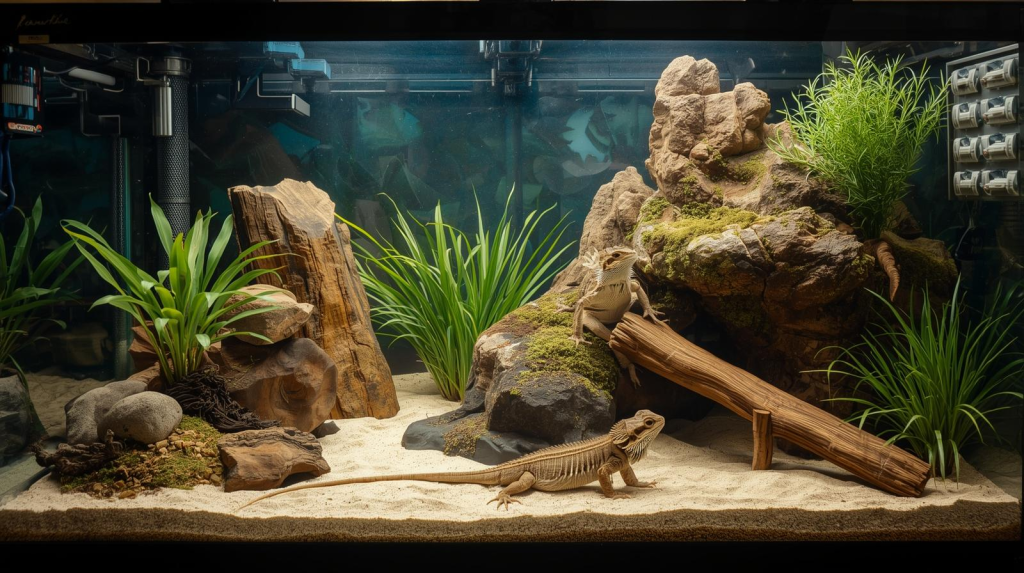
Bearded dragons love to climb. Add branches, rocks, and ledges to create vertical variety. Ensure all climbing structures are stable and smooth to prevent injuries. A mix of heights gives your dragon exercise and stimulation.
Substrate Selection
The substrate affects cleanliness, comfort, and stress. Avoid loose sand—it poses an impaction risk if swallowed. Instead, use reptile carpet, tile, or paper towels. These options are easy to clean and safe for your dragon’s health.
Visual Barriers
Sometimes, dragons get nervous when they see reflections or their own image in glass. You can reduce this by adding a background to the tank’s back and sides. It creates a sense of enclosure and reduces anxiety.
Creating a Natural Environment
Reptiles feel calmer in environments that mimic their natural habitat. Adding natural touches can transform a sterile tank into a thriving mini-ecosystem.
Natural Decor and Plants
Incorporate safe natural elements like rocks, branches, and artificial desert plants. If using real plants, make sure they’re non-toxic and pesticide-free. Natural textures and earthy tones calm your dragon and promote natural behaviors.
Lighting Cycles
Keep a consistent day-night cycle—12 hours of light, 12 hours of darkness. Dragons rely on these rhythms for hormonal balance, appetite, and sleep quality. Inconsistent light patterns can cause stress and confusion.
Humidity Control
Maintain humidity around 30–40%. Excess moisture leads to respiratory issues, while overly dry air can cause shedding problems. Use a hygrometer to monitor levels daily.
Feeding and Hydration for Calmness
Food and water setup influence how comfortable your bearded dragon feels.
Feeding Routine
Dragons thrive on routine. Feed them at consistent times—usually morning or midday when they’re most active. Offer a mix of protein (crickets, mealworms, dubia roaches) and vegetables (collard greens, bell peppers, squash). Consistency creates predictability, reducing stress.
Feeding Area
Use a flat feeding dish that’s easy to clean. Place it in the middle of the tank so your dragon doesn’t feel cornered or threatened while eating.
Hydration and Baths
Provide a shallow water dish, even if they rarely drink from it. Bearded dragons absorb moisture through their skin and enjoy occasional warm baths. Regular bathing also helps with shedding and relaxation.
Handling and Interaction Without Stress
Even the most social dragons can get stressed if handled too often or improperly.
Start Slowly
If your bearded dragon is new, give it time to adjust before frequent handling. Start with short sessions and let them climb onto your hand rather than grabbing them.
Recognize Stress Signs
If your dragon puffs its beard, hisses, or turns black, it’s telling you to back off. These are natural signs of discomfort or fear. Respect these signals to build trust over time.
Consistency Builds Confidence
Handle your dragon regularly but gently, maintaining a calm voice and steady movements. Over time, they’ll associate you with safety, not stress.
Maintaining Cleanliness and Stability
A clean habitat is a calm habitat. Messy or smelly enclosures cause stress and health problems.
Daily Spot Cleaning
Remove waste, uneaten food, and shed skin daily. It keeps the tank hygienic and prevents bacteria buildup.
Deep Cleaning Routine
Once a month, remove all decor and substrate for a thorough cleaning with reptile-safe disinfectant. Rinse everything well before returning it.
Consistent Environment
Avoid frequent rearrangements. Dragons thrive in familiar spaces. Constantly changing their habitat can make them anxious, so keep layout adjustments minimal and intentional.
Conclusion
Building a low-stress bearded dragon habitat means thinking like your dragon. Comfort, safety, and predictability are the keys. By controlling light, temperature, and space—and respecting their instincts—you create more than a tank. You create a sanctuary where your bearded dragon feels calm, secure, and content. With just a bit of care and consistency, your reptile can thrive in a stress-free home.
FAQ
1. How can I tell if my bearded dragon is stressed?
Look for darkened coloration, refusal to eat, excessive hiding, glass surfing, or rapid head bobbing. These signs indicate discomfort or anxiety.
2. What temperature should I maintain in a low-stress habitat?
Keep the basking area around 95–105°F and the cool zone at about 80°F to allow proper thermoregulation.
3. How often should I clean my bearded dragon’s tank?
Spot clean daily and perform a full deep clean once a month to prevent odors, bacteria, and stress.
4. Can loud noises stress bearded dragons?
Yes, vibrations and loud sounds can make them nervous. Place the enclosure in a quiet part of your home.
5. What’s the best way to make my dragon feel safe?
Provide multiple hides, maintain consistent routines, and avoid sudden movements or bright nighttime lights.