
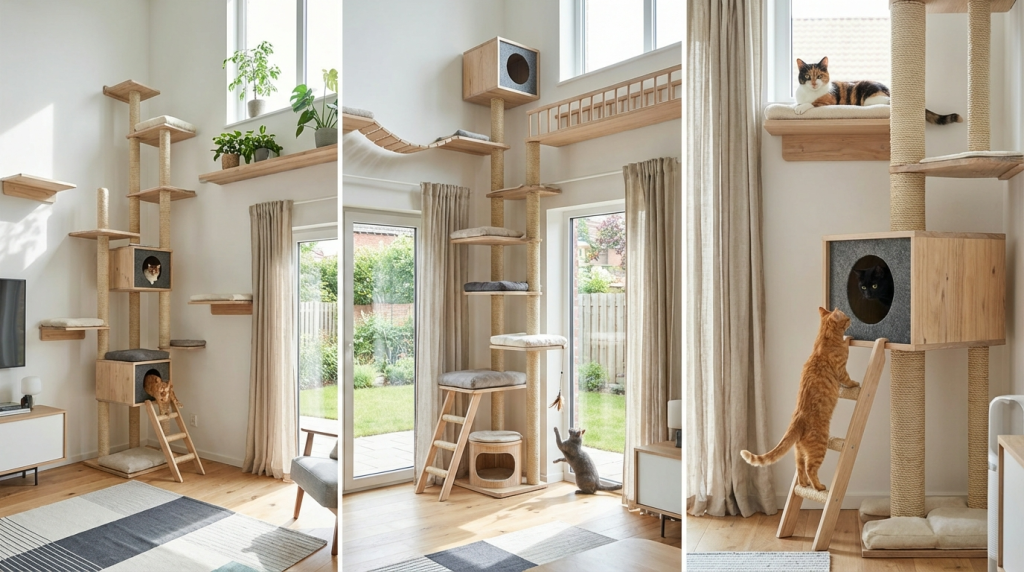

A vertical playground for cats is more than a stylish set of shelves on your wall. It is a carefully designed space that speaks to your cat’s deepest instincts. Cats are climbers, observers, and silent strategists. When given height, they feel safe. When given choice, they feel confident.
Yet many homes are built for humans, not felines. Floors are spacious, but vertical space remains empty. As a result, cats may become bored, stressed, or overweight. However, when you build a vertical playground for cats, you unlock an entirely new dimension of enrichment.
Let’s explore how to create a safe, engaging, and balanced climbing environment that supports both physical and emotional well-being.
Why Every Home Needs a Vertical Playground for Cats
Cats evolved to climb trees and survey territory from above. Height equals security. Therefore, a vertical playground for cats replicates that natural experience indoors.
When a cat climbs, muscles engage. Coordination improves. Additionally, stress levels decrease because elevated perches offer a sense of control.
Without vertical outlets, cats may redirect energy into unwanted behaviors. Scratching furniture or jumping onto counters often reflects unmet climbing needs.
By installing vertical pathways, you provide an acceptable outlet for these instincts. As a result, behavior often improves naturally.
Understanding Feline Instincts Before Building a Cat Climbing Space
Before constructing a vertical playground for cats, consider their instincts.
Cats prefer:
- Elevated resting spots
- Stable surfaces
- Multiple escape routes
- Clear sightlines
Because cats value security, wobbly structures create anxiety. Stability must be prioritized.
Additionally, cats enjoy progression. They like moving step by step upward rather than leaping to a single tall perch.
Think of the structure like a staircase in the wild. Branch to branch, steady and deliberate.
Choosing the Right Location for a Vertical Playground for Cats
Location determines success.
Place the vertical playground for cats in a room where activity occurs. Cats want to observe their environment, not feel isolated.
Walls near windows are ideal. Natural light and outdoor views increase stimulation.
However, avoid installing shelves near fragile décor or unstable furniture.
Additionally, ensure nearby pathways remain clear for safe jumping.
A thoughtfully chosen location transforms ordinary wall space into functional territory.
Essential Elements of a Perfect Vertical Playground for Cats
A balanced vertical playground for cats includes variety.
Incorporate:
- Wall-mounted shelves
- Cat trees with multiple levels
- Hammocks or soft platforms
- Climbing ramps or steps
- Scratching surfaces integrated vertically
Each element should connect naturally. Cats prefer routes, not random platforms.
Spacing matters. Shelves should be positioned 10 to 18 inches apart, depending on your cat’s agility.
Furthermore, provide resting spots at different heights. Some cats prefer mid-level lounges, while others seek the highest perch.
Safety First: Building a Secure Cat Vertical Environment
Safety must never be compromised.
Use heavy-duty brackets anchored into wall studs. Lightweight anchors alone are insufficient.
Choose materials that support your cat’s weight comfortably. Solid wood shelves are ideal.
Additionally, cover surfaces with non-slip materials such as carpet squares or sisal fabric.
Because cats land with precision, stable surfaces reduce injury risk.
Test every component before allowing your cat to explore.
Incorporating Scratching Zones Into the Vertical Playground for Cats
Scratching is essential behavior.
When you integrate scratching posts into a vertical playground for cats, you combine climbing and claw care.
Vertical scratching surfaces encourage stretching. Horizontal scratch pads can be placed on intermediate platforms.
Position scratching elements near entry points of the structure. This invites engagement immediately.
By offering appealing alternatives, furniture damage decreases significantly.
Balancing Height and Accessibility
Not all cats share the same agility.
Kittens and athletic adults may enjoy higher leaps. Senior cats, however, require easier access.
Therefore, design the vertical playground for cats with gradual elevation options.
Ramps, wider platforms, and shorter spacing accommodate older or less agile cats.
Additionally, consider future needs. A design that works today should remain accessible as your cat ages.
Adaptability increases longevity of the structure.
Encouraging Exploration and Enrichment
Height alone is stimulating. However, enrichment elevates the experience.
Place toys occasionally on different platforms. Rotate them weekly to maintain novelty.
Install a small perch near a bird feeder outside a window. This creates a natural “cat television.”
Additionally, hiding small treats on various levels encourages foraging behavior.
Because mental stimulation reduces boredom, a well-designed vertical playground for cats improves overall well-being.
Managing Multi-Cat Households
In multi-cat homes, vertical space reduces tension.
Cats establish hierarchy through territory. Therefore, multiple elevated spots allow separation without confrontation.
When designing a vertical playground for cats in shared homes, create more perches than cats.
Ensure at least two escape routes from each high point. This prevents blocking and territorial disputes.
Vertical expansion often reduces floor-level competition dramatically.
DIY vs Pre-Built Cat Climbing Systems
You can build a custom vertical playground for cats or purchase modular systems.
DIY options allow personalization. You control layout, spacing, and aesthetic.
Pre-built systems provide convenience and tested stability.
Whichever route you choose, prioritize durability and safe installation.
Customization ensures the playground fits your home’s layout and your cat’s personality.
Maintaining and Updating the Structure
Regular maintenance keeps the vertical playground for cats safe and appealing.
Inspect screws and brackets monthly. Tighten as needed.
Replace worn carpet or sisal surfaces promptly.
Additionally, update layout occasionally. Shifting one platform can refresh interest.
Cats appreciate subtle environmental changes. It stimulates curiosity without overwhelming them.
Avoiding Common Design Mistakes
Certain mistakes reduce effectiveness.
Installing shelves too high without intermediate steps creates frustration.
Overcrowding the wall makes navigation difficult.
Using slippery surfaces discourages climbing.
Moreover, neglecting structural support risks accidents.
When building a vertical playground for cats, simplicity and stability outperform elaborate complexity.
The Psychological Impact of Vertical Space
Height changes perspective.
When a cat rests high above ground, stress decreases. Elevated spots function like safe observation towers.
In anxious cats, vertical territory often increases confidence.
Furthermore, shy cats may become more social when they can retreat upward safely.
A vertical playground for cats does more than entertain. It provides emotional security.
Integrating Style With Function
A vertical structure can blend beautifully with your home.
Choose wood tones that match furniture. Paint brackets to complement walls.
Because modern designs emphasize minimalism, floating shelves can appear artistic rather than bulky.
Function and aesthetics can coexist effortlessly.
When designed thoughtfully, your vertical playground for cats enhances your space visually and practically.
Long-Term Benefits of a Vertical Playground for Cats
Over time, the benefits become clear.
Physical activity improves muscle tone. Weight management becomes easier.
Behavioral issues decrease. Confidence grows.
Most importantly, your cat experiences a richer daily life.
Providing vertical territory respects natural instincts rather than suppressing them.
Conclusion: Elevate Their World
A vertical playground for cats transforms unused wall space into a thriving ecosystem. It satisfies climbing instincts, reduces stress, and strengthens muscles.
By focusing on safety, accessibility, and enrichment, you create an environment where your cat feels secure and stimulated.
Cats were born to climb. When you build upward, you honor that instinct.
Elevate their world, and you will see the difference in their confidence, health, and happiness every single day.
FAQs
- How high should a vertical playground for cats be?
Height depends on ceiling space and your cat’s agility, but safe progression with multiple levels is essential. - Is a vertical playground for cats safe for kittens?
Yes, as long as platforms are secure and spaced appropriately for smaller jumps. - Can senior cats use vertical playgrounds?
Yes, if ramps and closer shelf spacing are incorporated to support mobility. - Do vertical playgrounds reduce destructive behavior?
Often, yes. Providing climbing outlets satisfies natural instincts and reduces furniture damage. - How much space do I need for a vertical playground for cats?
Even small walls can work. Creative use of vertical space makes it possible in apartments or large homes alike.