
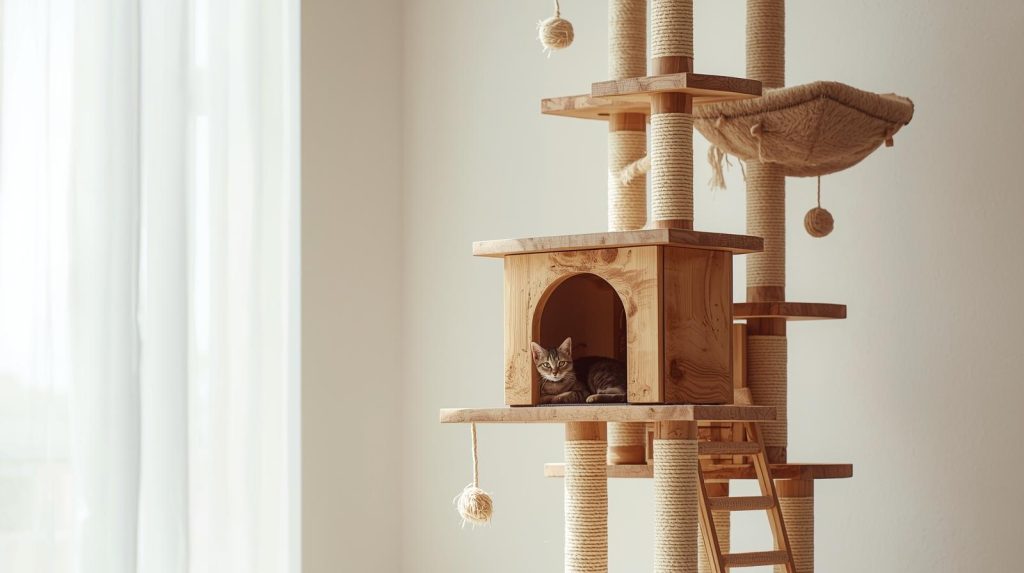

Many cat owners want their pets to stay happy indoors. However, space can feel limited. That is where a vertical playground for cats becomes essential. Instead of expanding outward, you build upward.
Cats naturally love height. They feel safer and more confident when they can observe from above. Therefore, creating vertical space meets their instincts while improving their environment.
A well-designed vertical playground for cats keeps your pet active, curious, and mentally engaged. It also helps reduce boredom and unwanted behaviors at home.
Why Cats Love Vertical Space
Cats are natural climbers. In the wild, they seek high ground to watch for prey and avoid danger. Because of this instinct, a vertical playground for cats makes them feel secure.
When cats have access to elevated areas, they gain control over their environment. This reduces stress and builds confidence. As a result, they become more relaxed and less anxious.
Additionally, vertical movement adds exercise. Jumping, climbing, and balancing strengthen muscles and improve coordination. Therefore, height is not just fun—it is essential for health.
Benefits of a Vertical Setup at Home
Creating a vertical playground for cats offers more than entertainment. It supports both physical and emotional well-being.
Key benefits include:
- Increased daily activity
- Better weight management
- Reduced destructive behavior
- Improved mental stimulation
Moreover, vertical spaces help multi-cat households. Cats can avoid conflict by claiming different levels. This reduces tension and promotes harmony.
Even small apartments can benefit from vertical design. With the right setup, limited floor space becomes a rich environment.
Understanding Your Cat’s Climbing Style
Before building anything, observe your cat. Not all cats use vertical space the same way. A vertical playground for cats should match your pet’s personality.
Some cats prefer high perches. Others enjoy mid-level platforms. Meanwhile, older cats may need easier access with smaller jumps.
Consider these factors:
- Age and mobility
- Energy level
- Confidence and curiosity
By tailoring the setup, you ensure your cat actually uses it. Otherwise, even the best design may go unused.
Essential Elements of a Vertical Playground
To build an effective setup, include key features. A vertical playground for cats should offer variety and safety.
Important elements include:
- Sturdy cat trees or towers
- Wall-mounted shelves
- Climbing ramps or steps
- Soft resting platforms
Each element serves a purpose. For example, shelves encourage movement, while platforms provide rest areas.
In addition, combining different heights creates a dynamic space. Cats enjoy moving between levels throughout the day.
Choosing the Right Location in Your Home
Placement matters just as much as design. A vertical playground for cats works best when integrated into daily life.
Ideal locations include:
- Near windows for outdoor views
- In living areas where family gathers
- Along empty walls with unused space
Avoid placing structures in isolated corners. Cats prefer areas where they can observe activity.
Natural light also enhances the experience. Watching birds or people outside keeps cats entertained for hours.
Wall Shelves: A Simple and Effective Solution
Wall shelves are one of the easiest ways to build height. A vertical playground for cats can start with just a few well-placed shelves.
Arrange them in a step-like pattern. This allows your cat to climb safely from one level to another.
Use non-slip surfaces to prevent accidents. Additionally, ensure shelves are securely mounted.
Spacing is important. Keep distances manageable, especially for smaller or older cats.
With careful planning, shelves turn blank walls into exciting pathways.
Cat Trees and Towers for Instant Height
Cat trees provide an all-in-one solution. They combine climbing, scratching, and resting areas. Therefore, they are a key part of any vertical playground for cats.
Choose a sturdy model that does not wobble. Stability is crucial for safety and confidence.
Look for features like:
- Multiple platforms
- Built-in scratching posts
- Cozy hideouts
Place the tree near a window if possible. This enhances its appeal and encourages use.
Adding Bridges and Walkways
For a more advanced setup, add connecting elements. A vertical playground for cats becomes more engaging with bridges or walkways.
These features allow cats to move freely between sections. As a result, the space feels larger and more interactive.
Bridges can be:
- Wooden planks
- Rope walkways
- Fabric tunnels
Ensure all connections are secure. Safety should always come first.
Creating Cozy Resting Spots
Cats need places to relax after climbing. A vertical playground for cats should include comfortable resting areas.
Soft beds or cushioned platforms work well. Place them at different heights to give your cat options.
Higher spots often become favorites. Cats enjoy sleeping where they feel safe and undisturbed.
Adding variety keeps the space interesting and functional.
Incorporating Scratching Surfaces
Scratching is a natural behavior. Therefore, a vertical playground for cats should include scratching areas.
Vertical scratching posts are ideal. They allow full-body stretching and claw maintenance.
You can also add:
- Sisal-wrapped poles
- Scratch pads on shelves
- Wall-mounted scratch boards
Providing these options protects your furniture while meeting your cat’s needs.
Safety Tips for Your Setup
Safety should always be a priority. A vertical playground for cats must be stable and secure.
Follow these guidelines:
- Anchor tall structures to walls
- Use strong brackets for shelves
- Avoid slippery surfaces
- Check for loose parts regularly
Additionally, consider your cat’s jumping ability. Avoid gaps that are too wide.
A safe environment encourages confidence and regular use.
Adapting for Kittens and Senior Cats
Cats of different ages have different needs. A vertical playground for cats should be adaptable.
For kittens:
- Include lower platforms
- Add soft landing areas
- Encourage exploration gradually
For senior cats:
- Use ramps instead of jumps
- Keep levels closer together
- Provide easy access to favorite spots
Adapting the design ensures comfort and usability at every stage of life.
Keeping the Playground Engaging Over Time
Cats can lose interest if nothing changes. Therefore, a vertical playground for cats should evolve over time.
Simple updates include:
- Rearranging shelves
- Rotating toys
- Adding new elements
Even small changes can renew curiosity. As a result, your cat stays engaged and active.
Consistency combined with variety creates lasting enrichment.
Combining Play and Vertical Space
Vertical design works best when paired with play. A vertical playground for cats becomes more exciting with interactive activities.
Use toys that encourage climbing, such as feather wands. Guide your cat across levels during play sessions.
This approach reinforces use of the structure. It also strengthens your bond with your pet.
Over time, your cat will naturally explore the space on their own.
Conclusion
A vertical playground for cats transforms your home into a dynamic and enriching environment. By building upward, you maximize space while supporting your cat’s natural instincts.
Climbing, exploring, and resting at different heights improve both physical health and emotional well-being. With the right design, even small homes can offer endless opportunities for activity.
Start with simple additions and expand over time. Your cat will become more confident, active, and content.
In the end, a well-designed vertical space is not just a luxury. It is a key part of a happy and healthy indoor life.
FAQ
1. How high should I build climbing spaces for my cat?
Height depends on your cat’s ability. Start low and gradually increase levels as your cat gains confidence.
2. Are wall shelves safe for cats?
Yes, as long as they are securely mounted and have non-slip surfaces for stability.
3. Can small apartments support vertical cat spaces?
Absolutely. Vertical setups are perfect for small spaces because they use walls instead of floors.
4. What materials are best for cat climbing structures?
Wood, sisal, and carpeted surfaces work well. They provide grip and durability.
5. How do I encourage my cat to use new climbing areas?
Use treats or toys to guide your cat. Positive reinforcement helps them feel comfortable exploring new spaces.