
Welcoming a kitten into your home is one of the most joyful experiences. Their tiny paws, endless curiosity, and playful nature bring warmth to every day. However, kittens also depend on you for everything—especially nutrition. The food choices you make today shape your kitten’s growth, energy, digestion, body strength, and long-term health. That’s why having a complete resource like this ultimate kitten feeding guide matters. It helps you feed your kitten confidently and consistently, even as their nutritional needs evolve month by month.
Kittens grow rapidly. They build muscle, strengthen bones, and develop essential immune defenses in just a short period. Because of this, they require more calories, more protein, and more frequent meals than adult cats. Yet they also need the right balance of nutrients to avoid digestive issues or weight problems. By understanding what to feed, when to feed, and how much to offer at each stage, you make sure your kitten thrives.
This ultimate kitten feeding guide walks you through every major step, from choosing the right food to building better mealtime habits. The goal is simple: give your kitten the nourishment they need for a healthy, joyful life.
Why Nutrition Matters in the Ultimate Kitten Feeding Guide
Nutrition influences a kitten’s growth more than any other factor. Unlike adult cats, kittens require concentrated nutrients because their bodies change so quickly. Healthy growth is steady, not rushed. You want strong bones, balanced muscle development, and stable energy. Overfeeding or underfeeding can cause long-term issues, which is why following the ultimate kitten feeding guide helps you stay consistent.
When you understand a kitten’s nutritional needs, you create a foundation for:
• Strong bones and joints
• Healthy immune development
• Steady energy
• Cognitive growth
• Digestive stability
• Lifelong eating habits
The right food supports every part of their development. High-quality kitten formulas are designed to match their biological needs, offering the perfect amounts of protein, fat, vitamins, and minerals.
Choosing the Right Food in the Ultimate Kitten Feeding Guide
Selecting the right food is one of the most important decisions you’ll make. Kittens need food specifically labeled as “kitten formula,” “growth,” or “all life stages.” These formulas meet strict nutritional requirements that adult cat foods do not.
Wet vs. Dry Food: Which Is Better?
Many owners wonder whether wet or dry food fits better into an ultimate kitten feeding guide. Both have benefits, but wet food tends to offer more hydration and easier digestion, especially for younger kittens.
Wet Food Benefits:
• Higher moisture supports kidney health
• Softer texture is easier for small mouths
• Often more appealing in smell and taste
• Helps with weight maintenance
Dry Food Benefits:
• Convenient and less messy
• Supports dental health
• Can be free-fed in some situations
Most experts recommend feeding a combination of both, especially during the first year. Wet food supports hydration and digestion, while dry food helps build healthy chewing habits.
Protein: The Heart of the Ultimate Kitten Feeding Guide
Kittens need a protein-rich diet. Protein powers muscle growth, tissue repair, and overall development. Choose foods with animal-based proteins like chicken, turkey, rabbit, or fish.
Look for:
• High protein percentage
• Named protein sources (not generic)
• Balanced amino acids
Protein quality matters. The better the quality, the healthier the growth.
Healthy Fats Support Brain Development
Fat supplies essential fatty acids, fuels brain development, and improves skin and coat health. Kitten food typically contains higher fat levels than adult food because kittens burn more energy exploring and learning.
Common sources include:
• Fish oil
• Chicken fat
• DHA-rich ingredients
DHA is especially important for brain and eye development.
Vitamins and Minerals for Healthy Growth
Your kitten needs essential vitamins and minerals such as:
• Calcium and phosphorus
• Vitamin A
• Vitamin D
• Taurine
• Omega-3s
These nutrients must be balanced. Excess or deficiency can harm development. Using commercial kitten food ensures your kitten receives the correct amounts.
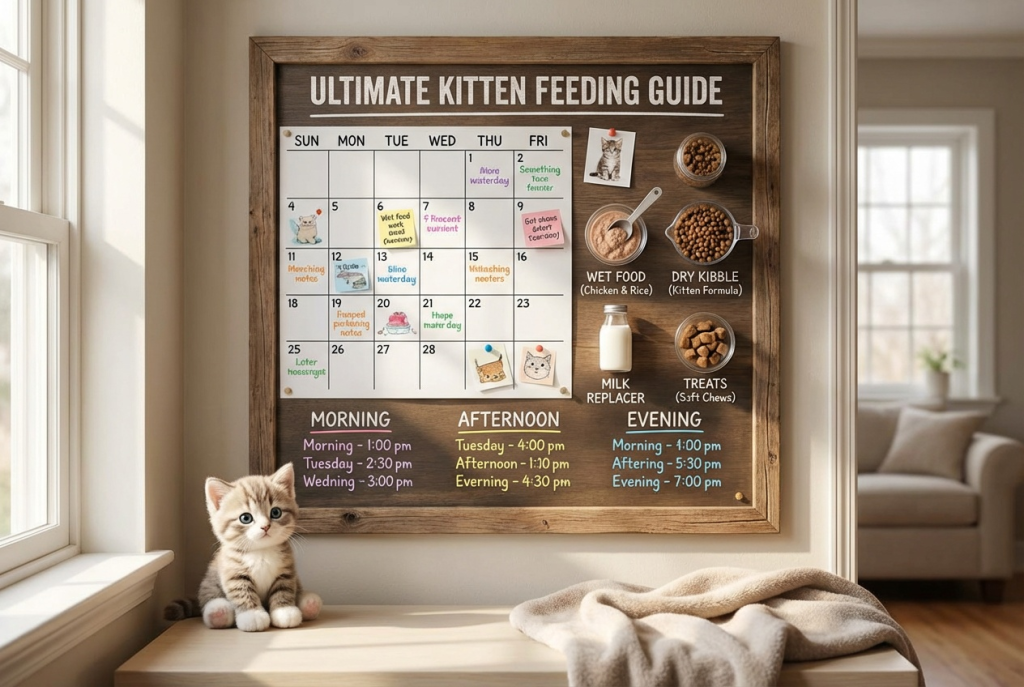
Feeding Schedule in the Ultimate Kitten Feeding Guide
How often you feed your kitten matters just as much as what you feed them. Kittens have tiny stomachs and high energy needs, so they require frequent meals.
0–4 Weeks: Nursing Stage
In the earliest weeks, kittens drink their mother’s milk. If the mother is unavailable, kitten formula designed for newborns must be used. Cow’s milk is not safe.
At this stage:
• Feed every 2–3 hours
• Keep kittens warm
• Use kitten-safe formulas
4–8 Weeks: Weaning Stage
Around four weeks, kittens begin transitioning to solid food. This is a gentle process.
Offer:
• Wet kitten food mixed with warm water or kitten milk
• Shallow dishes for easy access
Feed small meals several times a day.
8–12 Weeks: Rapid Growth Stage
This stage marks a major milestone. Kittens become more playful, active, and curious.
Feed:
• At least four meals per day
• A combination of wet and dry food
Because kittens at this age burn energy quickly, frequent meals maintain steady growth.
3–6 Months: Building Strength
Continue feeding three to four times per day. Kittens in this age range grow quickly and require nutrient-dense meals.
During this stage:
• Introduce puzzle feeders
• Encourage healthy eating habits
• Keep mealtimes consistent
6–12 Months: Transition Toward Adult Habits
At this stage, feeding two to three meals per day works well. Continue using kitten food until your cat reaches their first birthday.
Most kittens benefit from staying on growth formulas until at least 12 months old. Large breeds like Maine Coons often need kitten food until 18 months.
How Much to Feed: Portion Guidance in the Ultimate Kitten Feeding Guide
Feeding amounts depend on your kitten’s weight, age, activity level, and food type. Because needs change fast, always follow the label instructions as a starting point.
General tips:
• Kittens need more calories per pound than adult cats
• Feed scheduled meals instead of free-feeding when possible
• Adjust amounts based on growth and appetite
If your kitten always seems hungry, check weight regularly with your vet. Sometimes extra food is appropriate, especially during growth spurts.
Hydration in the Ultimate Kitten Feeding Guide
Water plays a huge role in your kitten’s health. Although wet food provides hydration, fresh water should always be available.
Encourage drinking by:
• Offering multiple water bowls
• Using shallow bowls
• Trying a cat water fountain
• Replacing water daily
Kittens naturally explore, so place water bowls in various quiet locations.
Safe Treats and Snacks in the Ultimate Kitten Feeding Guide
Treats should make up less than 10% of daily calories. Choose treats formulated for kittens or tiny pieces of cooked chicken.
Avoid:
• Cow’s milk
• Processed human foods
• Salted meats
• Chocolate
• Onions or garlic
Some “people foods” are toxic to cats. When in doubt, stick to kitten-friendly options.
Avoid These Common Feeding Mistakes
Even well-meaning owners sometimes make mistakes. Avoid:
• Free-feeding high-calorie dry food
• Switching foods too quickly
• Giving inappropriate human foods
• Feeding adult cat food to kittens
• Overfeeding during growth spurts
Sticking to the ultimate kitten feeding guide helps prevent these errors.
How to Transition Foods Safely
Switching food should always be gradual. Quick changes may cause digestive upset.
Follow a 7–10 day transition:
• Days 1–3: 25% new food
• Days 4–6: 50% new food
• Days 7–9: 75% new food
• Day 10: 100% new food
This method maintains digestive comfort and helps your kitten accept new flavors.
Special Cases in the Ultimate Kitten Feeding Guide
Some kittens need specialized feeding routines. These include kittens that are:
• Underweight
• Orphaned
• Recovering from illness
• Sensitive to certain proteins
• On medications
Work closely with your vet for personalized guidance.
Encouraging Healthy Eating Behaviors
Your kitten’s feeding habits today shape their adult preferences. Encourage healthy behaviors by:
• Offering meals at consistent times
• Creating calm feeding spaces
• Avoiding overcrowded feeding areas
• Separating food and litter boxes
• Introducing puzzle feeders for enrichment
Kittens learn quickly. With gentle routine, they build life-long habits around food.
Conclusion
This ultimate kitten feeding guide helps you support your kitten through every important stage of growth. When you choose the right food, follow a consistent feeding schedule, and offer nutritious portions, you ensure your kitten develops into a strong, confident, and healthy adult cat. Nutrition is a powerful tool, and when used thoughtfully, it transforms your kitten’s entire life. With patience, knowledge, and love, you can guide your kitten toward a future filled with vitality, curiosity, and joy.
FAQ
1. When should I switch my kitten to adult food?
Most kittens transition at 12 months, though large breeds may need longer.
2. Can kittens eat only dry food?
They can, but wet food supports hydration and digestion, so a combination is ideal.
3. How many treats can I give my kitten?
Keep treats under 10% of daily calories to maintain balanced nutrition.
4. What if my kitten refuses a new food?
Transition more slowly and warm the food to enhance aroma.
5. How do I know if I’m feeding enough?
Monitor weight and energy. Ask your vet for guidance based on growth and appetite.