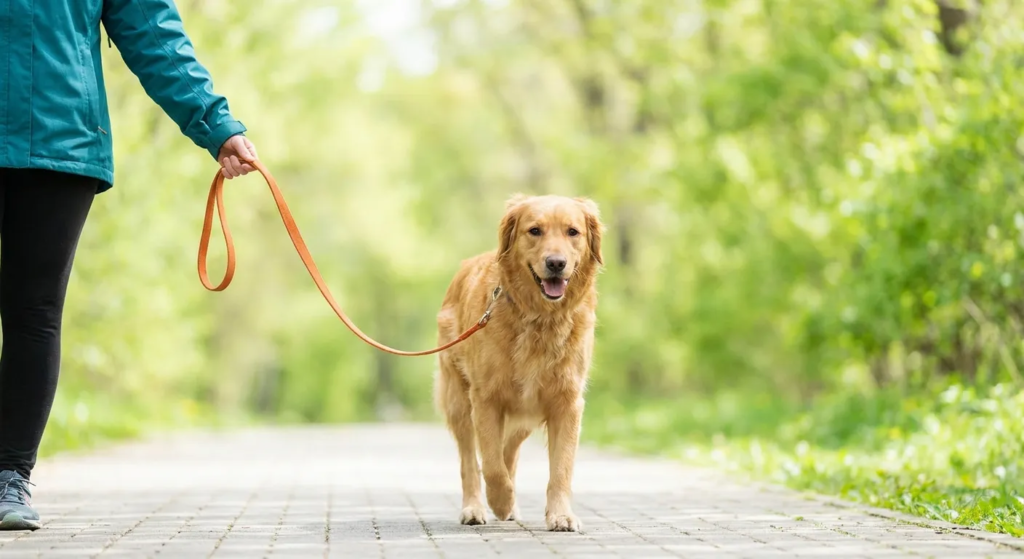
To stop dog leash pulling, begin with a clear goal: walking without sustained tension on the lead. That does not mean a dog must perform a formal heel throughout every outing. This guide introduces reward-based loose-lead practice, explains how to organize a manageable session and keeps equipment, safety and individual behavior concerns part of the plan.
No method here guarantees a cure or a fixed completion date. If your dog is fearful, lunges at others, appears uncomfortable or is too strong for you to manage safely, seek veterinary and qualified behavior help. A general walking guide cannot diagnose the cause or prescribe a complete plan for an unsafe situation.
Understand the behavior before choosing a response
The Dogs Trust — Walking Nicely on a Lead guidance explains that pulling may be reinforced when it gets a dog where it wants to go. A dated RSPCA — Reward-Based Training and Loose-Lead Walking handout also identifies lack of loose-lead training and anxiety as possible reasons. These are possibilities, not a diagnosis that explains every dog pulling in every environment.
Describe the situation rather than assign a personality label. Does tension begin on leaving the building, near a particular sound or throughout the route? Record what you can actually observe. Do not conclude that the dog is dominant, deliberately disobedient or merely needs exhaustion based on the leash behavior alone.
A hypothetical dog might walk without tension in one quiet area and pull near another dog. That difference is information for a trainer, not proof that the first method failed or that harsher equipment is required. Keep the context visible when discussing the next step.
Use humane training principles
The AVSAB — Humane Dog Training Position Statements resource presents AVSAB’s support for reward-based methods and its opposition to aversive training. It also clarifies that its guidance does not endorse specific trainer organizations. Use that information when asking how a professional works, rather than treat a familiar certificate or marketing slogan as an automatic guarantee.
Ask prospective trainers which behaviors they reinforce, how they respond when the dog struggles and when they refer health or behavior concerns. Avoid a plan that depends on painful corrections or provoking the dog to demonstrate control. This article supplies no ranking of trainers or claim to have tested a particular service.
The goal is an understandable learning task. Write down what walking behavior you will reward and how the caregiver will recognize it. If everyone uses a different definition, progress becomes difficult to describe. A shared written plan can clarify instructions without promising that consistency alone solves every underlying concern.
Check equipment with individual suitability in mind
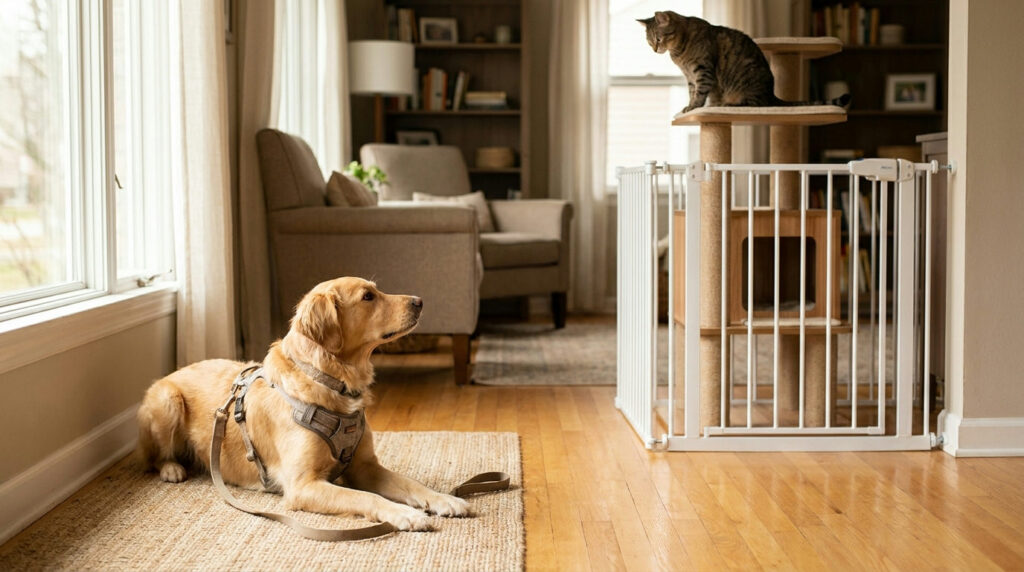
Dogs Trust recommends comfortable, safe equipment and warns about products that cause discomfort while claiming to cure pulling. It suggests introducing a harness gently and positively. This guide therefore does not rank a front-clip harness, collar or head halter as the best or safest option for every dog.
Ask an appropriate professional about fit and suitability for the individual animal and your handling needs. Follow the actual product instructions, including any relevant inspection or use requirements. Do not use a familiar-looking item whose purpose or fit is unclear simply because another owner recommends it.
Before practice, identify a setting where you can remain in control without forcing the task. If the situation is unsafe, the right response is to arrange appropriate help. Buying new equipment does not establish that you can safely manage a dog whose behavior has not been assessed.
Begin in a manageable setting
Dogs Trust advises starting near you in a quiet home or garden setting, rewarding the dog for being beside you, then adding movement and gradually increasing distractions. Its guidance also recommends returning to an easier stage if the dog struggles. Keep any practice area secure and suitable; this is not a recommendation to remove a lead in public.
For a fictional planning exercise, choose one safe familiar area and define a modest task such as a few comfortable steps without tension. The invented exercise is not a prescribed distance or duration. Ask your trainer what suits your dog and adjust according to that guidance rather than set an arbitrary endurance goal.
Avoid beginning with the busiest part of a necessary outing simply to test whether the dog can cope. A practice session and an essential toilet or care trip may have different constraints. Discuss how to manage both in the actual household instead of pretending every walk can be an ideal lesson.
Reward the behavior you are teaching
The RSPCA handout describes using rewards to establish walking beside the caregiver, then gradually moving away from continuous food-luring toward rewarding steps taken. Its brief instructions should be adapted with appropriate professional help. It does not supply a promise about how quickly every dog learns or how many repetitions guarantee success.
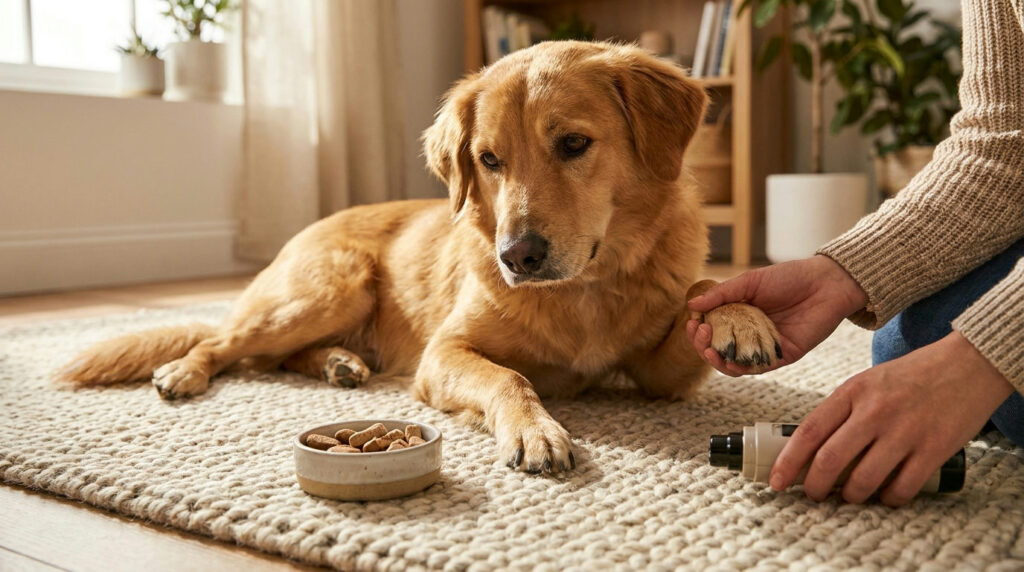
Choose rewards consistent with the dog’s diet and care requirements. A general leash guide cannot prescribe a treat allowance or override feeding restrictions. If food is used, make its role clear to every caregiver so one person’s practice does not silently add to another person’s feeding plan.
In a hypothetical session log, distinguish cue given, behavior observed and reward delivered. Record the actual response rather than announce success because the dog was briefly close to you. This makes it easier to discuss whether the exercise was understandable without turning an informal note into a scientific training-effect claim.
Respond to tension without jerking the lead
Dogs Trust’s loose-lead method includes stopping when the lead tightens and waiting calmly for slack before continuing. It specifically advises against jerking the lead or telling the dog off. This is a basic training example, not a universal response to every fear, aggression or emergency situation outdoors.
If the dog is struggling in the environment, do not turn standing still into a contest or force continued exposure. Seek guidance on making the situation manageable for the individual animal. The aim is a safe lesson, not making the dog prove it can tolerate a particular trigger.
For a fictional ordinary practice moment, note tension appeared, movement paused and what the dog did next. If the next behavior was not observed clearly, leave that part unresolved. Do not rewrite an incomplete attempt as evidence that the method always works or label the dog a failure.
Increase demands thoughtfully
The RSPCA handout discusses building walking distance between rewards and practicing in different situations after the initial steps. Treat those as gradual learning ideas, not a command to add difficulty on a fixed timetable. A calmer setting can remain appropriate while you seek help with a more demanding one.
Change one part of the practice plan at a time when discussing progress with a trainer. For example, a change of location and a change of caregiver create different questions. If every detail changes together, your notes cannot clearly describe what the dog was asked to do compared with the earlier session.
A difficult day does not justify an unsupported conclusion about the dog’s intelligence or your bond. Record the conditions and ask what should be adjusted. Do not compensate by extending the session indefinitely or choosing stronger corrections to reach an invented target before going home.
Share the plan and know when to seek help
Give each caregiver the same definition of loose-lead practice, reward arrangement and professional contact. If someone cannot safely manage the dog, identify that limitation rather than assume the written instructions provide the necessary skill. Arrange an appropriate care alternative or individual support.
The Merck Veterinary Manual — Behavior Problems of Dogs manual describes medical evaluation as relevant when assessing behavior concerns. New or concerning behavior should therefore be discussed with your veterinarian rather than assigned automatically to a training failure. A veterinary or qualified behavior professional can determine whether a different assessment or referral is needed.
This article is general educational information and is not medical advice or veterinary advice, a diagnosis or a behavior-treatment plan. It promises no guaranteed result, recommends no corrective device and offers no individualized exercise prescription. Use suitable professional guidance for the dog and conditions you actually face.
Frequently asked questions
Does a harness alone stop dog leash pulling?
Equipment does not establish that the desired behavior has been learned. Discuss fit, handling and training together for the individual dog.
Must a dog walk in a formal heel all the time?
This guide’s goal is walking without sustained lead tension. A formal heel is a different training task.
What if the dog cannot cope with practice?
Do not force a harder session or assume the cause. Make safety the immediate priority and obtain appropriate veterinary or qualified behavior guidance.