
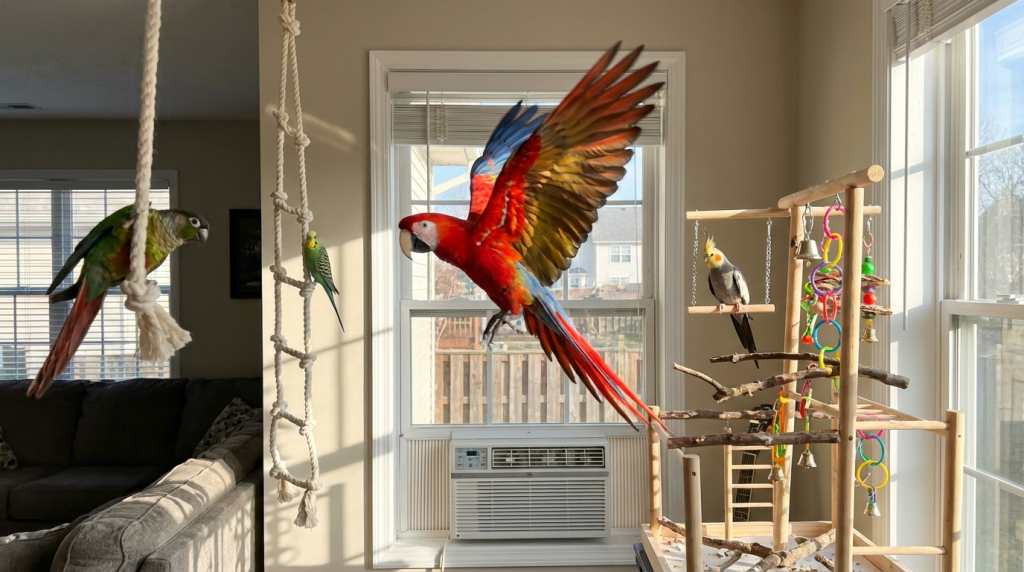

Pet birds need daily physical activity for the same reason humans do. Movement keeps the body strong. It sharpens the mind. It supports emotional balance. Yet many companion birds spend most of their lives inside cages with limited space.
While a cage offers safety, it does not replace natural movement. In the wild, birds fly miles each day. They climb, forage, and interact constantly. However, in captivity, activity must be encouraged intentionally.
If exercise is ignored, problems develop slowly. Weight increases. Muscles weaken. Behavior changes. Therefore, understanding why pet birds need daily physical activity is essential for long-term wellness.
Let’s explore how movement affects your bird’s body, mind, and lifespan.
Why Pet Birds Need Daily Physical Activity for Physical Health
A bird’s body is built for motion. Wings are not decorative. They are powerful muscles designed for sustained flight.
When pet birds need daily physical activity but do not receive it, muscle atrophy occurs. Chest muscles shrink. Endurance drops.
Additionally, poor circulation can develop. Movement stimulates blood flow. Without it, metabolic efficiency declines.
Obesity is another risk. Even small birds can gain excess weight. High-calorie diets combined with inactivity create imbalance.
Moreover, joint stiffness may appear over time. Regular climbing and wing stretching keep joints flexible.
Just like humans, birds benefit from consistent exercise. Strong muscles support organ function. Healthy weight reduces disease risk.
Therefore, physical activity becomes preventive medicine.
Pet Birds Need Daily Physical Activity to Prevent Obesity
Obesity in birds often goes unnoticed. Feathers hide subtle weight gain. However, excess fat strains the liver and heart.
Fatty liver disease is common among sedentary pet birds. It develops gradually. Symptoms may remain hidden until advanced.
When pet birds need daily physical activity but remain inactive, calorie burn decreases. Energy is stored instead of used.
In contrast, active birds regulate weight more naturally.
Encourage short flight sessions in a safe room. Provide climbing ladders and ropes. Use food puzzles to stimulate movement.
Small daily efforts create large long-term benefits.
Mental Stimulation: Why Pet Birds Need Daily Physical Activity
Movement is not only physical. It is mental.
Birds are intelligent creatures. Many species solve problems and mimic sounds. However, boredom develops quickly in confined spaces.
When pet birds need daily physical activity but lack stimulation, behavioral issues often follow.
Feather plucking may begin. Excessive screaming can occur. Aggression may increase.
Physical activity engages the brain. Foraging toys challenge thinking. Flight practice builds confidence.
Additionally, interactive play strengthens the bond between you and your bird.
Exercise becomes therapy for both body and mind.
Natural Instincts Explain Why Pet Birds Need Daily Physical Activity
In nature, survival depends on motion. Birds search for food, escape predators, and explore territory.
Captive environments remove those challenges. While safety increases, stimulation decreases.
Therefore, when pet birds need daily physical activity, it reflects instinctive programming.
Flight remains a core behavior. Even clipped birds require wing flapping and climbing.
Foraging mimics wild feeding patterns. Hide small treats in paper cups or shreddable toys.
By honoring natural instincts, you reduce stress and improve overall happiness.
Cardiovascular Benefits: How Pet Birds Need Daily Physical Activity
The avian heart beats rapidly. Oxygen demand is high. Efficient circulation is essential.
Regular activity strengthens the cardiovascular system. Heart muscles remain conditioned.
Without exercise, endurance declines. Respiratory efficiency may weaken.
Encouraging daily flight or active climbing improves lung capacity.
Additionally, controlled activity reduces the risk of sudden cardiac strain.
A moving bird maintains stronger internal systems.
Bone Strength and Why Pet Birds Need Daily Physical Activity
Bones require stress to remain strong. When pet birds need daily physical activity but sit for long periods, bone density may decrease.
Perching alone does not provide enough stimulation.
Climbing varied textures supports foot health. Wing movement strengthens skeletal structure.
Furthermore, exposure to natural light assists calcium metabolism.
Therefore, combine exercise with proper lighting for optimal bone support.
Healthy bones prevent fractures and improve balance.
Emotional Stability: Pet Birds Need Daily Physical Activity
An under-stimulated bird often becomes anxious.
Movement releases pent-up energy. It reduces stress hormones.
Additionally, predictable play sessions create routine. Routine builds security.
When pet birds need daily physical activity and receive it, mood stabilizes.
You may notice brighter vocalizations and increased curiosity.
Conversely, inactivity breeds frustration.
Emotional wellness depends on both social interaction and physical exertion.
Creating a Safe Exercise Environment
Safety must come first.
Before flight sessions, close windows and doors. Turn off ceiling fans.
Remove toxic plants and secure small objects.
Supervised free-flight time strengthens muscles naturally.
If flight is not possible, create a climbing playground outside the cage.
Install ropes, swings, and ladders.
Variety prevents boredom.
Consistency ensures results.
Interactive Play Supports Daily Physical Activity
You play a vital role.
Encourage recall training. Call your bird gently from one perch to another.
Use target sticks for guided movement.
Additionally, rotate toys weekly. Novelty maintains interest.
Short sessions work best. Five to fifteen minutes several times daily keeps energy balanced.
Gradual progress prevents exhaustion.
Even shy birds can learn to explore safely.
Diet and Exercise Work Together
Nutrition and movement are partners.
If pet birds need daily physical activity, diet must support energy demands.
High-quality pellets provide balanced nutrients.
Fresh vegetables add hydration and vitamins.
Avoid excessive fatty seeds.
Hydration also matters. Clean water supports circulation.
Balanced fuel enhances exercise benefits.
Common Barriers to Exercise
Some owners fear injury. Others lack time.
However, inactivity poses greater risks.
Start small if needed. Open the cage door in a quiet room.
Offer perches at different heights.
Even wing-flapping practice improves muscle tone.
Gradual exposure builds confidence for both you and your bird.
Signs Your Bird Needs More Activity
Weight gain may be visible near the abdomen.
Feathers may appear dull.
Energy levels may drop.
Additionally, excessive vocalization can signal boredom.
Observe posture. Slouching indicates weakness.
If these signs appear, increase structured movement gradually.
Small changes restore vitality.
Species Differences in Activity Needs
Large parrots require more flight space.
Budgies and cockatiels also benefit from daily movement.
However, each species has unique endurance levels.
Research your bird’s natural behavior.
Tailor exercise accordingly.
While all pet birds need daily physical activity, intensity varies.
Observation guides adjustments.
Building a Sustainable Routine
Routine creates habit.
Schedule exercise at consistent times.
Morning and late afternoon often work well.
Track progress. Notice improved stamina.
Celebrate milestones. A longer glide. A confident climb.
Consistency transforms short sessions into lifelong habits.
Over time, movement becomes expected and enjoyable.
Long-Term Health Outcomes
Active birds live longer.
Muscle mass supports aging gracefully.
Circulation remains efficient.
Behavior stabilizes.
Because pet birds need daily physical activity, ignoring this need shortens lifespan.
However, meeting it enhances quality of life.
Think of exercise as daily maintenance.
Like oiling a machine, it keeps parts functioning smoothly.
Conclusion
Pet birds need daily physical activity to maintain strong muscles, healthy hearts, stable emotions, and balanced weight. Movement is not optional. It is fundamental to their biology. By providing safe flight opportunities, climbing structures, interactive play, and consistent routines, you protect your bird from preventable illness and behavioral distress. Even small daily efforts create lasting benefits. When exercise becomes part of your bird’s lifestyle, you will see brighter feathers, sharper focus, and greater joy in every flutter and song.
FAQ
- How much daily physical activity do pet birds need?
Most pet birds benefit from at least 20 to 60 minutes of structured activity spread throughout the day. - Can clipped birds still exercise safely?
Yes. Clipped birds can climb, flap wings, and engage in supervised ground play. - What happens if pet birds do not get enough exercise?
Inactivity can lead to obesity, muscle weakness, and behavioral problems. - Is free flight necessary for all birds?
Free flight is ideal when safe, but climbing and interactive play also provide effective exercise. - How can I motivate a reluctant bird to move more?
Use treats, gentle encouragement, and new toys to make movement enjoyable and rewarding.