
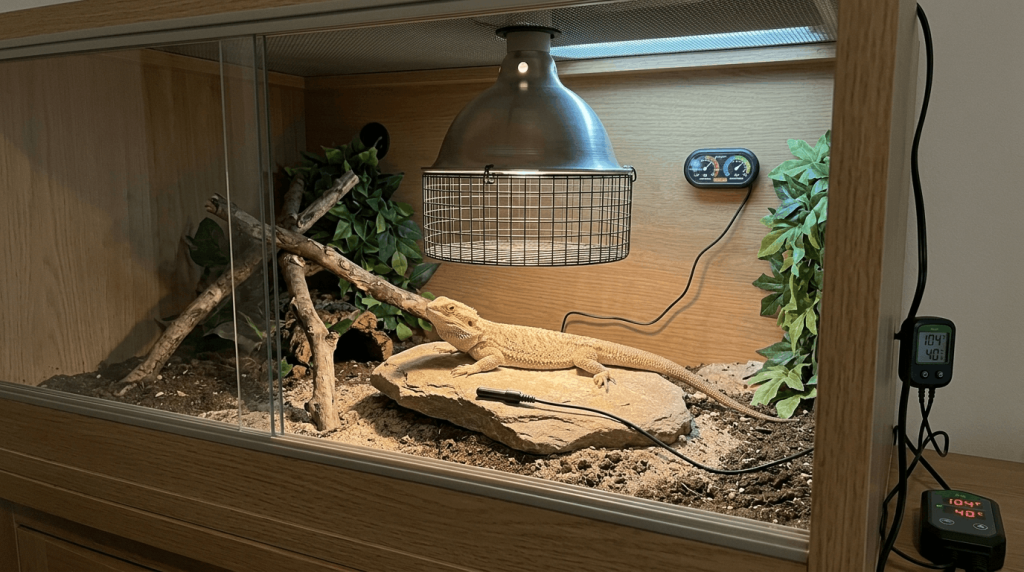

Heat lamp safety reptiles depend on is one of the most important aspects of proper reptile care. While heat lamps are essential for maintaining the correct temperature inside an enclosure, they can also pose serious risks if used incorrectly. Many reptile owners focus on providing warmth but overlook the potential dangers associated with improper setup. Therefore, understanding heat lamp safety reptiles require helps create a balanced environment where your pet can thrive without unnecessary hazards.
Reptiles rely on external heat sources to regulate their body temperature. Unlike mammals, they cannot generate their own heat, so they depend entirely on their environment. Because of this, heat lamps play a critical role in digestion, metabolism, and overall health. However, without proper precautions, these same heat sources can cause burns, dehydration, or even fires. As a result, learning how to manage heat lamp safety reptiles need is essential for every responsible owner.
Why Heat Lamps Are Essential For Reptiles
Heat lamps are not just accessories; they are vital tools that replicate natural sunlight. In the wild, reptiles bask in the sun to warm their bodies. In captivity, heat lamps provide a similar effect, allowing reptiles to maintain optimal body functions.
Proper temperature gradients are especially important. Reptiles need both a warm basking area and a cooler zone within the enclosure. This allows them to regulate their body temperature naturally. Without this gradient, reptiles may become stressed or develop health issues.
However, while heat lamps support health, they must be used correctly. Heat lamp safety reptiles require ensures that the benefits outweigh the risks. When installed properly, these devices create a safe and effective environment for your pet.
Common Risks Associated With Heat Lamps
Although heat lamps are beneficial, they come with several potential dangers. Understanding these risks helps you take preventive measures.
Burn injuries are among the most common problems. If a reptile comes into direct contact with a hot bulb, it can suffer severe burns. This often happens when lamps are placed too close or without protective barriers.
Overheating is another concern. Excessive heat can lead to dehydration and heat stress, which can be life-threatening. Monitoring temperatures regularly helps prevent this issue.
Fire hazards also exist. Faulty wiring or improper installation can cause overheating of fixtures, increasing the risk of fire. Therefore, following heat lamp safety reptiles need is not just about protecting your pet but also your home.
Choosing The Right Heat Lamp Setup
Selecting the right equipment is the first step in ensuring heat lamp safety reptiles depend on. Not all heat lamps are the same, and choosing the correct type makes a significant difference.
Ceramic heat emitters, basking bulbs, and infrared lamps each serve different purposes. Understanding your reptile’s specific needs helps you choose the most appropriate option. Additionally, using high-quality fixtures designed for reptile enclosures ensures durability and safety.
Proper wattage is also important. A bulb that is too powerful can overheat the enclosure, while one that is too weak may not provide enough warmth. Checking manufacturer recommendations helps you make the right choice.
Since heat lamp safety reptiles require starts with proper equipment, investing in reliable products is always worthwhile.
Safe Placement And Installation Tips
Correct placement is crucial when setting up a heat lamp. Positioning the lamp too close to the reptile increases the risk of burns, while placing it too far away reduces effectiveness.
Using a secure fixture ensures that the lamp stays in place. Loose or unstable setups can lead to accidents. Mounting the lamp outside the enclosure or using a protective dome reduces direct contact with the reptile.
Protective guards are highly recommended. These barriers prevent reptiles from touching the hot surface while still allowing heat to pass through. This simple addition greatly improves heat lamp safety reptiles depend on.
Additionally, avoid placing flammable materials near the lamp. Keeping the area clear reduces fire risks and ensures safe operation.
Maintaining Proper Temperature Levels
Monitoring temperature is essential for both safety and effectiveness. Using thermometers in different parts of the enclosure helps maintain the correct gradient.
Digital thermometers provide accurate readings and are easy to use. Placing one in the basking area and another in the cooler zone ensures proper balance.
Thermostats are also valuable tools. They regulate the heat output automatically, preventing overheating. This adds an extra layer of protection and simplifies temperature management.
Because reptiles rely on stable conditions, consistent monitoring supports both health and heat lamp safety reptiles need.
Preventing Burns And Injuries
Burn prevention should always be a priority. Reptiles may not recognize the danger of a hot surface, making them vulnerable to injury.
Ensuring that the lamp is out of reach is the first step. Using elevated fixtures or external mounting reduces the chance of contact. Protective screens or cages around the bulb provide additional safety.
Observing your reptile’s behavior also helps. If your pet frequently climbs toward the heat source, adjustments may be needed. Providing alternative basking spots can redirect this behavior.
Since heat lamp safety reptiles require includes minimizing physical risks, these precautions are essential.
Regular Maintenance And Inspection
Routine maintenance keeps your setup safe and functional. Checking the lamp, wiring, and fixtures regularly helps identify potential issues before they become serious.
Replacing bulbs as recommended ensures consistent performance. Old or damaged bulbs may malfunction, increasing risks. Cleaning fixtures also prevents dust buildup, which can affect heat output.
Inspecting cords for wear and tear is equally important. Damaged wiring can lead to electrical hazards. Addressing these issues promptly maintains a safe environment.
Because heat lamp safety reptiles depend on involves ongoing care, regular inspections are a key part of responsible ownership.
Creating A Balanced Enclosure Environment
A well-designed enclosure supports both safety and comfort. Combining heat sources with proper lighting, humidity, and ventilation creates a balanced habitat.
Providing hiding spots allows reptiles to escape heat when needed. This reduces stress and prevents overheating. At the same time, maintaining proper humidity levels supports skin health and hydration.
Ventilation is another important factor. Good airflow prevents heat buildup and ensures fresh air circulation. This contributes to overall enclosure stability.
When all elements work together, heat lamp safety reptiles need becomes part of a comprehensive care strategy.
Conclusion
Heat lamp safety reptiles rely on is a fundamental aspect of creating a healthy and secure enclosure. While heat lamps are essential for maintaining proper temperatures, they must be used with care and attention. By understanding the risks and implementing the right precautions, you can provide a safe environment that supports your reptile’s well-being.
From choosing the right equipment to monitoring temperatures and preventing burns, every step plays a role in ensuring safety. Consistency and awareness are key to avoiding accidents and maintaining optimal conditions. Ultimately, when heat lamp safety reptiles require is prioritized, both your pet and your home remain protected.
FAQ
- How close should a heat lamp be to a reptile?
The distance depends on the bulb type and wattage, but it should be far enough to prevent direct contact and burns. - Do all reptiles need heat lamps?
Most reptiles require external heat sources, although the type and intensity vary depending on the species. - Can I leave a heat lamp on overnight?
Some reptiles need nighttime heat, but using a thermostat or ceramic emitter is safer than constant bright light. - What is the safest way to mount a heat lamp?
Mounting the lamp outside the enclosure or using secure fixtures with guards is the safest option. - How do I know if my enclosure is too hot?
Signs include lethargy, excessive hiding, and panting. Using thermometers helps monitor and adjust temperatures accurately.