
Embarking on the journey of fish keeping is exciting, and a proper freshwater aquarium setup guide is your first step towards creating a vibrant aquatic ecosystem. While dogs and cats remain popular, the trend of diverse pet ownership, influenced by urbanization and smaller living spaces, has seen a growing interest in fish. Setting up an aquarium correctly is not just about aesthetics; it’s about establishing a healthy, stable environment that promotes the wellness and longevity of your aquatic companions. This guide will walk you through the practical, evidence-based steps to ensure your fish thrive from day one.
Choosing Your Tank and Equipment for a Thriving Freshwater Aquarium
The foundation of any successful aquarium is the right tank and supporting equipment. This directly impacts the health and comfort of your fish, aligning with the focus on wellness and prevention in pet care. Therefore, careful selection is paramount.
Tank Size and Placement Considerations
Larger tanks are generally more stable and forgiving for beginners. A 20-gallon tank is a good starting point for a small community of fish. Furthermore, consider the adult size of the fish you plan to keep; overcrowding is a common issue. Choose a sturdy, level surface away from direct sunlight (to prevent algae growth) and drafts. Moreover, ensure the location can support the weight of a full aquarium, which can be surprisingly heavy. For instance, a 20-gallon tank with water, substrate, and decorations can weigh over 200 pounds.
Essential Filtration Systems
Filtration is critical for maintaining water quality. There are three main types: mechanical (removes particles), chemical (removes dissolved waste), and biological (breaks down toxic compounds). A good filter will incorporate all three. Hang-on-back (HOB) filters or internal filters are common for beginner freshwater setups. In addition, canister filters offer excellent filtration for larger tanks. Regular maintenance of your filter is crucial; always follow the manufacturer’s instructions for cleaning and media replacement.
Heaters and Thermometers for Stable Temperatures
Most tropical freshwater fish require stable water temperatures, typically between 74-80°F (23-27°C). An submersible heater with a thermostat is essential for maintaining this range. Always use an accurate thermometer to monitor the water temperature, especially if you’re interested in data-driven pet care through smart technology. Fluctuations in temperature can stress fish, making them more susceptible to disease. Therefore, a reliable heater is a non-negotiable component of your freshwater aquarium setup.
Understanding Lighting Options
Aquarium lighting enhances the visual appeal of your tank and is crucial for live plants, if you choose to include them. For a fish-only tank, a simple LED light is sufficient. For planted tanks, you’ll need more specialized full-spectrum lighting that mimics natural sunlight. Notably, excessive lighting can lead to algae blooms, so consider a timer to provide 8-10 hours of light per day. Proper lighting contributes to the overall health and visual appeal of your aquatic environment.
Substrate, Decor, and Live Plants for a Balanced Ecosystem
These elements contribute to your fish’s comfort, provide hiding spots, and can even aid in water quality. Thoughtful selection creates a more natural and stimulating environment.
Selecting the Right Substrate
Aquarium gravel or sand are common choices. Rinse any substrate thoroughly before adding it to prevent cloudy water and introduce unwanted particles. The substrate can also host beneficial bacteria, contributing to the biological filtration. Specifically, finer substrates like sand are often preferred for bottom-dwelling fish species, whereas gravel works well for most community tanks. Consider the color of your substrate too; darker colors can make fish feel more secure and display more vibrant colors.
Safe and Stimulating Decorations
Choose decorations specifically designed for aquariums. Avoid items with sharp edges or paints that could leach chemicals into the water. Rocks and driftwood can be beautiful additions but should be properly prepared (boiled or soaked) to remove impurities and tannins. Providing hiding spots with caves, plants, or decor is vital for reducing fish stress. Furthermore, varied decorations offer mental stimulation, which is important for overall pet well-being, much like enriching your pet’s environment in other contexts.
Benefits of Incorporating Live Plants
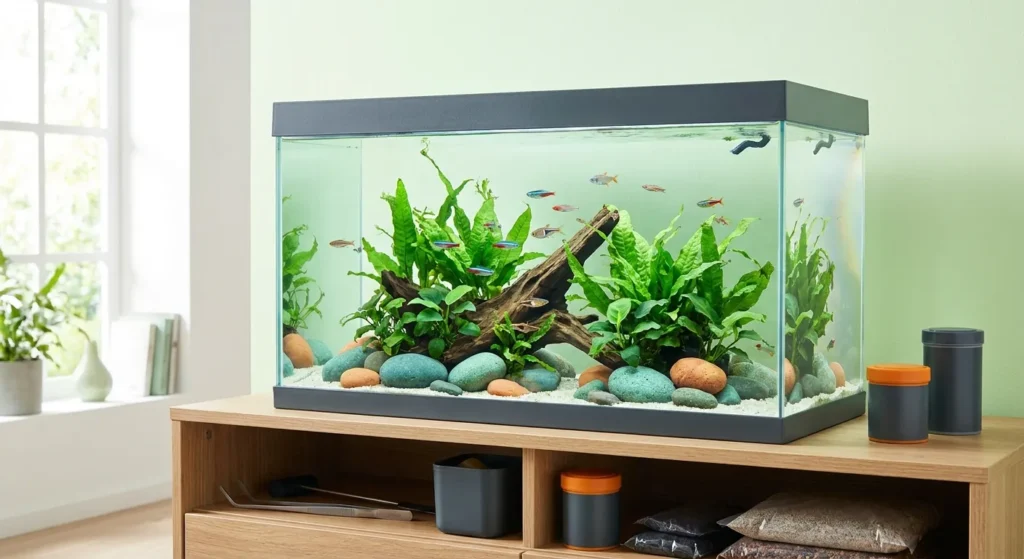
Live plants not only look beautiful but also offer numerous benefits. They consume nitrates, provide oxygen, and offer natural hiding places for fish. Some popular beginner-friendly plants include Anubias, Java Fern, and Amazon Swords. Be sure to research the specific light and nutrient requirements for any plants you choose. Alternatively, high-quality artificial plants can provide similar aesthetic and hiding benefits without the maintenance. However, live plants undeniably contribute to a more natural and stable aquatic ecosystem, making them a valuable part of any freshwater aquarium setup.
Water Preparation and Cycling: The Foundation of Fish Health
Establishing the correct water parameters is perhaps the most critical step in setting up a new aquarium. This process, known as cycling, ensures a healthy environment before any fish are introduced. This is a key aspect of responsible pet care and vital for a successful freshwater aquarium setup.
Understanding the Nitrogen Cycle
The nitrogen cycle is a natural biological process that converts toxic ammonia and nitrite into less harmful nitrate. When fish waste and uneaten food break down, they produce ammonia. Nitrifying bacteria then convert ammonia to nitrite, and other bacteria convert nitrite to nitrate. This cycle is essential for maintaining water quality. Therefore, understanding this process is fundamental for any fish keeper.
Cycling Your Aquarium
Cycling an aquarium typically takes 4-6 weeks and can be done in a few ways. The ‘fishless cycle’ is often recommended for beginners, as it doesn’t expose fish to harmful ammonia and nitrite levels. This involves adding an ammonia source (like pure ammonia or fish food) to kickstart the bacterial growth. Regularly test your water parameters (ammonia, nitrite, nitrate) during this phase. Once ammonia and nitrite consistently read zero, and nitrate is present, your tank is cycled and ready for fish. This patience ensures a robust biological filter, which is crucial for the long-term health of your aquatic pets.
Water Conditioners and Testing Kits
Tap water contains chlorine or chloramines, which are harmful to fish and beneficial bacteria. A good water conditioner neutralizes these chemicals. Moreover, an accurate water testing kit is indispensable for monitoring water parameters throughout the cycling process and once fish are introduced. Regular testing allows you to identify and address issues before they become serious, aligning with proactive pet health management. Key parameters to monitor include pH, ammonia, nitrite, and nitrate. Investing in a reliable test kit is a smart choice for any new fish owner.
Introducing Fish and Ongoing Maintenance
Once your aquarium is cycled, the exciting part begins: adding fish! However, this must be done carefully to avoid stressing your new inhabitants. A well-executed freshwater aquarium setup requires ongoing commitment.
Acclimating Your New Fish
When you bring new fish home, proper acclimation is vital to minimize stress. Float the bag in your aquarium for 15-20 minutes to equalize temperature. Then, gradually add small amounts of aquarium water to the bag over another 30 minutes. Finally, net the fish and introduce them to the tank, discarding the bag water (do not add it to your tank). This slow introduction helps them adjust to the new water parameters. This careful approach is a cornerstone of responsible fish care, similar to pet-proofing your home for a new terrestrial companion.
Stocking Your Aquarium Responsibly
Avoid overstocking your tank. A general rule of thumb for freshwater fish is one inch of adult fish per gallon of water, though this varies by species. Research the compatibility of different fish species to prevent aggression and ensure all inhabitants can thrive. Introduce fish gradually over several weeks to allow your biological filter to adjust to the increased bioload. This measured approach contributes to a stable and harmonious community.
Routine Maintenance Schedule
Consistent maintenance is key to a healthy aquarium. Perform weekly or bi-weekly partial water changes (25-30%) using dechlorinated water. Clean the substrate with a gravel vacuum to remove detritus. Rinse filter media in old tank water (not tap water) to preserve beneficial bacteria. Additionally, regularly check and clean your heater and thermometer. This routine is essential for maintaining water quality and preventing common issues. For more detailed information on maintaining aquatic environments, consider resources like the National Aquarium website.
Common Challenges and Troubleshooting in Freshwater Aquariums
Even with the best freshwater aquarium setup, challenges can arise. Knowing how to identify and address common issues will help you maintain a healthy environment for your fish. This proactive knowledge is invaluable.
Algae Growth Management
Algae is a natural part of any aquatic ecosystem, but excessive growth can be unsightly and indicate an imbalance. Common causes include too much light, excess nutrients (nitrates and phosphates), and infrequent water changes. To manage algae, reduce lighting duration, perform more frequent water changes, and consider adding live plants or algae-eating inhabitants like Otocinclus catfish or nerite snails. Understanding the root cause is the first step in effective management. You might also explore ways to provide optimal nutrition to your fish to support their natural immunity against environmental stressors.
Dealing with Fish Diseases
Fish diseases can be caused by poor water quality, stress, or the introduction of infected fish. Common signs of illness include clamped fins, lethargy, white spots (Ich), or frayed fins. Early detection is crucial. Isolate sick fish if possible and research appropriate treatments. Maintaining pristine water conditions is the best preventative measure against most diseases. For further reading on aquatic animal health, the FishBase website offers a comprehensive database.
Maintaining Water Parameters
Consistent water parameters are vital. Fluctuations in pH, hardness, or temperature can stress fish. Regular testing helps you monitor these parameters. If adjustments are needed, make them slowly and gradually to avoid shocking your fish. For instance, if your pH is consistently too high or low, you may need to investigate your water source or consider specific buffering substrates. A stable environment is a hallmark of a successful freshwater aquarium setup.
Beyond the Basics: Enhancing Your Aquatic Hobby
Once you’ve mastered the fundamentals of setting up a freshwater aquarium, you might be ready to explore more advanced aspects of fish keeping. This can lead to a more rewarding and engaging hobby.
Exploring Different Fish Species
There’s a vast array of freshwater fish to choose from, each with unique requirements and personalities. From vibrant guppies and peaceful tetras to majestic angelfish and intelligent cichlids, research is key. Consider their adult size, temperament, and specific water parameter needs before adding them to your tank. This ensures compatibility and prevents stress or aggression within your community. Understanding the needs of diverse animals is at the core of Types of Pets’s mission.
Aquascaping and Design
Aquascaping is the art of arranging aquatic plants, rocks, driftwood, and other decorations in an aesthetically pleasing way. This can transform your aquarium into a stunning underwater landscape. There are various styles, from naturalistic to Dutch or Iwagumi. Experiment with different layouts to create a visually captivating and stimulating environment for both you and your fish. A beautifully aquascaped tank is a true testament to a well-executed freshwater aquarium setup.
Breeding Freshwater Fish
For many enthusiasts, breeding freshwater fish becomes the next exciting step. This requires specific knowledge about the breeding habits, water parameters, and dietary needs of your chosen species. Setting up a separate breeding tank is often necessary to protect fry from adults. Successfully breeding fish can be an incredibly rewarding experience, offering a deeper connection to the aquatic world you’ve created.
Conclusion: Your Journey to a Thriving Freshwater Aquarium
Setting up a freshwater aquarium is a rewarding endeavor that brings a piece of the natural world into your home. By diligently following this freshwater aquarium setup guide, from choosing the right equipment to understanding water chemistry and ongoing maintenance, you lay the groundwork for a thriving aquatic ecosystem. Remember that patience, research, and consistent care are your most valuable tools. A healthy aquarium is a stable aquarium, and your fish will flourish in an environment thoughtfully created just for them. Enjoy the serene beauty and engaging activity that a well-maintained freshwater tank provides.
FAQ
What is the ideal tank size for a beginner’s fish tank?
For beginners, a 20-gallon tank is generally recommended. It’s large enough to offer stability in water parameters but manageable in terms of maintenance. This size allows for a small community of compatible fish species.
How long does it take to cycle a new fish tank?
Cycling a new fish tank typically takes between 4 to 6 weeks. This process establishes beneficial bacteria that convert harmful waste products into less toxic forms. It’s crucial not to rush this step to ensure a healthy environment for your future fish.
What are the most important water parameters to monitor?
The most important water parameters to monitor are ammonia, nitrite, and nitrate, especially during the cycling process. Once fish are introduced, also regularly check pH and temperature. Keeping these stable is key to a successful aquatic habitat.
Can I put tap water directly into my aquarium?
No, you should not put untreated tap water directly into your aquarium. Tap water often contains chlorine or chloramines, which are toxic to fish and beneficial bacteria. Always use a water conditioner to neutralize these chemicals before adding tap water to your tank.
What are some easy-to-care-for live plants for a new tank?
Several live plants are excellent for beginners. Good options include Anubias, Java Fern, and Amazon Sword plants. These plants are relatively low-maintenance, can tolerate various lighting conditions, and provide natural benefits to your aquatic environment.