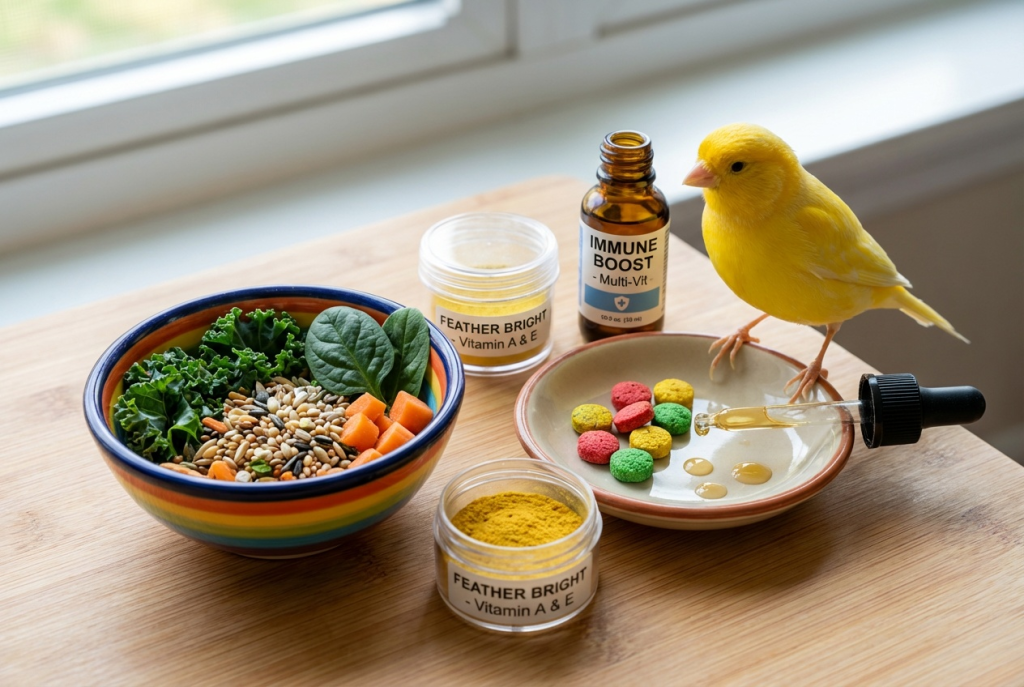

Caring for small birds like canaries and finches brings joy into your daily life. Their songs brighten quiet mornings, their gentle personalities soothe stressful days, and their vibrant colors add beauty to your home. Yet these delicate birds rely heavily on nutritional balance to stay healthy. Understanding the essential vitamins for canaries and finches is one of the most important steps in preventing illness, supporting strong feathers, and maintaining their natural energy.
Because canaries and finches have fast metabolisms, every nutrient matters. Their bodies use vitamins constantly to regulate digestion, immunity, feather growth, bone strength, and reproductive health. Even small deficiencies can lead to noticeable changes. You may see dull feathers, low energy, breathing trouble, or reduced singing when vitamin levels drop. Fortunately, when you learn the essential vitamins for canaries and finches, you can support these birds with confidence.
This guide breaks down each important vitamin, explains how it supports your bird, and highlights the best ways to provide it through diet and supplements. With a consistent feeding routine built around balanced nutrients, your bird thrives with brighter feathers, clearer songs, and a healthier life overall.
Why the Essential Vitamins for Canaries and Finches Matter
Vitamins are crucial for all birds, but small species like canaries and finches need particularly careful attention. Because they eat small meals throughout the day, each bite must offer value. A diet missing even one essential vitamin can lead to long-term complications, especially since many seed diets lack complete nutrition.
The essential vitamins for canaries and finches contribute to:
• Feather strength and sheen
• Proper vision
• Healthy skin
• Immune function
• Bone growth
• Egg production
• Digestion
• Energy balance
Unlike humans, birds cannot store all vitamins long-term. They need them replenished regularly. Ensuring consistent access prevents serious issues such as respiratory problems, seizures, weight loss, and organ stress.
Vitamin A: One of the Most Essential Vitamins for Canaries
Vitamin A tops the list of essential vitamins for canaries and finches because it plays a direct role in immunity, feather quality, and respiratory health. Many seed-based diets lack vitamin A, making deficiency common. Birds with low vitamin A often show symptoms such as:
• Dull feathers
• Frequent infections
• Mouth sores
• Difficulty breathing
• Watery eyes
Vitamin A supports the lining of the respiratory tract, helping birds resist infections. It also keeps their skin and feathers smooth and helps them maintain bright, clear eyes.
Best Sources of Vitamin A
• Dark leafy greens
• Carrots
• Sweet potatoes
• Red bell peppers
• Broccoli
• Commercial vitamin-enriched pellets
Offering these foods regularly ensures your birds receive enough of this vital nutrient.
Vitamin D3: Another Critical Vitamin for Canaries and Finches
Vitamin D3 is essential for calcium absorption. Without enough D3, bones weaken and egg-laying females risk egg-binding, a dangerous condition. Birds living indoors or in low-light environments often struggle to synthesize enough D3, so diet becomes essential.
D3 supports:
• Strong bones
• Healthy beaks
• Muscle function
• Nervous system balance
Safe Sources of Vitamin D3
• High-quality bird pellets
• Egg yolk (in moderation)
• UVB lighting for indoor birds
• Vet-approved supplements
Sunlight exposure helps, but indoor windows block UVB, making diet the most reliable source.
Vitamin E: A Key Antioxidant
Vitamin E protects cells from oxidative stress. It supports reproductive health, strengthens muscles, and boosts immunity. Deficiency can cause muscle weakness, poor coordination, and reduced fertility.
Sources of Vitamin E
• Spinach
• Nuts (very small amounts, finely ground)
• Wheat germ
• Vegetable oils (drop-sized portions only)
• Fortified seeds or pellets
Because birds require tiny quantities, consistent but controlled feeding is best.
Vitamin K: Essential for Blood Clotting
Vitamin K plays a vital role in clotting. Birds deficient in vitamin K may bruise easily or bleed excessively from small injuries. While most birds get enough K from a balanced diet, pure seed diets may still fall short.
Common Sources of Vitamin K
• Leafy greens
• Broccoli
• Herbs like parsley
• Pelleted diets
Fresh greens are one of the easiest and safest ways to supply vitamin K.
B Vitamins: A Powerful Group of Essential Vitamins for Canaries
B vitamins support energy production, nerve stability, digestion, and feather development. Because they act as co-enzymes, B vitamins are crucial for daily functioning.
Key B vitamins include:
• B1 (Thiamine)
• B2 (Riboflavin)
• B3 (Niacin)
• B6 (Pyridoxine)
• B12 (Cobalamin)
• Biotin
• Folate
Signs of B-Vitamin Deficiency
• Poor balance
• Weakness
• Feather loss
• Weight decline
• Digestive trouble
• Nervous system issues
Best Sources of B Vitamins
• Hard-boiled eggs (very small amounts)
• Fresh vegetables
• Fortified pellets
• Whole grains
• Brewer’s yeast (sparingly)
Including B vitamins in daily meals ensures steady energy and supports healthy molting cycles.
Vitamin C: Helpful, Even if Not Always Essential
Unlike humans, birds can produce their own vitamin C. However, offering some dietary vitamin C boosts immunity, reduces stress, and supports respiratory health—especially during molting, seasonal changes, or illness.
Sources of Vitamin C
• Bell peppers
• Leafy greens
• Kiwi
• Oranges (very small pieces)
Offering vitamin C-rich foods a few times a week helps maintain resilience.
How to Include Essential Vitamins for Canaries Safely
Although offering fresh foods supports a balanced diet, too much of certain vitamins can cause harm. Birds require small quantities, so thoughtful feeding is key.
Use Pellets as a Nutritional Foundation
Pelleted diets are formulated with the correct vitamin balance. When combined with fresh produce, they create a strong nutritional base. If your bird currently eats only seeds, transition slowly to avoid stress.
Rotate Fresh Foods Regularly
Introduce variety by rotating:
• Greens
• Vegetables
• Low-sugar fruits
Rotation ensures nutritional diversity and keeps meals interesting.
Use Supplements Thoughtfully
Supplements should only be used when recommended by a vet. Over-supplementation, especially with fat-soluble vitamins like A and D3, can cause toxicity.
Avoid Unsafe Foods
Some foods damage birds’ health and should never be offered.
Avoid:
• Avocado
• Chocolate
• Caffeine
• Onions
• Garlic
• Apple seeds
• Excess salt
These items pose serious risks.
Building a Daily Feeding Routine
A consistent routine helps you deliver essential vitamins for canaries and finches safely. Birds feel more secure when feeding times follow a pattern.
Try:
• Morning: Fresh vegetables and a portion of pellets
• Afternoon: Small amount of seeds for enrichment
• Evening: Greens or soft foods
• Throughout the day: Fresh, clean water
Monitor droppings, energy, and feather condition to ensure nutritional needs are being met.
How Seasonal Changes Affect Vitamin Needs
Molting increases vitamin demands, especially for protein and B vitamins. Breeding seasons require more vitamin E. Winter months may reduce natural light exposure, increasing the need for D3.
Understanding these shifts helps you adjust diet naturally and safely.
Recognizing Vitamin Imbalances Early
Catching deficiencies early prevents long-term harm.
Watch for:
• Reduced singing
• Lethargy
• Poor feather regrowth
• Flaky skin
• Thickened scales on legs
• Weight loss
• Frequent respiratory issues
When you notice these signs, adjust diet or consult a vet promptly.
Conclusion
Providing the essential vitamins for canaries and finches is one of the most effective ways to support a long, healthy life. When you choose balanced foods, offer fresh vegetables, and pay attention to your bird’s seasonal needs, you create a strong nutritional foundation. With consistent care and the right vitamins, your birds enjoy brighter feathers, stronger immunity, improved song quality, and greater overall wellbeing. Healthy nutrition isn’t complicated—it’s simply a habit built with intention and love.
FAQ
1. Do canaries and finches need supplements daily?
Not always. Pelleted diets typically provide balanced vitamins, and fresh foods help fill gaps.
2. What is the most common vitamin deficiency in canaries?
Vitamin A deficiency is the most common, especially in seed-fed birds.
3. Can too many vitamins harm small birds?
Yes. Fat-soluble vitamins like A and D can become toxic if oversupplied.
4. How often should I offer fresh vegetables?
Offer vegetables daily to support consistent vitamin intake.
5. Are seeds enough to meet vitamin needs?
No. Seeds lack several essential vitamins, so they must be part of a balanced diet—not the entire diet.