
Providing enrichment toys for small pets is one of the simplest yet most effective ways to improve their quality of life. While food, shelter, and basic care are essential, they are not enough on their own. Small pets such as hamsters, guinea pigs, rabbits, and mice need stimulation to stay mentally and physically healthy. Without it, they can quickly become bored, stressed, or even develop harmful behaviors. Therefore, introducing enrichment toys for small pets creates a more engaging environment that supports natural instincts and daily activity.
In the wild, small animals spend most of their time exploring, foraging, and interacting with their surroundings. However, when they are kept in enclosures, those natural opportunities are limited. As a result, enrichment becomes essential rather than optional. By using enrichment toys for small pets, you can recreate these natural behaviors in a safe and controlled way. Over time, this leads to happier, more active, and more curious pets that thrive in their environment.
Why Enrichment Is Essential for Small Pets
Small pets may appear calm or inactive, but they require consistent stimulation to stay healthy. One of the key benefits of enrichment toys for small pets is that they reduce boredom. When animals lack stimulation, they often develop repetitive behaviors such as chewing cage bars or pacing. These habits are not only signs of stress but can also lead to injury over time.
Additionally, enrichment supports mental engagement. Just like larger animals, small pets benefit from challenges that keep their minds active. Toys that encourage problem-solving or exploration can make a significant difference. As a result, enrichment toys for small pets help maintain cognitive function and prevent mental stagnation.
Another important factor is emotional well-being. Pets that feel stimulated and secure are less likely to become anxious or withdrawn. By adding variety to their environment, you create a sense of curiosity and comfort. This balance plays a key role in long-term health and happiness.
Types Of Enrichment Toys That Make A Difference
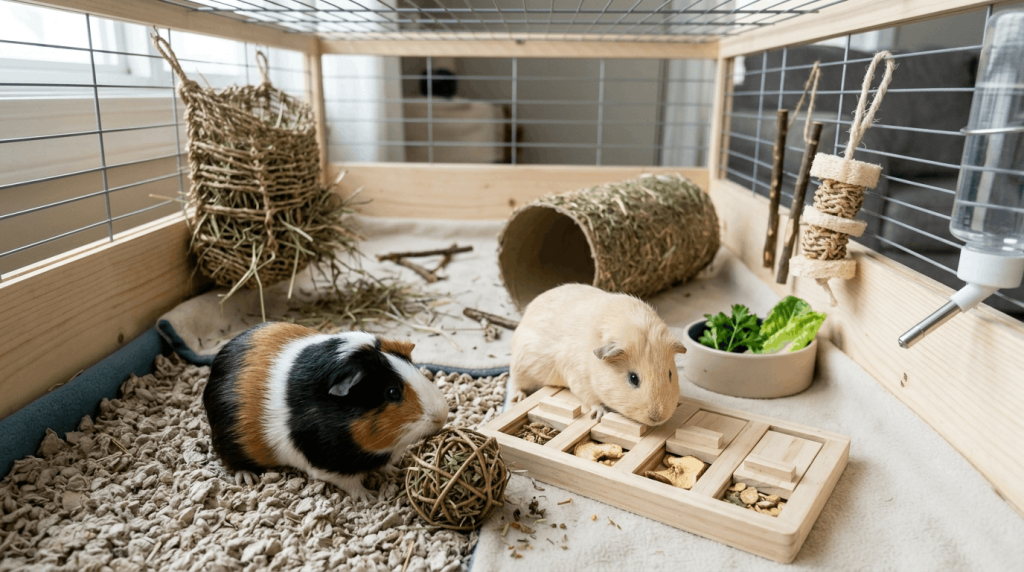
When choosing enrichment toys for small pets, variety is essential. Different types of toys serve different purposes, and combining them creates a more complete environment. For example, chew toys are ideal for animals with constantly growing teeth, such as rabbits and hamsters. These toys not only prevent dental issues but also provide a safe outlet for natural chewing behavior.
Interactive toys are another valuable option. These include puzzle feeders or treat-dispensing toys that encourage pets to work for their food. By doing this, you mimic natural foraging behavior. As a result, enrichment toys for small pets become both a source of nutrition and entertainment.
Climbing structures and tunnels also play a major role. Many small animals enjoy exploring vertical and enclosed spaces. Providing platforms, ramps, or tunnels encourages movement and exercise. This not only improves physical health but also reduces boredom.
Soft toys and nesting materials can also be beneficial. These items allow pets to build and arrange their environment, which supports natural instincts. Although simple, they add comfort and engagement to the enclosure.
How To Choose The Right Toys For Your Pet
Selecting the best enrichment toys for small pets depends on the species and individual personality of your pet. For instance, hamsters often enjoy tunnels and wheels, while guinea pigs prefer hiding spots and chewable items. Therefore, understanding your pet’s natural behavior is the first step.
Safety should always come first. Choose toys made from non-toxic materials that are free from sharp edges or small parts. This reduces the risk of injury and ensures that your pet can interact with the toy safely. In addition, size matters. Toys should be appropriate for your pet’s size to prevent accidents.
It is also helpful to observe your pet’s reactions. Some animals may prefer certain textures or types of toys. By paying attention to what they enjoy, you can refine your choices over time. This approach ensures that enrichment toys for small pets remain effective and engaging.
Rotation is another important strategy. Instead of keeping all toys in the enclosure at once, switch them out periodically. This keeps the environment fresh and prevents boredom. Even familiar toys can feel new again when reintroduced after a break.
Creating A Stimulating Environment Beyond Toys
While enrichment toys for small pets are important, they are only part of the overall environment. A well-designed habitat includes multiple elements that work together to provide stimulation. For example, rearranging the enclosure occasionally can create new exploration opportunities. Even small changes can encourage curiosity and movement.
Adding natural elements such as wood, hay, or safe plants can also enhance the space. These materials provide different textures and scents, which stimulate the senses. As a result, enrichment toys for small pets become part of a larger, more dynamic environment.
Providing space for exercise is equally important. Wheels, open areas, and climbing structures allow pets to stay active. Physical activity not only improves health but also reduces stress and excess energy.
Social interaction can also play a role. Some small pets benefit from companionship, whether from other animals or from human interaction. Spending time with your pet strengthens your bond and adds another layer of enrichment.
Common Mistakes To Avoid
Even with the best intentions, it is easy to make mistakes when introducing enrichment toys for small pets. One common issue is overcrowding the enclosure. Too many items can limit movement and create stress. Therefore, it is important to maintain a balance between enrichment and open space.
Another mistake is choosing unsafe or low-quality toys. Cheap materials may break easily or contain harmful substances. Always invest in reliable products designed specifically for small animals. This ensures safety and durability.
Ignoring your pet’s preferences is another problem. Not all pets will respond to the same toys. If a toy is consistently ignored, it may not be suitable. Instead, try different options until you find what works best.
Lack of cleaning is also a concern. Toys can collect dirt, waste, or bacteria over time. Regular cleaning keeps the environment safe and hygienic. This simple step helps maintain the effectiveness of enrichment toys for small pets.
Long-Term Benefits Of Enrichment Toys
Over time, the impact of enrichment toys for small pets becomes increasingly clear. Pets that receive regular stimulation tend to be more active and alert. They show natural behaviors more frequently, which is a sign of good mental health.
Physical health also improves. Active pets are less likely to become overweight or develop related issues. In addition, proper chewing habits help maintain dental health. These benefits contribute to a longer and healthier life.
Behavioral improvements are another advantage. Enriched pets are less likely to develop destructive habits or signs of stress. Instead, they become more relaxed and comfortable in their environment. This makes them easier to care for and more enjoyable to observe.
Ultimately, enrichment toys for small pets create a better overall experience for both the pet and the owner. They turn a basic enclosure into a lively and engaging space that supports well-being on multiple levels.
Conclusion
Adding enrichment toys for small pets is one of the most effective ways to improve their daily lives. By focusing on variety, safety, and interaction, you can create an environment that encourages natural behavior and supports long-term health. Although it may take some trial and error, the effort is well worth it.
Small changes can lead to big improvements. Whether you introduce a new toy, rearrange the enclosure, or spend more time interacting with your pet, each step adds value. Over time, these changes build a more stimulating and enjoyable habitat.
In the end, enrichment toys for small pets are not just accessories. They are essential tools that help your pet stay active, curious, and happy. By making enrichment a priority, you ensure that your small pet thrives in every aspect of its life.
FAQ
1. What types of toys are best for keeping small animals entertained?
A mix of chew toys, tunnels, climbing structures, and interactive feeders works best for maintaining engagement.
2. How often should I change my pet’s toys?
Rotating toys every one to two weeks helps keep the environment fresh and prevents boredom.
3. Are DIY toys safe for small pets?
DIY toys can be safe if made from non-toxic materials and designed without sharp edges or small parts.
4. Can enrichment reduce stress in small animals?
Yes, providing stimulation helps reduce boredom and anxiety, leading to calmer behavior.
5. Do all small pets need the same type of enrichment?
No, each species has unique preferences, so it is important to tailor enrichment to your pet’s natural behavior.