
Beginner friendly pet frogs are best understood as animals whose actual requirements a new keeper can meet. The phrase does not mean a species is self-sufficient, forgiving of unsafe conditions or suitable for every household. This guide helps you compare four candidates, identify the care questions behind their appealing names and prepare before acquisition.
No species here is ranked as the easiest, safest or cheapest. Treat African dwarf frogs, Pacman frogs, White’s tree frogs and Oriental fire-bellied toads as research possibilities rather than guaranteed recommendations. Their names do not replace verified identification, species-specific husbandry guidance and a suitable veterinary contact.
Understand what differs between amphibians
The AVMA — Selecting an Amphibian brochure distinguishes aquatic, terrestrial and arboreal lifestyles among amphibians and emphasizes species-specific research. It explains that water quality, nutrition and an appropriate environment matter. A generic frog tank is therefore not a complete plan for every animal sold under a familiar common name.
Write the precise species name and source of identification before selecting equipment. Ask which life stage you are acquiring, since a guide for an adult cannot automatically be used for an egg, tadpole or juvenile. Do not infer the correct care from a photograph or assume two similarly named frogs need identical conditions.
In a hypothetical comparison, one candidate may require an aquatic setup while another requires access to a different habitat arrangement. The relevant question is which verified requirements you can meet, not which tank looks simpler. This example supplies no specific enclosure dimensions or care prescription for an actual frog.
African dwarf frogs: verify the aquatic plan
If African dwarf frogs are on your shortlist, confirm the exact animal with a knowledgeable professional before you buy an aquarium or feed. Ask whether the identification, enclosure, water management and dietary plan all refer to that species. Do not use an interchangeable label such as small water frog to choose a setup.
Make the water-care plan concrete: who checks the equipment, which parameters the professional advises monitoring, what maintenance is required and how you obtain help if a problem arises. This article does not provide a universal tank volume, compatible companion list, feeding recipe or claim that a small aquarium is automatically sufficient.
Ask about the animal’s current diet and history as well as future requirements. A seller’s broad statement that it is a good beginner pet does not answer whether your proposed habitat is ready. Leave any unresolved care field visible and postpone acquisition until it can be addressed.
Pacman frogs: clarify housing and feeding
Pacman frogs are another candidate requiring a species-specific discussion. The FDA — Considering a Pet Reptile or Amphibian resource uses a Pacman frog as an example when explaining feeding and human-health considerations, and notes that it should live alone because it may eat cage mates. Do not interpret its rounded appearance or apparent inactivity as proof that its care is undemanding.
Ask which animal the common name identifies, what food and supplements are appropriate and what the housing needs are. Consider whether every caregiver is willing and able to manage the feeding arrangement. This guide supplies no prey size, feeding interval or instruction to offer live vertebrates.
Avoid building a mixed-species display simply because the animals look compatible in a photograph. Discuss the actual proposed arrangement with a veterinarian experienced in amphibians. A beginners’ guide cannot assess whether a particular combination is safe or replace species-specific professional guidance.
White’s tree frogs: research the vertical habitat question
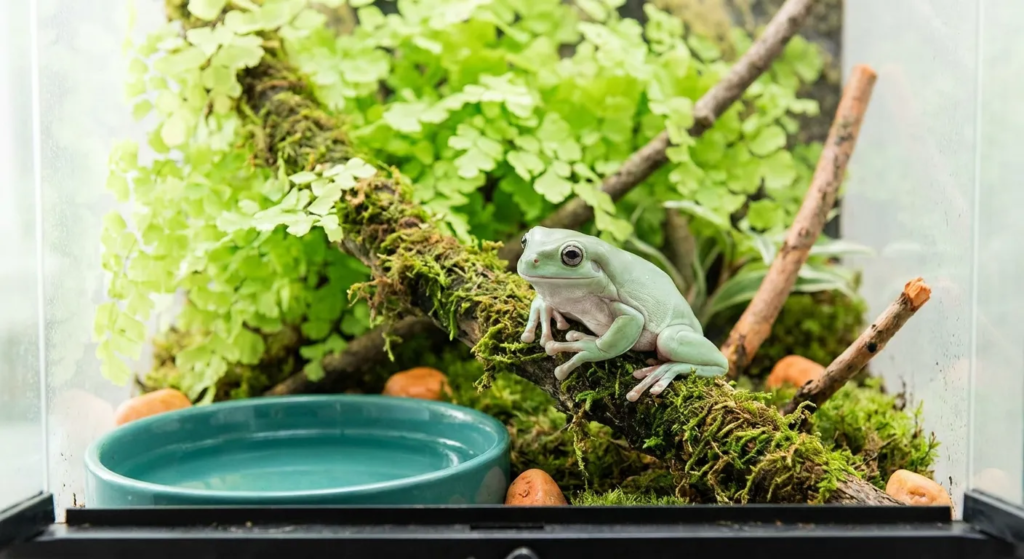
White’s tree frogs appear frequently in pet discussions, but popularity alone is not a welfare assessment. Verify the exact species and ask how its environment should be arranged. The amphibian categories in AVMA’s brochure help frame the distinction between tree-dwelling and other lifestyles without prescribing one design for every frog.
For your planning sheet, draw the complete proposed enclosure and maintenance access. Ask which furnishings and environmental equipment are suitable and how they should be secured and maintained. Do not assume that adding a branch to a tank establishes a complete or safe habitat.
This article makes no claim that these frogs tolerate frequent handling, require no heating or always remain quiet. Those assumptions can conceal important care questions. Obtain guidance about the specific animal and its environment before choosing it for a bedroom, shared living area or household expecting a pet to enjoy regular touch.
Fire-bellied toads: avoid generalizing from the name
Oriental fire-bellied toads provide a fourth research possibility. Verify the precise species and housing requirements rather than treating toad as a care category. Ask how aquatic and non-aquatic areas, if required for the individual setup, should be designed and maintained under species-specific guidance.
Do not assume that a colorful animal is appropriate for unrestricted handling or a child’s first independent care project. A common-name list supplies no assessment of the child, animal or household. Discuss actual care and hygiene responsibilities with appropriate professionals before making a decision.
The practical comparison should include equipment, food, maintenance, veterinary access and backup care. Leave price and ease rankings out unless you have a clearly defined comparison based on current, relevant information. A low acquisition price does not establish the total effort or cost of keeping an animal responsibly.
Environmental conditions need measurement and guidance
The Merck Veterinary Manual — Amphibian Environment and Husbandry manual explains that preferred temperature conditions vary among amphibian species and that water and environmental quality require attention. It also discusses moisture, ventilation and feeding needs. These distinctions mean an ordinary room temperature or a damp-looking enclosure is not enough evidence that a habitat is suitable.
Ask your veterinarian which measurements and equipment are relevant to the exact species. Keep the actual instructions with the care plan. This guide provides no universal humidity percentage, temperature range, cleaning-chemical recipe or lighting schedule that should be applied across all four candidates.
A useful preparation exercise is to confirm the setup before the animal arrives, using appropriate professional guidance. Record any unresolved equipment question. Do not claim the habitat is ready because it looks like a promotional photo or because a seller assured you that frogs are hardy.
Feeding is a commitment to investigate
AVMA’s brochure explains that amphibian diets differ and often involve live prey. Before acquisition, ask what the specific animal currently eats and what appropriate long-term feeding involves. Confirm how food will be obtained, stored and handled rather than assume a packet labeled frog food meets every species’ needs.
The Merck husbandry discussion also addresses appropriate nutritional supplementation. Do not create a supplement dose from a general guide or copy one intended for another animal. Ask a veterinarian for the plan suitable to the species, life stage and actual diet, and preserve the product identification with those instructions.
For a hypothetical care rota, identify the person who has agreed to feeding tasks and the person available during an absence. If nobody is willing to perform the required care, that is a reason to pause the decision. A pet without walks can still need a substantial and reliable routine.
Human-health precautions are part of selection
The CDC — Reptiles and Amphibians guidance explains that reptiles and amphibians can carry germs such as Salmonella even when they appear healthy. It recommends handwashing and appropriate handling of habitats and supplies, and identifies higher-risk household groups. Read the full current guidance when deciding whether an amphibian is appropriate for your household.
The FDA resource also distinguishes the animal, food and habitat as potential contamination sources. Follow its relevant hygiene guidance rather than label a frog germ-free or hypoallergenic. Discuss personal health questions with a healthcare professional; this article cannot decide medical suitability for a particular person.
Keep acquisition separate from proof of legal permission. Check official local requirements and your actual housing terms for the exact species. An online listing does not answer those questions. Do not release an unwanted pet outdoors; discuss appropriate rehoming options with the relevant professional or organization.
Arrange veterinary care before acquisition
Ask a clinic directly whether it sees the species and what emergency arrangements are available. AVMA recommends an amphibian veterinarian’s assessment and husbandry guidance when acquiring a new animal. Do not assume any clinic advertising pet care provides the same amphibian service.
Bring the animal’s source information, current diet and proposed habitat details to the discussion. Keep any separation or quarantine instructions specific to the professional assessment, rather than invent a universal time period. This article supplies no diagnosis or treatment for a frog that stops eating, changes appearance or behaves differently.
This is general educational information and is not medical advice or veterinary advice. Beginner friendly pet frogs require informed selection and dependable species-specific care; the title should never be taken as a promise that mistakes are harmless.
Frequently asked questions
Which frog is easiest for every beginner?
This guide establishes no universal winner. Compare verified needs with your household’s space, abilities and care access.
Can all frogs share one tank setup?
Amphibian environments and diets differ. Obtain guidance for the precise species and arrangement.
What should I do before choosing a frog?
Confirm identity, permission, veterinary access and the complete habitat and feeding plan. Resolve important gaps before acquisition.