Many pet owners wonder if bathing is necessary. While cleanliness matters, you must bathe small pets safely to avoid stress and health problems. Unlike dogs, many small animals groom themselves or require minimal bathing.
Therefore, bathing too often can do more harm than good. It may strip natural oils or cause anxiety. Understanding when and how to bathe small pets safely is essential for responsible care.
With the right approach, you can keep your pet clean without disrupting their health or comfort. In turn, your pet will stay calm, healthy, and well-adjusted.
Do Small Pets Really Need Baths?
Not all animals require frequent bathing. In fact, you should only bathe small pets safely when necessary.
Many small pets, such as hamsters and rabbits, clean themselves regularly. Their grooming habits keep their fur in good condition.
However, certain situations require intervention. For example:
- Dirt or sticky substances on fur
- Medical conditions requiring cleaning
- Hygiene issues in older or sick pets
Even then, gentle methods are best. Spot cleaning often works better than full baths.
Understanding your pet’s needs helps you avoid unnecessary stress.
Risks of Bathing Small Pets Incorrectly
Improper bathing can cause serious problems. That is why it is important to bathe small pets safely using the right techniques.
Common risks include:
- Stress and fear
- Hypothermia from wet fur
- Skin irritation
- Loss of natural oils
Additionally, small animals are sensitive to sudden temperature changes. Even lukewarm water can feel uncomfortable if not handled properly.
Therefore, always approach bathing with caution. Proper handling reduces risk and keeps your pet calm.
Which Small Pets Should Not Be Bathed Often
Some animals should rarely be bathed. To bathe small pets safely, you must know which species require minimal water exposure.
Avoid frequent bathing for:
- Hamsters
- Gerbils
- Chinchillas
- Guinea pigs (unless necessary)
Chinchillas, for example, require dust baths instead of water. Water can damage their dense fur and cause skin issues.
Understanding species-specific needs prevents unnecessary harm.
Alternatives to Traditional Bathing
In many cases, water baths are not needed. You can bathe small pets safely by using alternative cleaning methods.
Effective options include:
- Spot cleaning with a damp cloth
- Dry shampoos designed for small animals
- Dust baths for specific species
- Regular cage cleaning
These methods reduce stress while maintaining hygiene.
Additionally, keeping the environment clean minimizes the need for bathing.
When Bathing Becomes Necessary
Sometimes, a full bath is unavoidable. In such cases, you must bathe small pets safely and carefully.
Situations that may require bathing include:
- Exposure to harmful substances
- Severe dirt buildup
- Medical treatment recommended by a vet
When bathing is necessary, preparation is key. Gather all supplies before starting to reduce handling time.
Act calmly and gently throughout the process.
How to Bathe Small Pets Safely at Home
Preparation makes a big difference. To bathe small pets safely, follow a step-by-step approach.
Start by:
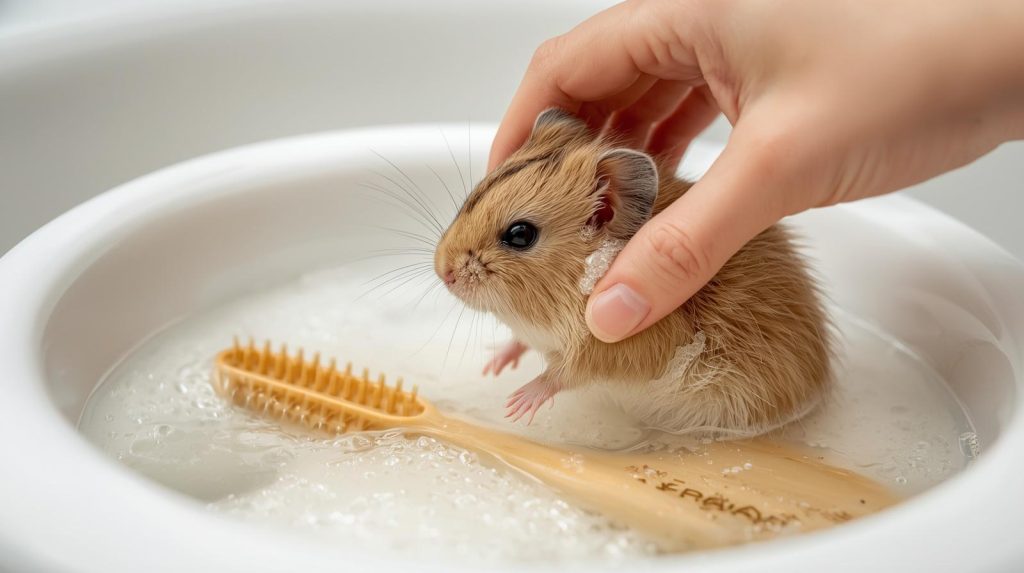
- Using lukewarm water
- Choosing a shallow container
- Keeping the head dry
Gently wet the fur and apply a small amount of pet-safe shampoo if needed.
Rinse thoroughly to remove residue. Then, dry your pet immediately with a soft towel.
Avoid loud noises or sudden movements. A calm environment reduces stress.
Drying Your Pet Properly
Drying is just as important as washing. To bathe small pets safely, ensure they are completely dry afterward.
Wet fur can lead to chills or illness. Therefore, drying should be thorough but gentle.
Use:
- Soft towels
- Warm, quiet spaces
- Low heat if using a dryer (only if safe)
Never leave your pet damp. Proper drying keeps them comfortable and healthy.
Creating a Stress-Free Bathing Experience
Stress can affect your pet’s health. To bathe small pets safely, focus on creating a calm experience.
Helpful tips include:
- Handling your pet gently
- Speaking softly during the process
- Keeping sessions short
Additionally, choose a quiet location with minimal distractions.
Positive experiences help your pet remain calm during future cleanings.
Common Mistakes Pet Owners Make
Many owners make simple errors. To bathe small pets safely, avoid these common mistakes.
These include:
- Using human shampoo
- Bathing too frequently
- Using water that is too hot or cold
- Failing to dry properly
Each mistake can lead to discomfort or health issues.
Instead, follow proper guidelines and adjust based on your pet’s needs.
Maintaining Hygiene Without Frequent Baths
Bathing is not the only way to maintain cleanliness. To bathe small pets safely, you should also focus on prevention.
Keep your pet clean by:
- Cleaning the cage regularly
- Providing fresh bedding
- Monitoring diet and waste
A clean environment reduces the need for bathing.
Consistency helps maintain hygiene without causing stress.
Understanding Your Pet’s Behavior During Bathing
Behavior can reveal a lot. To bathe small pets safely, observe how your pet reacts.
Signs of stress include:
- Rapid movement
- Vocalization
- Attempts to escape
If your pet shows extreme stress, stop the process. Try alternative methods instead.
Understanding behavior helps you adjust your approach.
Long-Term Effects of Proper Bathing Practices
Proper care leads to better outcomes. When you bathe small pets safely, you support long-term health.
Benefits include:
- Healthier skin and fur
- Reduced stress levels
- Better hygiene
Additionally, your pet becomes more comfortable with handling.
Consistent, gentle care builds trust and improves overall well-being.
Conclusion
Bathing small animals requires careful attention. When you bathe small pets safely, you protect their health while maintaining cleanliness.
Not all pets need frequent baths. In many cases, alternative methods work better. However, when bathing is necessary, proper technique is essential.
Focus on gentle handling, proper drying, and minimizing stress. These steps ensure a safe and positive experience.
With the right approach, your small pet will remain clean, healthy, and comfortable.
FAQ
1. Do all small pets need regular baths?
No, many small animals groom themselves and only need occasional cleaning.
2. What is the safest way to clean a small pet?
Spot cleaning with a damp cloth is often the safest method.
3. Can I use regular shampoo on my pet?
No, always use products designed specifically for small animals.
4. How do I reduce stress during bathing?
Keep the environment calm, handle gently, and limit the duration.
5. What should I do if my pet hates water?
Use dry cleaning methods or consult a veterinarian for advice.