
Learning how to trim dog nails at home can feel nerve-racking the first time, especially if your dog pulls away or you worry about the quick. The good news is that it gets easier with patience, the right tool and small, calm sessions. This guide walks you through each stage, from paw handling to the final reward, so both you and your dog can stay relaxed.
Who this guide is for
This guide is for owners who want to keep their dog’s nails tidy between vet or groomer visits. It suits first-timers as well as owners whose dog has become wary of nail care. If your dog is very anxious, has a painful paw or has ever reacted with fear during handling, read the final sections first. In those cases, a groomer or your vet is often the better starting point.
Why regular nail care matters
Long nails can change the way a dog stands and walks. They may also catch on carpet or split. So how often should you trim? There is no single rule for every dog. Instead, check regularly; many owners notice clicking on hard floors as a sign that a trim is due. Dogs that walk a lot on rough ground may wear their nails down naturally, while others need more frequent attention. Don’t forget the dewclaws, which sit higher on the leg and never touch the ground.
Getting your dog comfortable with paw handling
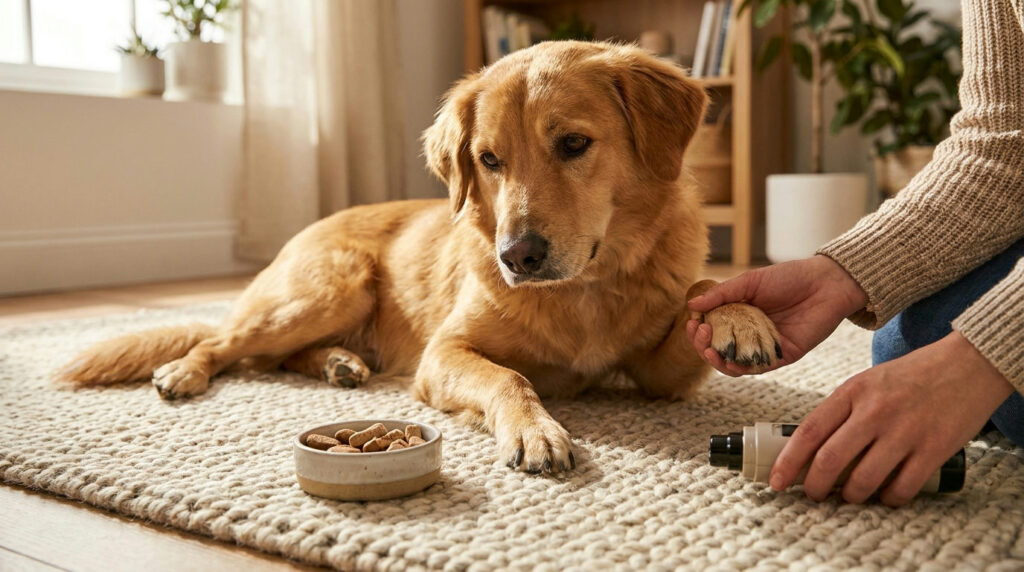
Before you pick up a tool, spend time making paw handling feel normal and pleasant. Many owners find this step makes the biggest difference. Keep sessions short and stop while your dog is still calm.
- Choose a quiet moment when your dog is already relaxed, such as after a walk.
- Stroke down the leg and briefly hold the paw. Then praise and give a small treat.
- Next, gently press each toe so the nail extends a little. Reward again.
- Once your dog accepts this, let them see and sniff the clippers or grinder. Reward calm interest.
- Touch the tool to a nail without cutting. If you use a grinder, switch it on nearby first so your dog gets used to the sound.
- Repeat over several days. Only move to the next step when your dog stays relaxed.
If your dog pulls away, go back a step. Forcing the process tends to build fear, which makes every later trim harder.
Choosing clippers or a grinder
Both tool types work well. The right choice depends on your dog and your own comfort. Whichever you pick, make sure it is sharp, sized for your dog’s nails and comfortable in your hand.
| Tool type | How it works | May suit | Things to watch |
|---|---|---|---|
| Scissor-style clippers | Two blades close around the nail | Thicker nails and larger dogs | Blades need to stay sharp to avoid crushing |
| Guillotine-style clippers | A blade slides across a ring | Small to medium dogs with thinner nails | Can be awkward on very thick nails |
| Nail grinder | A rotating head files the nail down gradually | Dark nails and owners who prefer slow, precise work | Noise and vibration need introducing; keep long fur away from the head |
Keep a clean cloth and a product made to stop minor nail bleeding within reach before you start. You will probably not need them, but having them close helps you stay calm.
Finding the quick in light and dark nails
The quick is the living part inside the nail. It contains blood vessels and nerves, so cutting into it hurts and causes bleeding. Knowing where it sits is the heart of learning how to trim dog nails safely.
Light or clear nails
In pale nails, you can usually see the quick as a pink area running down the centre. Trim the tip well in front of that pink section. Leave a clear margin rather than cutting close to it.
Dark or black nails
Dark nails hide the quick, so take a little at a time. After each small cut, look at the cut surface. As you get closer to the quick, the centre often looks lighter or slightly moist, like a small dot or ring. When you see that change, stop trimming that nail. A grinder can help here, because it removes nail slowly and lets you check often.
If you are unsure, trim less. You can always take a little more next time. Every dog is different, so let the nail itself guide you.
How to trim dog nails step by step
Once your dog is happy with handling and you have your tool ready, follow these steps.
- Set up. Work in good light on a non-slip surface. Small dogs can sit on your lap, while larger dogs may prefer lying on their side.
- Hold the paw firmly but gently. Support the foot and press the toe pad lightly to extend the nail.
- Angle the tool. Position clippers so the cut follows the natural curve of the nail. With a grinder, touch the nail briefly and move around the tip.
- Take a small amount. Cut or grind only the tip. Then check the cut surface before going further.
- Reward. Give a treat and praise after each nail, or after each paw for calmer dogs.
- Do the dewclaws. Check whether your dog has them on the front or back legs, and trim them the same way.
- Know when to stop. If your dog becomes restless, finish the nail you are on and stop. You can do the rest another day.
Some owners trim just one paw per session. That approach is perfectly fine. Short, positive sessions usually work better than one long struggle.
Rewards and building a routine
Knowing how to trim dog nails is only half the job; rewards turn nail care into something your dog can look forward to. Use small, high-value treats that your dog does not get at other times. In addition, keep your voice calm and upbeat. Many owners find that finishing with a game or a short walk helps the whole routine end on a good note. Over time, your dog may begin to offer a paw on their own.
What to do if a nail bleeds
Even careful owners occasionally nick the quick. If it happens, stay calm, because your dog will take cues from you.
- Apply gentle pressure to the nail tip with a clean cloth.
- Alternatively, use a product made for stopping minor nail bleeding, following the label.
- Keep your dog still and quiet while the bleeding settles.
- Offer reassurance and a treat, then end the session.
- Contact your vet if the bleeding does not stop, or if the toe looks swollen or your dog starts limping afterwards.
After a slip like this, go back to easy handling practice for a while before the next trim.
This example is hypothetical. Imagine a young dog with black nails who pulls back whenever her paws are touched. Her owner spends a few days on paw handling with treats, then introduces a grinder at a distance. Next, she grinds a single nail per session and checks the surface after each pass. Within a few weeks, the dog stays relaxed for a whole paw. That gradual approach is the key point, not the exact timeline.
When to let a groomer or vet do it
Home trims are not right for every dog or every owner. Consider booking a groomer or your vet if:
- Your dog shows fear, growling or snapping during handling.
- The nails are very overgrown or curling toward the pad.
- A nail is cracked, split or looks unusual.
- Your dog seems sore, is limping or keeps licking a paw.
- You simply don’t feel confident yet. Many groomers and vet practices are happy to show you the technique.
Common mistakes when learning how to trim dog nails
| Mistake | Why it causes trouble | What to try instead |
|---|---|---|
| Rushing paw handling | Your dog learns to fear the process | Go back a step and keep sessions short |
| Cutting too much at once | Raises the chance of hitting the quick | Take a little at a time and check the surface |
| Using a blunt tool | Can crush or split the nail | Keep blades sharp or replace worn tools |
| Poor lighting | Makes the quick harder to see | Work near a window or a bright lamp |
| Forgetting dewclaws | They can overgrow unnoticed | Check them every time you trim |
| Skipping rewards | Nail care becomes something to avoid | Reward each nail or paw with praise and treats |
For more dog care guides, visit our dogs section.
Where to read more: ASPCA dog grooming tips and Michigan Humane on trimming nails.
Key takeaways
- Build comfort with paw handling before you trim anything.
- Choose clippers or a grinder that suits your dog’s nails and your confidence.
- Find the quick in light nails by sight, and in dark nails by taking a little at a time.
- Reward generously and keep sessions short.
- If a nail bleeds, stay calm, apply gentle pressure and contact your vet if it does not stop.
- Ask a groomer or vet for help whenever you or your dog are unsure.
With patience and small steps, nail trims can become a calm, routine part of caring for your dog.
Written by the Types of Pets Editorial desk. This guide is general information, not veterinary advice; talk to your vet about your own pet. Disclosure: this guide contains no affiliate or sponsored links.