
If you want to introduce a cat to a dog at home, the safest approach is slow, calm and planned in stages. Rushing a first meeting can leave a cat frightened and a dog overexcited, and that first impression can be hard to undo. This guide walks you through each stage, from a separate cat base room to supervised time together. Along the way, you will learn how to read stress signals in both animals and when to step back.
Who this guide is for
This guide suits anyone bringing a new cat into a home with a resident dog, or a new dog into a home with a resident cat. It also helps if an earlier introduction went badly and you want to start again. The steps assume both pets are healthy and that you can keep them apart when needed. If your dog has a strong history of chasing small animals, read the section on getting help before you begin.
Step 1: Set up a cat base room
Before the animals meet, give the cat a private room the dog cannot enter. This base room becomes a safe place where the cat can settle and feel in control. As a result, the cat starts the process calm rather than on edge.
- Choose a quiet room with a door that closes firmly.
- Add food, water, a litter tray, a bed and a scratching post. Keep the litter tray away from the food and water.
- Provide at least one hiding place, such as a covered bed or a box on its side.
- Add high resting spots, like a shelf, a cat tree or a cleared windowsill.
- Spend quiet time in the room so the cat links it with good things.
Meanwhile, keep the dog’s routine as normal as possible. Walks, meals and play at the usual times help the dog stay settled while the house changes around it.
Step 2: Swap scents before they meet
Cats and dogs learn a lot through smell. Swapping scents lets each animal get used to the other without any pressure. In other words, the first “meeting” happens through the nose.
- Rub a soft cloth gently on the cat’s cheeks and place it near the dog’s bed. Do the same with the dog and place that cloth in the cat’s room.
- Swap bedding or blankets between the two animals.
- Once the cat seems relaxed in its room, shut the dog in another room. Then let the cat explore the rest of the house and pick up the dog’s scent.
- Next, swap roles. Let the dog sniff around while the cat is safely in its base room.
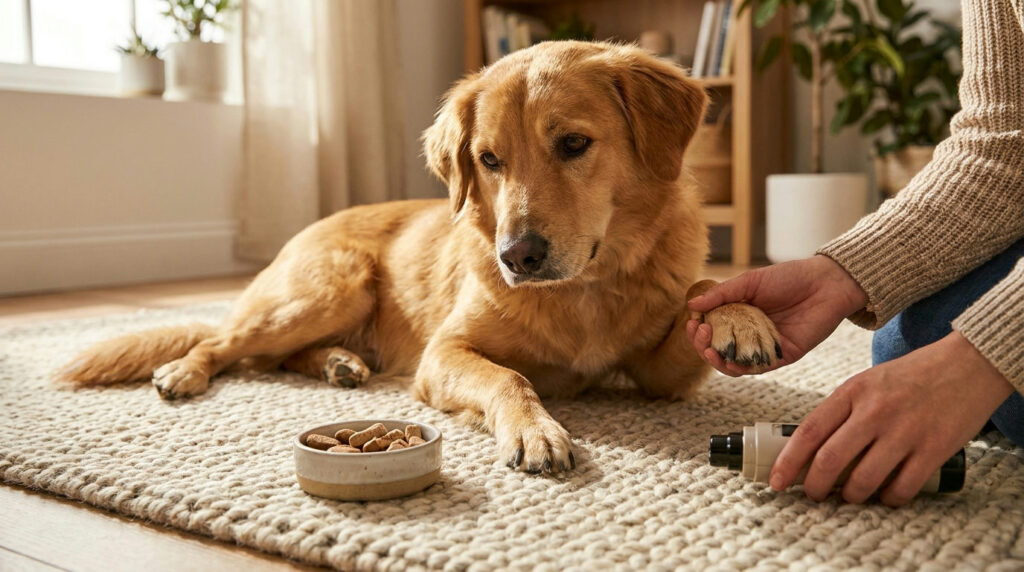
- Reward calm sniffing with praise or a small treat.
If either animal hisses at, growls at or avoids the scented items, simply keep repeating this stage. There is no fixed timetable, so let their behaviour guide you.
Step 3: How to introduce a cat to a dog behind a gate
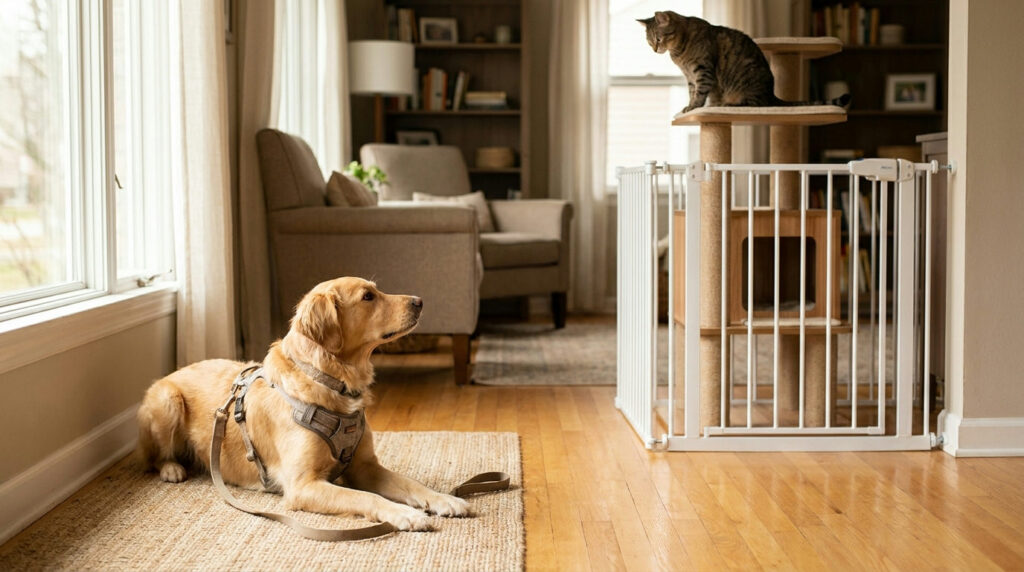
When both pets react calmly to each other’s scent, you can try the first sight introduction. A sturdy pet gate or a door open just a crack keeps them apart while they look at each other. For extra safety, keep the dog on a lead, even behind the gate.
- Pick a quiet moment. Many owners find a long walk first helps the dog arrive calmer.
- Put the dog on a lead and ask a second person to hold it at a comfortable distance from the gate.
- Let the cat choose whether to come towards the gate. Never carry or push the cat closer.
- Reward calm behaviour in both animals with praise and tasty treats.
- Keep the session short, and end it while both are still relaxed.
- Over later sessions, reduce the distance a little at a time as long as both stay calm.
A useful sign is whether both animals will still take treats. If either refuses food, the session is likely too intense, so increase the distance next time.
Step 4: Use reward-based steps for shared time
Once gate sessions go smoothly, you can let the pets share a room under supervision. Keep the dog on a lead at first, so you can calmly guide it away if needed. Reward-based training works better here than telling either animal off.
- Teach or practise a “sit”, “down” or “look at me” cue with the dog, and reward it often around the cat.
- Give the dog something calm to do, such as chewing on a safe chew or a puzzle feeder.
- Let the cat move around freely and choose how close it wants to get.
- Never punish hissing or growling. These are warnings, and punishing them can make an animal skip the warning next time.
- Separate the pets whenever you leave the house, until you are fully confident in how they behave together.
Only move to time off the lead after many calm, supervised sessions. Even then, keep watching closely and stay ready to step in.
Read stress signals in both animals
Learning to spot stress early is the key skill when you introduce a cat to a dog. The table below describes common signals in plain terms. It is a rough guide, so watch your own pets as individuals.
| Animal | Relaxed signs | Stress or warning signs |
|---|---|---|
| Cat | Soft eyes, slow blinks, tail held loosely, eating and grooming normally | Flattened ears, puffed tail, hissing or spitting, crouching low, hiding for long periods, not eating or using the litter tray |
| Dog | Loose body, soft face, able to look away from the cat, takes treats gently | Staring fixedly, stiff body, whining, barking, lunging, pulling hard on the lead, ignoring cues it normally knows |
If you see stress signs, calmly end the session and give both pets space. Then go back to the last stage where they were relaxed.
Give the cat high escape routes
Cats feel safer when they can get up high and out of reach. Therefore, plan escape routes in every room where the pets will meet.
- Place cat trees, shelves or cleared furniture tops so the cat can climb away quickly.
- Make sure the cat can always reach its base room without passing the dog.
- Put food, water and litter trays where the dog cannot reach them, for example behind a gate the cat can jump over or slip through.
- Keep some hiding spots at ground level too, such as covered beds the dog cannot fit into.
When to slow down
Every pair of animals moves at its own pace, so there is no set schedule when you introduce a cat to a dog. Slow down and repeat an earlier stage if you notice any of the following:
- The dog becomes fixated on the cat’s door or tries to dig or scratch at it.
- The cat hides for long stretches or stops eating, grooming or using its tray.
- Either animal refuses treats during sessions.
- The dog lunges, chases or pulls hard towards the cat.
Going back a step is normal and not a failure. In fact, a slower start often leads to a calmer household later on.
When to ask a vet or qualified behaviourist
Some attempts to introduce a cat to a dog need extra support. Contact your vet if either pet stops eating, seems unwell, or shows a sudden change in behaviour. A vet can check for pain or other issues that may affect how an animal reacts.
A qualified behaviourist or a force-free trainer can help if stress or chasing continues after many slow, careful sessions. They can also help if your dog has a history of chasing or hurting small animals. Ask your vet for a referral if you are unsure where to start. Some cats and dogs may never be comfortable together, and a professional can help you plan safely around that.
Common mistakes to avoid
| Mistake | Why it causes problems | What to try instead |
|---|---|---|
| Holding the cat up to the dog | The cat cannot escape and may panic or scratch | Let the cat choose its own distance |
| Letting them “sort it out” | A chase can frighten the cat and set back progress | Keep the dog on a lead and supervise |
| Skipping the scent stage | A first sighting with no familiar scent can feel threatening | Swap bedding and cloths first |
| Long sessions | Animals tire and stress builds up | Keep sessions short and end on a calm note |
| Punishing growls or hisses | It can hide warning signs without reducing fear | Increase distance and reward calm behaviour |
For more on caring for both species, browse our cat guides and dog guides.
Where to read more: RSPCA Australia: introducing a new cat to the family dog and Wisconsin Humane Society: introducing cats to dogs.
Key takeaways
- Start with a separate cat base room that has food, water, a litter tray, hiding places and high spots.
- Swap scents before the pets see each other.
- Use a gate and keep the dog on a lead for early sight introductions.
- Reward calm behaviour in both animals and keep sessions short.
- Watch for stress signals, and go back a stage whenever you see them.
- Ask your vet or a qualified behaviourist for help if problems continue.
With patience, planning and plenty of rewards, you give your cat and dog the best chance of sharing a calm and safe home.
Written by the Types of Pets Editorial desk. This guide is general information, not veterinary advice; talk to your vet about your own pet. Disclosure: this guide contains no affiliate or sponsored links.