
Puzzle toys small pets benefit from are more than just entertainment; they are essential tools for keeping animals mentally active and physically engaged. Many small pets, including hamsters, rabbits, guinea pigs, and ferrets, are naturally curious and intelligent. However, when they live in confined spaces, they often lack the stimulation they would find in the wild. As a result, puzzle toys small pets need become an important part of daily care, helping to prevent boredom and promote healthier behaviors.
Unlike traditional toys, puzzle toys challenge pets to think, explore, and solve problems. This not only keeps them busy but also supports their cognitive development. Moreover, these toys mimic natural foraging behaviors, encouraging pets to use their instincts in a safe environment. When used consistently, puzzle toys small pets thrive with can significantly improve both mental and physical well-being.
Why Mental Stimulation Matters For Small Pets
Mental stimulation is often overlooked, yet it plays a crucial role in the overall health of small animals. Without enough stimulation, pets may develop repetitive or destructive behaviors. For instance, chewing cage bars, pacing, or excessive digging can signal boredom or stress.
Puzzle toys small pets enjoy help address these issues by providing a productive outlet for energy. Instead of engaging in unwanted behaviors, pets focus on solving challenges and interacting with their environment. As a result, they remain more relaxed and content.
Additionally, mental exercise supports brain health. Just like humans, animals benefit from activities that challenge their thinking. Over time, consistent stimulation helps maintain cognitive function and reduces stress levels. Therefore, puzzle toys small pets rely on are not just optional but essential for long-term wellness.
Types Of Puzzle Toys That Work Best
There are many types of puzzle toys available, each designed to suit different species and personalities. Choosing the right option depends on your pet’s size, behavior, and level of curiosity.
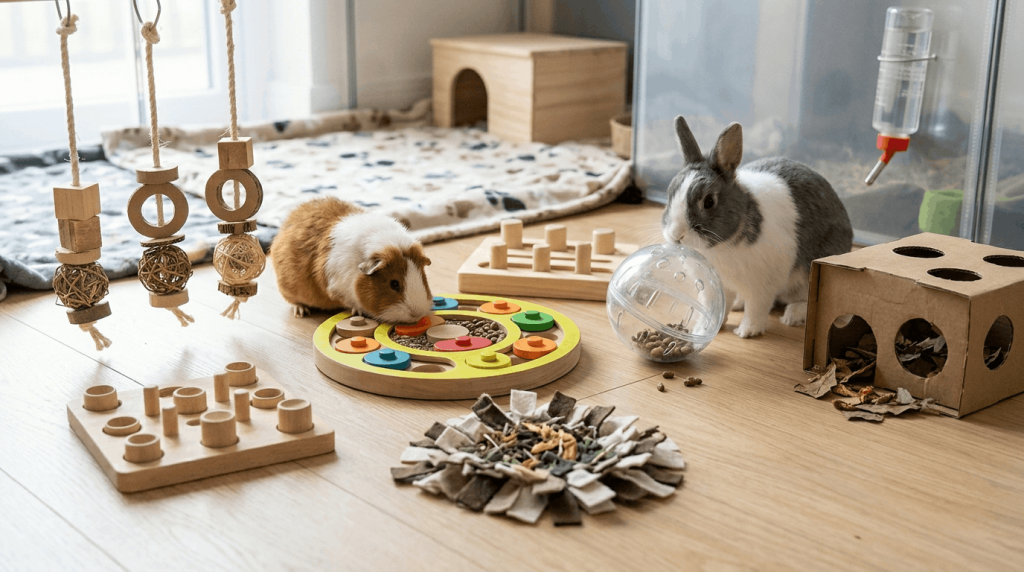
Treat-dispensing toys are among the most popular choices. These toys require pets to manipulate them to release food, which encourages problem-solving and persistence. Because food is involved, pets remain motivated and engaged.
Foraging mats are another effective option. These mats hide treats within layers of fabric, mimicking natural searching behavior. As pets dig and explore, they stay mentally active and physically engaged.
Interactive tunnels and mazes also provide stimulation. These setups encourage exploration and movement, which helps prevent inactivity. Additionally, chewable puzzle toys offer both mental and dental benefits, especially for rodents.
By offering a variety of options, you ensure that puzzle toys small pets use remain interesting and effective over time.
How To Introduce Puzzle Toys Safely
Introducing new toys should always be done gradually. Some pets may feel unsure or hesitant at first, especially if they are not used to interactive play.
Start with simple designs. Easy puzzles help build confidence and allow pets to understand how the toy works. Once they become comfortable, you can introduce more complex challenges.
Placement also matters. Position the toy in a familiar area where your pet feels safe. This reduces anxiety and encourages exploration. Additionally, supervising initial interactions ensures that your pet uses the toy safely.
Since puzzle toys small pets depend on for enrichment should never cause stress, taking a gentle approach leads to better results.
Benefits Beyond Entertainment
The advantages of puzzle toys go far beyond keeping pets occupied. These tools contribute to physical health by encouraging movement. When pets interact with puzzles, they stretch, climb, and explore, which supports muscle development.
Furthermore, puzzle toys help manage weight. Small pets that lack activity can easily become overweight, leading to health problems. By promoting movement, puzzle toys small pets use help maintain a healthy weight.
Emotional well-being also improves. Pets that engage in stimulating activities are less likely to experience anxiety or depression. They become more confident and curious, which enhances their quality of life.
Because of these benefits, incorporating puzzle toys small pets enjoy into daily routines creates a more balanced and fulfilling environment.
Common Mistakes To Avoid
While puzzle toys are beneficial, certain mistakes can reduce their effectiveness. One common issue is choosing toys that are too difficult. When pets cannot solve a puzzle, they may become frustrated and lose interest.
Another mistake is lack of variety. Using the same toy repeatedly can lead to boredom. Rotating toys keeps the experience fresh and engaging, which encourages continued interaction.
Overuse of treats is also a concern. While treats motivate pets, excessive amounts can lead to weight gain. Balancing rewards with regular diet ensures that puzzle toys small pets use remain healthy tools.
Additionally, neglecting supervision can be risky. Some toys may have small parts that could pose a hazard. Regular checks help ensure safety and durability.
Avoiding these mistakes helps maximize the benefits of puzzle toys small pets rely on for enrichment.
Creating A Stimulating Environment
Puzzle toys work best when combined with a well-designed habitat. A stimulating environment encourages natural behaviors and enhances the effectiveness of enrichment tools.
Providing different textures, levels, and hiding spots adds variety. For example, combining tunnels, platforms, and bedding materials creates opportunities for exploration. When puzzle toys are integrated into this setup, pets remain engaged for longer periods.
Lighting and noise levels also influence behavior. A calm and comfortable environment supports focus and reduces stress. This allows pets to interact with their toys more effectively.
Because puzzle toys small pets benefit from are part of a larger system, creating a supportive environment enhances their impact.
Adapting Toys To Different Species
Each type of small pet has unique needs, so customization is important. Hamsters, for instance, enjoy digging and foraging, so puzzles that involve hidden treats work well. Rabbits, on the other hand, benefit from chewable toys that also challenge their minds.
Guinea pigs prefer gentle exploration, so simple puzzles with accessible rewards are ideal. Ferrets, known for their intelligence, often enjoy more complex challenges that involve multiple steps.
Understanding these differences ensures that puzzle toys small pets use are both safe and effective. Tailoring toys to your pet’s natural behavior leads to better engagement and satisfaction.
Keeping Playtime Consistent
Consistency is key when it comes to enrichment. Introducing puzzle toys occasionally may provide temporary entertainment, but regular use delivers lasting benefits.
Setting aside time each day for interactive play helps establish a routine. Pets quickly learn to expect these sessions, which increases excitement and participation. Even short sessions can make a difference when done consistently.
Rotating toys every few days keeps the experience fresh. This prevents boredom and encourages continued curiosity. Additionally, observing your pet’s preferences helps you choose the most effective options.
Since puzzle toys small pets rely on for mental stimulation are most effective when used regularly, consistency ensures long-term success.
Conclusion
Puzzle toys small pets need are essential for maintaining both mental and physical health. By encouraging natural behaviors and providing meaningful challenges, these toys transform a simple enclosure into a dynamic and engaging environment. When used correctly, they reduce boredom, prevent behavioral issues, and promote overall well-being.
Small pets may live in limited spaces, but their need for stimulation remains strong. By incorporating puzzle toys into daily routines, you create opportunities for exploration and growth. Over time, these simple tools make a significant difference in your pet’s quality of life.
Ultimately, investing in puzzle toys small pets enjoy is one of the most effective ways to support their happiness and health. With the right approach, you can ensure that your pet stays active, curious, and content every day.
FAQ
- What types of enrichment toys are best for small animals?
Treat-dispensing toys, foraging mats, and tunnels are excellent choices for keeping small pets engaged. - How often should I give my pet interactive toys?
Daily use is ideal, even if sessions are short, to maintain consistent mental stimulation. - Can puzzle toys help reduce boredom-related behaviors?
Yes, they provide a productive outlet for energy, which helps prevent destructive habits. - Are these toys safe for all small pets?
Most are safe, but it is important to choose toys suited to your pet’s size and behavior. - Do I need to supervise playtime with enrichment toys?
Yes, especially when introducing new toys, to ensure safety and proper use.