
Keeping small pets mentally engaged is just as important as meeting their physical needs, yet many owners overlook this aspect of care. Puzzle toys for small pets offer a simple and effective way to stimulate curiosity, encourage natural behaviors, and prevent boredom. Whether you care for a hamster, rabbit, guinea pig, or other small animal, these interactive tools can significantly improve daily life. Because small pets spend much of their time in enclosures, providing enrichment becomes essential for their well-being.
Without proper stimulation, small pets may develop repetitive behaviors or lose interest in their environment. This is where puzzle toys for small pets become especially valuable. They challenge the mind, encourage exploration, and promote healthy activity. Over time, these benefits lead to happier pets that are more active, alert, and engaged with their surroundings.
Why Mental Stimulation Matters For Small Animals
Small pets may appear content with minimal interaction, but they are naturally curious creatures. In the wild, they would spend time foraging, exploring, and solving small challenges to find food. Puzzle toys for small pets recreate these natural experiences in a controlled environment, which helps maintain both mental and emotional health.
When animals lack stimulation, they can become stressed or lethargic. This can affect their appetite, behavior, and overall quality of life. Therefore, introducing puzzle toys for small pets helps reduce stress by providing purposeful activities that mimic natural instincts.
In addition, mental stimulation supports cognitive development. Even simple challenges can keep your pet’s mind active, which is especially important for younger animals. Over time, these interactions build confidence and encourage curiosity.
How Puzzle Toys Encourage Natural Behavior
One of the main advantages of puzzle toys for small pets is their ability to promote instinctive behavior. Many toys are designed to simulate foraging, which encourages pets to search for hidden treats or food. This activity mirrors what they would do in nature.
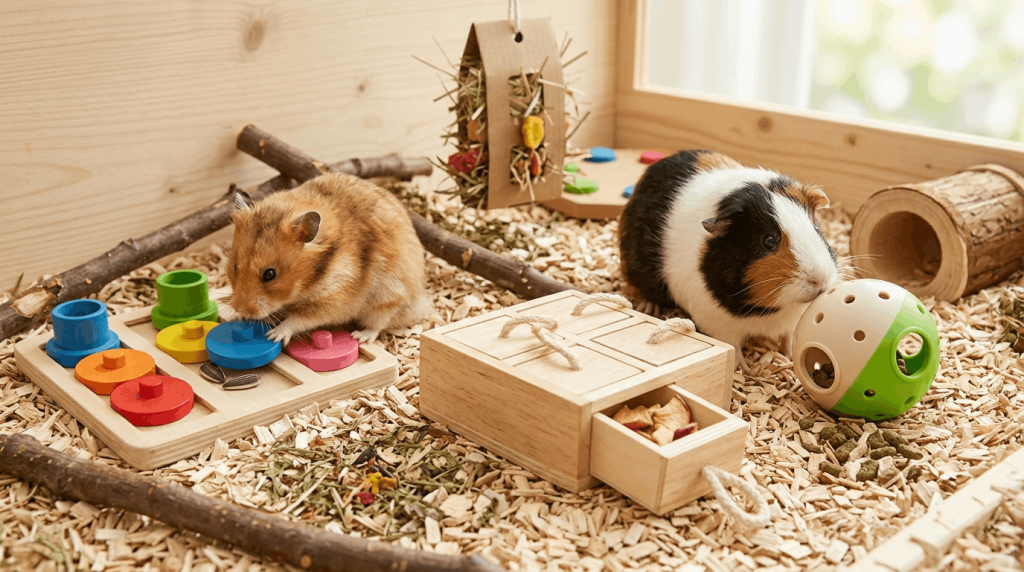
For example, a rabbit may enjoy digging through a treat-filled toy, while a hamster might explore compartments to find food. These actions not only provide entertainment but also keep your pet physically active. Because of this, puzzle toys for small pets help prevent inactivity and support overall health.
In addition, these toys encourage problem-solving skills. When pets learn how to access rewards, they become more engaged and motivated. This creates a positive cycle where activity leads to satisfaction and improved behavior.
Types Of Puzzle Toys For Small Pets
There are many different types of puzzle toys available, each designed to suit specific species and preferences. Choosing the right option depends on your pet’s size, behavior, and activity level. Some toys focus on food-based challenges, while others emphasize exploration and interaction.
Treat-dispensing toys are among the most popular options. These toys require pets to move, push, or manipulate them to release food. As a result, puzzle toys for small pets like these combine feeding with mental stimulation.
Hide-and-seek toys are another effective choice. These designs encourage pets to search for hidden treats, which keeps them engaged for longer periods. In addition, interactive tunnels and mazes provide opportunities for exploration and exercise.
Rotating different types of puzzle toys for small pets helps maintain interest. Variety prevents boredom and ensures your pet continues to benefit from these activities.
Image Placement And Optimization
Image 1: Hamster interacting with a treat puzzle
Alt text: puzzle toys for small pets hamster enrichment
Image 2: Rabbit exploring a wooden puzzle toy
Alt text: puzzle toys for small pets foraging activity
Image 3: Guinea pig using a food-dispensing toy
Alt text: puzzle toys for small pets feeding enrichment
Choosing Safe And Suitable Materials
Safety should always be a priority when selecting enrichment items. Puzzle toys for small pets must be made from non-toxic materials that are safe to chew. Many small animals naturally gnaw on objects, so durability and safety are essential.
Wooden toys are often a good choice, as they are both sturdy and safe. However, they should be untreated and free from harmful chemicals. In addition, plastic toys should be designed specifically for pets to ensure they meet safety standards.
Size is another important factor. Toys should be appropriate for your pet’s size to prevent choking hazards. By carefully selecting materials and designs, you ensure that puzzle toys for small pets remain both fun and safe.
Introducing Puzzle Toys Effectively
Introducing new toys requires patience, as some pets may be hesitant at first. Puzzle toys for small pets should be introduced gradually to avoid overwhelming your pet. Start with simple designs that are easy to understand.
Placing familiar treats inside the toy can encourage interaction. As your pet becomes more comfortable, you can introduce more complex puzzles. This step-by-step approach helps build confidence and keeps your pet engaged.
In addition, observing your pet’s behavior provides valuable insights. Some animals may prefer certain types of toys over others. By paying attention, you can tailor your selection of puzzle toys for small pets to suit their preferences.
Building A Routine With Enrichment Activities
Consistency is key when it comes to enrichment. Incorporating puzzle toys for small pets into your daily routine ensures that your pet receives regular mental stimulation. Even short sessions can make a significant difference over time.
Rotating toys regularly helps maintain interest. When pets encounter new challenges, they are more likely to engage actively. This variety keeps their environment fresh and exciting.
In addition, combining puzzle toys with other forms of enrichment, such as playtime and interaction, creates a well-rounded routine. By doing so, you support both physical and mental health.
Benefits Beyond Entertainment
While puzzle toys are often seen as a source of entertainment, their benefits go much deeper. Puzzle toys for small pets help reduce destructive behavior by providing an outlet for energy. Instead of chewing on cage bars or furniture, pets focus on constructive activities.
These toys also promote physical activity. Movement is essential for maintaining a healthy weight and preventing health issues. Because of this, puzzle toys for small pets contribute to overall wellness.
In addition, they strengthen the bond between pets and owners. Watching your pet interact with a toy and learn new skills can be a rewarding experience. Over time, this interaction builds trust and understanding.
Common Mistakes To Avoid
Even with the best intentions, some mistakes can limit the effectiveness of enrichment. One common issue is choosing toys that are too complex. If a puzzle is too difficult, your pet may lose interest. Therefore, starting simple is always the best approach.
Another mistake is leaving the same toys in the enclosure for too long. Without variety, pets may become bored. Rotating puzzle toys for small pets helps maintain engagement and interest.
Ignoring safety is also a concern. Regularly inspecting toys for damage ensures they remain safe to use. By avoiding these mistakes, you maximize the benefits of enrichment activities.
Conclusion
Providing mental stimulation is essential for the well-being of small pets, and puzzle toys for small pets offer an effective way to achieve this. By encouraging natural behaviors, promoting activity, and reducing boredom, these toys play a vital role in daily care. While it may take time to find the right options, the effort leads to noticeable improvements in behavior and overall health.
Creating a stimulating environment does not require complicated solutions. Simple, well-chosen toys can make a significant difference. Ultimately, puzzle toys for small pets are more than just entertainment; they are an essential part of responsible pet ownership that supports a happy and healthy life.
FAQ
- What types of pets benefit from puzzle toys?
Hamsters, rabbits, guinea pigs, and other small animals can all benefit from interactive toys. - How often should I use enrichment toys?
Daily use is ideal, even if only for short sessions, to keep your pet mentally active. - Are puzzle toys safe for chewing pets?
Yes, as long as they are made from non-toxic and durable materials designed for pets. - Can puzzle toys help reduce boredom?
Yes, they provide stimulation that prevents repetitive or destructive behaviors. - How do I know if my pet enjoys a toy?
Active interaction, curiosity, and repeated use are good signs your pet enjoys the toy.