
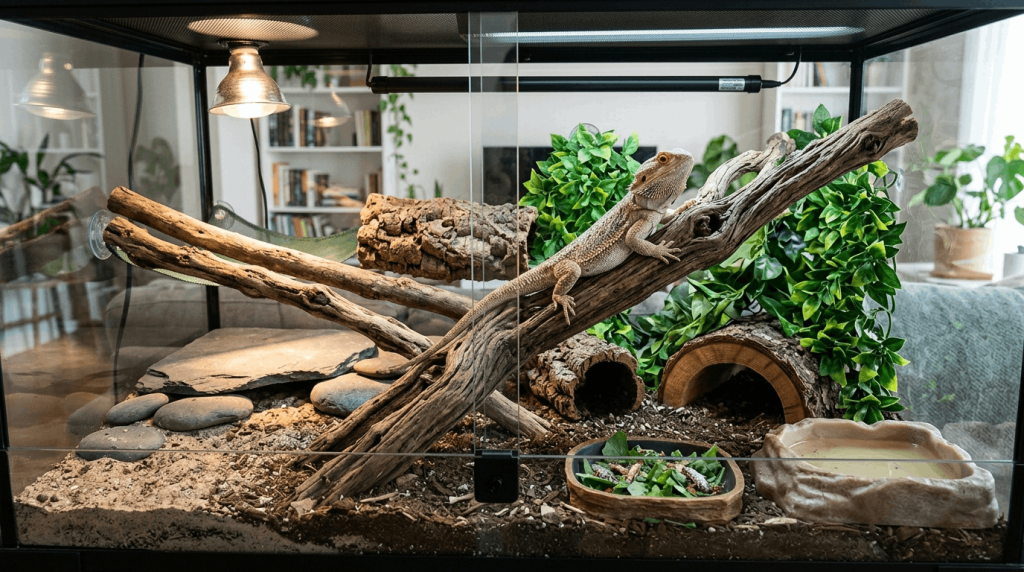

Understanding reptile habitat enrichment benefits can completely change the way you care for your pet. Many reptile owners focus on basic needs like heat and food, yet they often overlook how important stimulation and environmental complexity are. However, reptiles are not passive creatures. They respond strongly to their surroundings, and when their environment improves, their health often follows. Because of this, exploring reptile habitat enrichment benefits is one of the most effective ways to support long-term well-being.
In the wild, reptiles constantly interact with their environment. They climb, hide, explore, and regulate their body temperature by moving between different zones. Therefore, a simple, bare enclosure rarely meets their needs. When you provide enrichment, you mimic natural conditions, which encourages activity and reduces stress. Over time, this leads to noticeable reptile habitat enrichment benefits, including improved appetite, stronger immunity, and more natural behavior patterns.
Why Enrichment Matters for Reptiles
Reptiles may seem low-maintenance, but their needs are more complex than they appear. A lack of stimulation can lead to stress, which often shows up as poor appetite, inactivity, or repetitive behavior. On the other hand, reptile habitat enrichment benefits include increased movement and mental engagement. These changes help prevent health issues that often develop in stagnant environments.
Additionally, enriched habitats support natural instincts. For example, many reptiles enjoy climbing, digging, or hiding. When these behaviors are encouraged, reptiles feel more secure and less threatened. As a result, they tend to be calmer and more responsive. Because of this, reptile habitat enrichment benefits extend beyond physical health and influence overall behavior.
Another key point is that enrichment improves environmental control. By offering multiple temperature zones, textures, and hiding spots, reptiles can regulate their body more effectively. This ability is essential for digestion, energy levels, and immune strength. Therefore, enrichment is not optional. It is a core part of responsible reptile care.
Physical Health Improvements From Enrichment
One of the most noticeable reptile habitat enrichment benefits is better physical health. When reptiles move more, they build stronger muscles and maintain a healthy weight. In contrast, a lack of activity often leads to obesity or weakness. Therefore, adding climbing branches, rocks, or varied terrain encourages natural movement.
Moreover, enriched environments improve digestion. Reptiles rely on proper temperature gradients to process food efficiently. When they have access to different heat zones, they can choose where to rest after eating. This simple adjustment leads to better nutrient absorption and fewer digestive problems.
Hydration also improves with enrichment. Features like water dishes, misting areas, or humidity zones allow reptiles to stay properly hydrated. This is especially important for species that require higher humidity levels. Over time, these adjustments highlight the reptile habitat enrichment benefits that come from a well-designed enclosure.
Furthermore, skin and shedding health improve significantly. Rough surfaces and varied textures help reptiles shed properly. Without these elements, incomplete shedding can occur, which may lead to infections or discomfort. Therefore, adding natural materials supports both comfort and health.
Mental Stimulation And Behavioral Benefits
Reptiles may not show emotions like mammals, yet they still require mental stimulation. One of the strongest reptile habitat enrichment benefits is the reduction of boredom and stress. When reptiles have opportunities to explore and interact with their environment, they become more alert and engaged.
For example, introducing new objects or rearranging the enclosure occasionally can spark curiosity. Although reptiles may take time to adjust, these changes encourage exploration. As a result, they display more natural behaviors instead of remaining inactive.
Hiding spots also play a crucial role. Reptiles need secure areas where they can retreat and feel safe. Without proper hiding spaces, they may become stressed or defensive. Therefore, adding multiple shelters enhances comfort and supports reptile habitat enrichment benefits related to emotional stability.
In addition, feeding enrichment can improve behavior. Instead of placing food in the same spot every time, you can vary feeding locations or use feeding tools. This approach mimics hunting and encourages movement. Over time, reptiles become more active and responsive during feeding.
Creating A More Natural Environment
To fully experience reptile habitat enrichment benefits, it is important to design an enclosure that closely resembles the reptile’s natural habitat. Start by researching the species you own. Desert reptiles require dry, sandy environments, while tropical species need humidity and dense vegetation.
Substrate choice plays a major role. Natural substrates like soil, bark, or sand allow reptiles to dig and interact with their surroundings. This not only enhances physical activity but also supports natural instincts. Therefore, choosing the right substrate is a key step.
Lighting is another critical factor. Proper lighting supports circadian rhythms and overall health. UVB lighting, in particular, helps reptiles produce vitamin D3, which is essential for calcium absorption. Without it, serious health problems can develop. Because of this, lighting directly contributes to reptile habitat enrichment benefits.
Decor elements also matter. Rocks, branches, and plants create visual interest and provide climbing opportunities. While artificial decorations can work, natural materials often offer better functionality. By combining these elements, you create a dynamic and engaging environment.
Simple Ways To Add Enrichment
Improving your enclosure does not always require a complete overhaul. In fact, small changes can still deliver meaningful reptile habitat enrichment benefits. Start by adding new textures, such as bark pieces or stones. These items encourage movement and interaction.
Rotating decorations is another simple strategy. By changing the layout occasionally, you keep the environment fresh and stimulating. Although the changes should not be too frequent, occasional updates prevent boredom.
Adding multiple basking spots can also help. Instead of one heat source, providing different warm areas allows reptiles to choose their preferred temperature. This flexibility improves comfort and supports natural thermoregulation.
Live plants, when safe for your species, offer both aesthetic and functional benefits. They improve humidity levels and create hiding areas. At the same time, they make the enclosure feel more natural.
Finally, observing your reptile’s behavior helps guide your decisions. Each reptile is unique, so paying attention to how it interacts with its environment allows you to refine your setup and maximize reptile habitat enrichment benefits.
Common Mistakes To Avoid
While enrichment is important, it must be done carefully. One common mistake is overcrowding the enclosure. Too many objects can restrict movement and create stress. Therefore, balance is essential when adding new elements.
Another issue is using unsafe materials. Sharp edges or toxic plants can harm reptiles. Always ensure that everything in the enclosure is reptile-safe and properly cleaned before use.
Ignoring species-specific needs is also problematic. Not all reptiles require the same type of enrichment. For example, arboreal species need vertical space, while burrowing species need deep substrate. Understanding these differences ensures that reptile habitat enrichment benefits are fully realized.
Inconsistent maintenance can also reduce effectiveness. Dirty or poorly maintained environments negate the benefits of enrichment. Regular cleaning and monitoring are essential for maintaining a healthy setup.
Long-Term Impact On Reptile Health
Over time, the impact of enrichment becomes even more evident. Reptile habitat enrichment benefits include stronger immune systems, improved longevity, and reduced stress-related illnesses. These advantages make a significant difference in overall quality of life.
Reptiles that live in enriched environments often show more consistent eating habits. They are also less likely to develop behavioral issues. Because of this, enrichment supports both physical and mental health in a balanced way.
Additionally, enriched reptiles tend to interact more with their surroundings. While they may not be social in the traditional sense, they become more active and engaging to observe. This makes reptile ownership more rewarding.
Ultimately, investing in enrichment creates a healthier, more dynamic environment. It ensures that your reptile thrives rather than simply survives.
Conclusion
Exploring reptile habitat enrichment benefits is one of the most valuable steps you can take as a reptile owner. By creating a more natural, engaging environment, you support both physical and mental health. Although it may require some effort, the results are clear and long-lasting.
Small improvements can lead to big changes. Whether you add climbing structures, adjust lighting, or introduce new textures, each step enhances your reptile’s quality of life. Over time, these changes build a stronger foundation for health and well-being.
In the end, reptile habitat enrichment benefits go beyond simple care routines. They reflect a deeper understanding of your pet’s needs and a commitment to providing the best possible environment. With the right approach, your reptile can live a healthier, more active, and more fulfilling life.
FAQ
1. What are the main advantages of improving a reptile’s enclosure?
Improving the enclosure supports natural behavior, reduces stress, and enhances overall health.
2. How often should I change or update the habitat setup?
You can make small changes every few weeks to keep the environment engaging without causing stress.
3. Can enrichment reduce health problems in reptiles?
Yes, better environments often lead to stronger immunity and fewer stress-related issues.
4. Are live plants safe for reptile enclosures?
Some live plants are safe, but always research species compatibility before adding them.
5. Do all reptiles need the same type of habitat upgrades?
No, each species has unique needs, so enrichment should match their natural environment.