
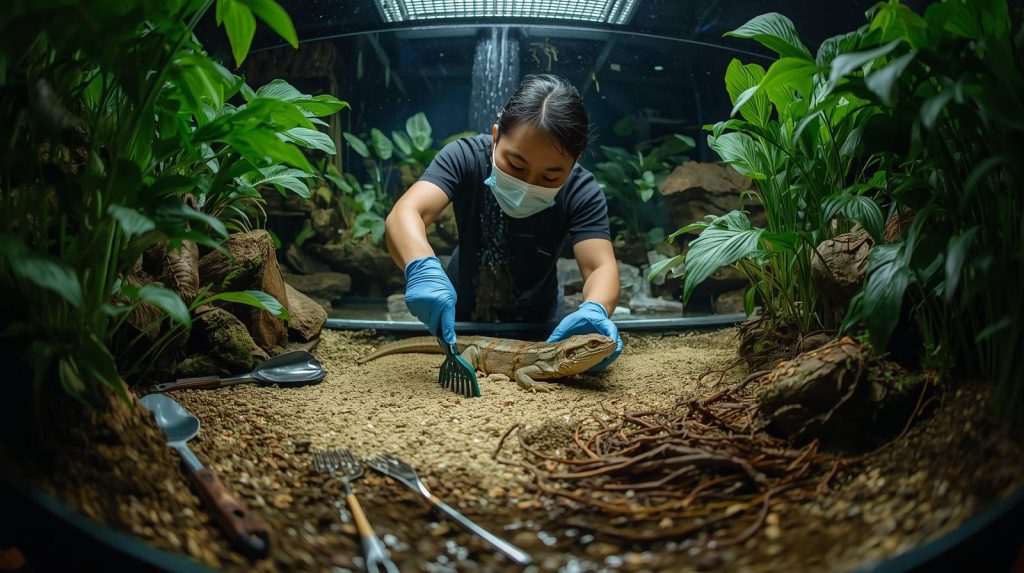

Reptile enclosure cleaning is one of the most important aspects of proper reptile care. While feeding and temperature control are essential, hygiene plays a critical role in preventing illness.
Because reptiles live in enclosed spaces, waste and bacteria can build up quickly. Without proper cleaning, harmful pathogens may spread and affect your pet’s health.
Therefore, understanding reptile enclosure cleaning helps you maintain a safe and comfortable environment. With consistent care, you can reduce risks and improve your reptile’s quality of life.
Why Cleanliness Matters in Reptile Habitats
Clean enclosures support both physical health and natural behavior. Reptiles rely on their environment for comfort, warmth, and security.
When a habitat becomes dirty, it may lead to:
- Bacterial growth
- Fungal infections
- Parasite infestations
Additionally, poor hygiene can cause stress. As a result, reptiles may eat less or become inactive.
Because of this, reptile enclosure cleaning is essential for long-term well-being.
Daily Reptile Enclosure Cleaning Tasks
Daily maintenance helps prevent buildup and keeps the habitat fresh.
Spot Cleaning Waste
Remove feces and uneaten food as soon as possible. This prevents bacteria from spreading.
Checking Water Dishes
Clean and refill water bowls daily. Dirty water can quickly become a source of contamination.
Inspecting the Enclosure
Look for signs of mold, odors, or debris. Early detection makes cleaning easier.
By performing these tasks, reptile enclosure cleaning becomes more manageable and effective.
Weekly Cleaning Routine
In addition to daily care, a deeper cleaning routine is necessary each week.
Replacing Substrate
Remove soiled bedding and replace it with fresh material. This reduces odor and bacteria.
Cleaning Surfaces
Wipe down walls, hides, and decorations using reptile-safe cleaners.
Sanitizing Accessories
Food dishes, water bowls, and climbing structures should be disinfected regularly.
Because of this, reptile enclosure cleaning at a weekly level ensures a healthier habitat.
Monthly Deep Cleaning Process
A full deep clean is essential to eliminate hidden contaminants.
Removing All Items
Take out all decorations, substrate, and accessories.
Disinfecting the Enclosure
Use a reptile-safe disinfectant to clean the entire enclosure. Rinse thoroughly to remove residue.
Drying Completely
Ensure everything is dry before reassembling the habitat. Moisture can promote bacterial growth.
Therefore, reptile enclosure cleaning at this level prevents long-term issues.
Choosing Safe Cleaning Products
Not all cleaning products are safe for reptiles.
Avoid Harsh Chemicals
Bleach and ammonia can leave harmful residues. These may irritate your reptile’s skin or respiratory system.
Use Reptile-Safe Cleaners
Choose products specifically designed for reptile habitats. Alternatively, diluted vinegar solutions can be used carefully.
Rinse Thoroughly
Always rinse surfaces to remove any remaining chemicals.
Because of this, reptile enclosure cleaning must prioritize safety as well as effectiveness.
Managing Odors Effectively
Unpleasant odors often indicate poor hygiene.
Regular Waste Removal
Frequent spot cleaning prevents smells from developing.
Proper Ventilation
Ensure the enclosure has adequate airflow. This helps reduce moisture and odor buildup.
Substrate Selection
Some substrates absorb odors better than others. Choose materials that suit your reptile’s needs.
As a result, reptile enclosure cleaning helps maintain a fresh environment.
Preventing Bacteria and Parasites
Clean habitats reduce the risk of infections.
Monitoring Humidity Levels
Excess moisture encourages bacterial growth. Maintain proper humidity for your reptile species.
Avoiding Cross-Contamination
Use separate tools for each enclosure. This prevents the spread of pathogens.
Regular Health Checks
Observe your reptile for signs of illness. Early detection supports effective treatment.
Because of this, reptile enclosure cleaning is key to disease prevention.
Handling Different Types of Substrate
Different reptiles require different substrates, which affects cleaning routines.
Loose Substrates
Materials like sand or bark need frequent replacement. Spot cleaning helps extend their lifespan.
Solid Substrates
Tiles or mats are easier to clean and disinfect. They are ideal for maintaining hygiene.
Bioactive Setups
These use beneficial organisms to break down waste. While they require less frequent cleaning, monitoring is still necessary.
Therefore, reptile enclosure cleaning varies based on substrate choice.
Cleaning Decorations and Accessories
Accessories can harbor bacteria if not cleaned regularly.
Hides and Climbing Structures
Wash and disinfect these items weekly. Pay attention to cracks and crevices.
Artificial Plants
Dust and clean them to prevent buildup.
Natural Items
Wood and rocks should be sanitized before use and cleaned regularly.
Because of this, reptile enclosure cleaning includes every item inside the habitat.
Maintaining a Cleaning Schedule
Consistency is essential for effective care.
Creating a Routine
Set daily, weekly, and monthly cleaning tasks. This ensures nothing is overlooked.
Tracking Maintenance
Keep a record of cleaning activities. This helps you stay organized.
Adjusting as Needed
Some reptiles produce more waste than others. Adjust your routine accordingly.
As a result, reptile enclosure cleaning becomes easier to manage over time.
Common Mistakes to Avoid
Avoiding errors helps maintain a safe environment.
Skipping Regular Cleaning
Neglect leads to rapid buildup of waste and bacteria.
Using Unsafe Products
Harsh chemicals can harm your reptile.
Overlooking Hidden Areas
Corners and accessories often collect debris.
Because of this, reptile enclosure cleaning must be thorough and consistent.
Signs Your Enclosure Needs Immediate Cleaning
Sometimes, immediate action is required.
Watch for:
- Strong odors
- Visible mold
- Dirty water
- Increased insect activity
If these signs appear, perform cleaning right away.
Conclusion: Keeping Your Reptile Safe and Healthy
Reptile enclosure cleaning is a vital part of responsible reptile care. By maintaining a clean habitat, you protect your pet from harmful bacteria and stress.
Moreover, consistent routines make cleaning easier and more effective over time. Simple daily tasks, combined with deeper weekly and monthly care, ensure a safe environment.
Ultimately, reptile enclosure cleaning supports your reptile’s health, comfort, and longevity. With proper care, your pet can thrive in a clean and well-maintained habitat.
FAQ
1. How often should I clean a reptile enclosure?
Daily spot cleaning, weekly maintenance, and monthly deep cleaning are recommended for most setups.
2. Can I use household cleaners in reptile habitats?
It is best to avoid them. Use reptile-safe products to prevent harmful residue.
3. What is the best substrate for easy cleaning?
Solid substrates like tiles or mats are easier to clean than loose materials.
4. How do I reduce odors in the enclosure?
Remove waste regularly, improve ventilation, and choose absorbent substrates.
5. Is deep cleaning always necessary?
Yes, periodic deep cleaning removes hidden bacteria and keeps the habitat safe.